The Indian Weight Loss Plate: Eat Smart and Stay Healthy Naturally
Why Most Weight Loss Efforts Fail
Most people struggle with weight loss not because they lack motivation, but because their diets are too restrictive. Many plans force you to stop eating foods that are part of your everyday life, such as dal, rice, or ghee.
Traditional Indian meals are not the problem. The real challenge lies in imbalance and portion distortion. When you learn how to structure your meals using the Indian Weight Loss Plate method, you can achieve your goals while enjoying the flavors and comfort of your regular food.
The focus is not on starvation or fad diets, but on creating a balance that allows your body to lose fat steadily and safely.
What the Indian Weight Loss Plate Is
The Indian Weight Loss Plate is a simple and practical approach that helps you eat in balance without calorie counting. It visually divides your plate into portions that support steady energy, better digestion, and natural fat burning.
The method is built on three principles:
- Eat local, seasonal, and whole foods.
- Maintain proportion among carbs, protein, and fiber.
- Follow consistent meal timings to support metabolism.
This is not a temporary diet plan. It is a realistic and flexible eating pattern designed for long-term Weight Loss and overall well-being.
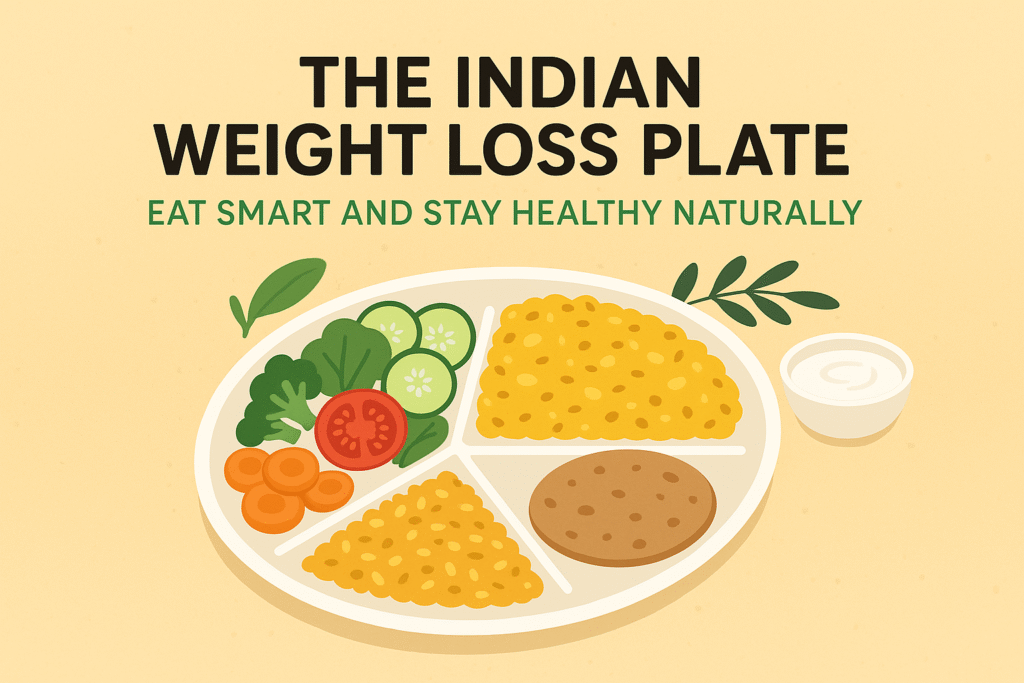
How to Build the Ideal Weight Loss Plate
Half of the Plate: Vegetables and Salads
Vegetables should take up half of your plate. They are rich in fiber, vitamins, and minerals but low in calories. This combination allows you to eat a larger volume of food while staying within your calorie goals.
Include a mix of cooked and raw vegetables like spinach, lauki, cabbage, carrots, beans, or cucumbers. Choose different colors each day to ensure variety in antioxidants and micronutrients.
Fiber from vegetables improves digestion, reduces hunger, and helps maintain steady blood sugar levels, all of which support sustainable Weight Loss.
One-Fourth of the Plate: Complex Carbohydrates
Carbohydrates are an important energy source, but the type you choose matters. Replace refined carbs with complex options that digest slowly and prevent sugar spikes.
Good examples include brown rice, multigrain roti, oats, quinoa, and millets such as jowar, bajra, or ragi. These provide B vitamins, minerals, and fiber, which help in fat metabolism and long-lasting energy.
Avoid white rice, white bread, and foods made with maida, as they cause blood sugar spikes and lead to fat storage.
One-Fourth of the Plate: Protein
Protein plays a central role in Weight Loss because it supports muscle repair, controls hunger, and boosts metabolism. Include at least one palm-sized portion of protein in every meal.
For vegetarians, good options include paneer, lentils, tofu, sprouts, or curd. Non-vegetarians can include eggs, chicken, or fish.
Protein helps you feel full longer and reduces cravings, making it easier to maintain a calorie deficit without feeling deprived.
Add Healthy Fats
Healthy fats are essential for hormone regulation and nutrient absorption. Use about one teaspoon per meal of ghee, olive oil, mustard oil, or coconut oil. Nuts and seeds like almonds, walnuts, chia, or flaxseeds also provide healthy fats that support metabolism and skin health.
Including the right fats keeps your food satisfying and prevents the overeating that often follows restrictive diets.
Include a Probiotic
Probiotic foods such as curd, buttermilk, or fermented dishes like kanji improve gut health. A balanced gut microbiome supports better digestion, reduces bloating, and helps with long-term Weight Loss.
Healthy digestion ensures that the nutrients from your meals are properly absorbed and utilized.
Why This Plate Supports Weight Loss
This approach works because it aligns with how your body naturally processes food and energy.
- Balances Blood Sugar: Fiber and complex carbs prevent sugar spikes that lead to fat storage.
- Boosts Metabolism: Protein digestion requires more energy, which helps you burn more calories.
- Improves Satiety: A mix of protein, fiber, and healthy fats keeps you full and satisfied for longer.
- Supports Hormone Balance: Healthy fats stabilize hunger hormones like leptin and insulin.
By focusing on balanced nutrition instead of extreme calorie restriction, you achieve Weight Loss that lasts.
Ideal Meal Timing for Weight Loss
Meal timing plays an important role in metabolism and digestion.
- Morning (6–7 AM): Begin your day with water, lemon water, or soaked chia seeds.
- Breakfast (8–9 AM): Include protein and complex carbs such as vegetable oats or eggs with toast.
- Lunch (1–2 PM): Follow the Indian Weight Loss Plate structure with all essential food groups.
- Evening Snack (5 PM): Choose light, nutrient-rich options like roasted chana, makhana, or fruit with nuts.
- Dinner (7–8 PM): Keep it light and protein-rich with paneer, tofu, or fish with vegetables.
- Before Bed: Herbal tea or water for hydration and better digestion.
Maintaining consistent meal timings prevents overeating and supports efficient fat burning.
7-Day Indian Weight Loss Plan
Day 1:
Breakfast: Vegetable oats with chia seeds
Lunch: Brown rice, dal, sabzi, salad
Dinner: Paneer tikka and soup
Snack: Apple and almonds
Day 2:
Breakfast: Idli with sambar
Lunch: Quinoa khichdi and curd
Dinner: Fish curry with vegetables
Snack: Green tea and roasted chana
Day 3:
Breakfast: Poha with sprouts
Lunch: Bajra roti and rajma
Dinner: Tofu stir-fry
Snack: Makhana
Day 4:
Breakfast: Dalia with milk
Lunch: Chapati, dal, and sabzi
Dinner: Egg curry and salad
Snack: Buttermilk
Day 5:
Breakfast: Besan chilla with chutney
Lunch: Lemon rice and vegetable curry
Dinner: Grilled paneer and soup
Snack: Coconut water
Day 6:
Breakfast: Upma with vegetables
Lunch: Millets, dal, and salad
Dinner: Chicken tikka with vegetables
Snack: Herbal tea
Day 7:
Breakfast: Moong dosa
Lunch: Brown rice and sambhar
Dinner: Vegetable soup and tofu
Snack: Small piece of dark chocolate
This rotation ensures variety and nutrient balance, helping you enjoy steady and sustainable Weight Loss.
Lifestyle Habits That Support Weight Loss
- Sleep Well: Get at least 7 to 8 hours of rest every night to reduce stress hormones.
- Stay Active: Add daily movement such as walking, stretching, or short workouts.
- Manage Stress: Meditation or evening walks help control emotional eating.
- Hydrate Properly: Drink 2.5 to 3 liters of water daily to maintain metabolism.
- Eat Mindfully: Avoid screens while eating and chew food slowly to improve digestion.
These lifestyle habits complement your diet and speed up your Weight Loss progress.
Common Mistakes That Prevent Weight Loss
- Skipping meals or eating too little.
- Consuming sugary beverages or juices.
- Overeating high-calorie “healthy” foods like nuts and smoothies.
- Ignoring protein intake.
- Eating heavy meals late at night.
Small, consistent corrections in these areas can dramatically improve your results.
When to Consult a Professional
If you have medical conditions such as thyroid issues, PCOS, or diabetes, consult a qualified nutritionist. Professional guidance ensures that your plan is personalized for your metabolism, age, and health goals.
A tailored approach helps you achieve effective Weight Loss while staying healthy and energized.
Nutridate with Priyanka
Nutridate with Priyanka is a trusted nutrition and wellness platform founded by Priyanka, a certified nutrition expert with over 15 years of professional experience in Weight Loss and lifestyle management.
At Nutridate with Priyanka, the focus is on creating customized, practical, and sustainable diet plans that fit real lives. Each program combines nutrition science with a personalized approach that helps clients achieve long-term results without giving up the foods they love.
The goal is to simplify healthy living for everyone through realistic habits, mindful eating, and balanced nutrition.
If you are serious about improving your health and achieving your Weight Loss goals, visit nutridatewithpriyanka.com to explore personalized plans, expert guidance, and step-by-step support for your transformation journey.
FAQ
1. What is the ideal calorie range for Weight Loss?
For women: 1200 to 1500 kcal per day.
For men: 1500 to 1800 kcal per day.
This varies depending on age, activity, and overall health.
2. Can I eat rice or roti during Weight Loss?
Yes, but in moderation. Choose whole-grain rice or multigrain rotis and combine them with protein and vegetables for balance.
3. How much weight can I lose in a month?
Losing 2 to 4 kilograms per month is considered safe and sustainable.
4. Is ghee good for Weight Loss?
Yes, when used in moderation. Ghee supports digestion and contains healthy fats that help with metabolism.
5. Can intermittent fasting help with Weight Loss?
Yes, if done correctly. The 14:10 fasting method can work well if meals remain balanced and nutritious.