IBS-Friendly Indian Meals to Improve Digestion and Gut Comfort
Living with Irritable Bowel Syndrome can make everyday eating feel confusing and stressful, especially when Indian food is such a big part of culture, family, and routine. Many people with IBS believe they must completely give up Indian meals to avoid bloating, pain, gas, constipation, or loose motions. The truth is very different.
With the right understanding and small adjustments, IBS-friendly Indian meals can be comforting, nourishing, and enjoyable. You do not need extreme restrictions. You need awareness, balance, and a gut-first approach to food.
This guide explains how to build IBS-friendly Indian meals using familiar ingredients, gentle cooking methods, and practical eating habits so your gut feels calm, supported, and resilient every day.
Struggling With IBS Symptoms or Sensitive Digestion?
Managing IBS requires more than avoiding random foods. The right Indian meal choices, portion sizes, and eating habits can significantly reduce bloating, pain, and digestive discomfort. Our personalised IBS-friendly nutrition guidance helps improve digestion and long-term gut comfort.
Get Your Personalised IBS-Friendly Meal PlanWhy IBS-Friendly Indian Meals Matter More Than You Think
IBS is a functional digestive disorder, meaning there is no visible damage in the gut, yet digestion does not function smoothly. The gut becomes overly sensitive to certain foods, stress, irregular eating patterns, and lifestyle habits. This sensitivity causes abdominal pain, bloating, gas, diarrhea, constipation, or a mix of both.
Indian diets are rich in grains, lentils, vegetables, spices, and fermented foods. These foods are healthy for many people, but in IBS, the same foods can either soothe or irritate the gut depending on how they are chosen, cooked, and eaten.
That is why IBS-friendly Indian meals focus on:
Gentle digestion
Reduced gut irritation
Balanced fiber
Controlled fermentation
Mindful eating habits
When meals feel safe to the gut, symptoms gradually reduce and quality of life improves.
What Makes an Indian Meal Truly IBS-Friendly
An IBS-friendly Indian meal is not about removing all favorite foods. It is about simplifying meals so digestion is not overwhelmed. These meals are usually lower in fermentable carbohydrates, moderate in fat, and rich in soluble fiber.
Portion size matters as much as food choice. Eating large quantities of even healthy food can trigger symptoms. Cooking methods also play a major role. Lightly cooked, warm, freshly prepared meals are easier for the gut to handle than raw, fried, or heavily spiced foods.
Consistency is key. Eating at regular times helps train the digestive system and reduces unpredictable gut reactions.
Understanding Low FODMAP Eating in Indian Meals
FODMAPs are fermentable carbohydrates that are poorly absorbed in the small intestine. When they reach the large intestine, they ferment quickly and create gas, bloating, and discomfort in people with IBS.
Many Indian foods naturally contain FODMAPs, but many staples are also low in FODMAPs when eaten in appropriate portions. Rice, oats, millets like ragi, vegetables such as bottle gourd and pumpkin, and fruits like banana and papaya are excellent foundations for IBS-friendly Indian meals.
A low FODMAP approach is not meant to be permanent. It is a tool to calm the gut and identify personal triggers. Once symptoms improve, foods can be reintroduced gradually.
IBS-Friendly Indian Breakfast Ideas That Start the Day Right
Breakfast should wake up digestion gently, not shock it. Heavy, oily, or spicy breakfasts often cause bloating early in the day and worsen symptoms later.
IBS-friendly Indian breakfast options include soft vegetable poha prepared without onion, oats porridge cooked with water or lactose-free milk, plain dosa with minimal fermentation, and steamed idli in moderate portions. These foods provide energy while being gentle on the stomach.
Eating slowly and chewing well in the morning reduces gas and discomfort significantly.
Building IBS-Friendly Indian Lunch Meals Without Discomfort
Lunch is usually the main meal of the day, which makes balance essential. A well-planned lunch supports energy levels without triggering gut symptoms.
Steamed rice or soft wheat rotis are easier to digest than heavy multigrain options. Vegetable sabzis prepared with bottle gourd, ridge gourd, pumpkin, carrot, spinach, or zucchini are excellent choices for IBS-friendly Indian meals.
Moong dal is one of the safest protein options when soaked well and pressure cooked. It provides nourishment without excessive gas. Using minimal oil and mild spices keeps digestion smooth.
IBS-Friendly Indian Dinner That Supports Gut Healing
Dinner should be light and calming, as digestion naturally slows down at night. Heavy or late dinners often lead to bloating, acidity, and disturbed sleep.
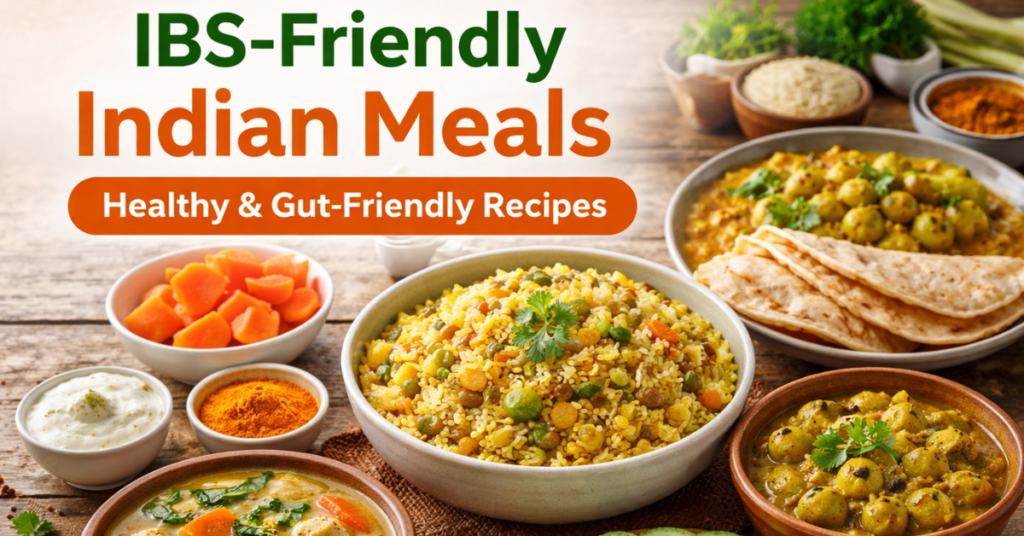
Vegetable khichdi made with rice and moong dal is one of the best IBS-friendly Indian meals for dinner. It is warm, hydrating, and easy to digest. Soft vegetable pulao with mild spices or plain rice with lightly cooked vegetables also works well.
Soups made from pumpkin, bottle gourd, or carrot are soothing options when symptoms flare. Avoid raw salads, fried foods, and spicy gravies at night.
Struggling With IBS Symptoms or Sensitive Digestion?
Managing IBS requires more than avoiding random foods. The right Indian meal choices, portion sizes, and eating habits can significantly reduce bloating, pain, and digestive discomfort. Our personalised IBS-friendly nutrition guidance helps improve digestion and long-term gut comfort.
Get Your Personalised IBS-Friendly Meal PlanVegetables That Work Best in IBS-Friendly Indian Meals
Vegetables are essential for gut health, but not all are suitable during IBS. Some vegetables ferment quickly and cause gas, while others contain fibers that irritate a sensitive gut.
Vegetables like bottle gourd, ridge gourd, pumpkin, spinach, carrot, eggplant, cucumber, and zucchini are generally well tolerated. These vegetables have high water content and gentle fibers.
Onion, garlic, cauliflower, cabbage, mushrooms, green peas, and broccoli often trigger IBS symptoms and should be limited or avoided during flare-ups.
Choosing Fruits Wisely for IBS-Friendly Indian Meals
Fruits provide vitamins and antioxidants but must be eaten mindfully. Portion size and timing matter.
Papaya supports digestion and reduces bloating. Banana helps regulate bowel movements. Orange, kiwi, pineapple, and berries are usually tolerated in controlled portions.
Apples, mangoes, watermelon, and dried fruits are high in fermentable sugars and commonly trigger IBS symptoms.
Protein Sources That Support an IBS-Friendly Indian Diet
Protein helps repair the gut lining and maintain strength, but it should be easy to digest.
Moong dal, well-cooked lentils, tofu, paneer in small portions, peanuts, and lactose-free dairy are suitable for many people. Non-vegetarian individuals may tolerate eggs or grilled chicken depending on individual sensitivity.
Avoid heavily processed, fried, or very fatty protein dishes.
Cooking Methods That Make Indian Food Gut-Friendly
The way food is cooked can either calm or irritate the gut. Gentle cooking improves digestion and nutrient absorption.
Steaming, boiling, pressure cooking, slow cooking, and light sautéing are ideal for IBS-friendly Indian meals. Deep frying, reheating oily food, and excessive tempering should be avoided.
Using asafoetida instead of onion and garlic adds flavor without triggering symptoms. Mild spices such as cumin, coriander, turmeric, and fennel support digestion when used moderately.
Eating Habits That Improve IBS Symptoms Long-Term
Even the best IBS-friendly Indian meals will not work if eating habits are poor. Eating too fast, skipping meals, overeating, or eating late at night disrupts gut rhythm.
Eating at fixed times, chewing food thoroughly, drinking enough water, and avoiding distractions during meals significantly improve digestion. Keeping a food and symptom journal helps identify personal triggers and builds long-term awareness.
Stress, Lifestyle, and the Gut Connection in IBS
IBS is closely linked to stress through the brain-gut connection. Emotional stress, poor sleep, anxiety, and irregular routines worsen symptoms even with a good diet.
Yoga, walking, breathing exercises, meditation, and adequate sleep calm the nervous system and improve gut function. Limiting caffeine and alcohol also reduces irritation.
Can IBS Be Managed Long-Term with Indian Food
IBS is a chronic condition, but symptoms can be managed successfully. Indian food does not need to be eliminated. It needs to be personalized.
When meals are built thoughtfully, IBS-friendly Indian meals can become a powerful tool for healing and comfort. With patience and consistency, many people experience long-term relief and better quality of life.
A Quick Recap
IBS-friendly Indian meals are not about fear or restriction. They are about understanding your body and working with it, not against it. When food is chosen carefully, cooked gently, and eaten mindfully, Indian cuisine can nourish the gut and support lasting digestive health.
If symptoms persist, working with a qualified nutrition professional can help personalize your approach and identify hidden triggers.
Struggling With IBS Symptoms or Sensitive Digestion?
Managing IBS requires more than avoiding random foods. The right Indian meal choices, portion sizes, and eating habits can significantly reduce bloating, pain, and digestive discomfort. Our personalised IBS-friendly nutrition guidance helps improve digestion and long-term gut comfort.
Get Your Personalised IBS-Friendly Meal PlanFrequently Asked Questions
IBS-friendly Indian meals are meals prepared using ingredients and cooking methods that are gentle on digestion and less likely to trigger bloating, gas, abdominal pain, constipation, or diarrhea. These meals focus on easily digestible grains, low FODMAP vegetables, balanced fiber, mild spices, and minimal oil while avoiding common gut irritants like onion, garlic, excess fat, and heavily processed foods.
Yes, Indian food can be suitable for people with IBS when prepared thoughtfully. Traditional Indian meals can be modified by choosing the right vegetables, using mild spices, controlling portion sizes, and following gentle cooking methods. IBS-friendly Indian meals do not require giving up Indian cuisine but adapting it to suit sensitive digestion.
Some of the best IBS-friendly Indian meals include vegetable khichdi made with rice and moong dal, plain rice with bottle gourd or pumpkin sabzi, soft rotis with well-cooked vegetables, oats porridge, plain dosa, and light vegetable soups. These meals are easy to digest and suitable for regular consumption.
Yes, rice is one of the safest and most commonly recommended foods for IBS-friendly Indian meals. White rice is low in fermentable carbohydrates and easy to digest, making it suitable for people with IBS. It can be paired with mild vegetables or lentils for balanced nutrition.
Lentils can be included in an IBS-friendly Indian diet if chosen and prepared carefully. Moong dal is generally the best option as it is lighter and easier to digest. Lentils should be soaked well, cooked thoroughly, and eaten in moderate portions to reduce gas and bloating.