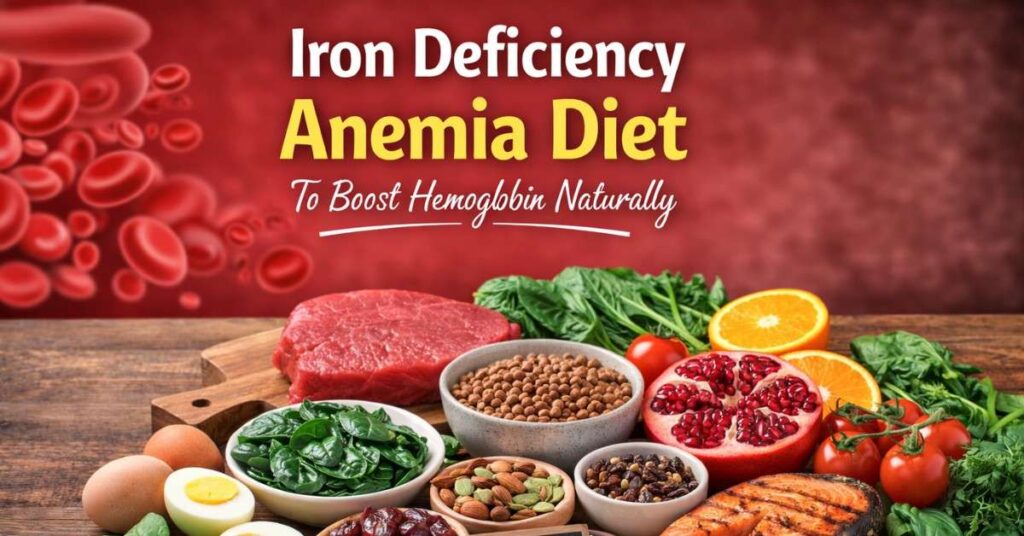
Iron Deficiency Anemia Diet Plan to Boost Hemoglobin Naturally
Do you often feel tired even after a full night’s sleep? Do you experience frequent dizziness, hair fall, or lack of focus? These are not just signs of a busy lifestyle. In many cases, they are early symptoms of iron deficiency anemia.
Iron deficiency anemia is one of the most common nutritional deficiencies, especially in India. The biggest reason behind this condition is not eating the right foods in the right combination. The good news is that with a well-planned iron deficiency anemia diet, you can naturally improve your hemoglobin levels, regain your energy, and enhance your overall health.
This guide is designed based on practical experience and proven nutrition strategies to help you understand, manage, and reverse anemia effectively.
What is Iron Deficiency Anemia and Why Diet is the Key Solution
Iron deficiency anemia occurs when your body does not have enough iron to produce hemoglobin. Hemoglobin is responsible for carrying oxygen in your blood. When its levels drop, your body struggles to function efficiently, leading to fatigue, weakness, and poor immunity.
While supplements are often prescribed, they are not always enough. Without correcting your daily diet, the problem can return again and again. This is why following a proper iron deficiency anemia diet is the most sustainable and natural solution.
Feeling Weak, Dizzy, or Low on Hemoglobin?
Iron deficiency anemia can cause fatigue, कमजोरी, and low energy levels. A proper diet rich in iron, vitamin C, and essential nutrients helps improve hemoglobin naturally. Get a personalised diet plan designed to boost iron levels safely and effectively.
Get Your Iron Boost Diet PlanSymptoms of Iron Deficiency Anemia You Should Never Ignore
Most people ignore the early warning signs of anemia, thinking it is just stress or weakness. However, your body gives clear signals when iron levels are low.
You may feel constantly tired, even after resting. You might notice pale skin, dark circles, or sudden hair fall. Many people also experience headaches, dizziness, or shortness of breath while doing simple tasks.
Other signs include brittle nails, cold hands and feet, and difficulty concentrating. If you notice these symptoms regularly, it is time to improve your diet immediately.
Root Causes of Iron Deficiency Anemia
Understanding the cause helps in fixing the problem faster. One of the most common reasons is low intake of iron-rich foods. Many people rely heavily on processed or low-nutrient diets, which leads to deficiency over time.
Women are more prone due to menstrual blood loss. Pregnant women need higher iron intake for the baby’s development. Children and teenagers also require more iron during growth phases.
Another major reason is poor absorption. Even if you eat iron-rich foods, your body may not absorb them properly if your diet lacks supporting nutrients like vitamin C.
Types of Iron: Why Food Combination Matters
There are two types of iron found in food, and understanding them can completely change your results.
Heme iron is found in animal foods like chicken, fish, eggs, and red meat. This type is easily absorbed and quickly improves iron levels.
Non-heme iron is found in plant-based foods like spinach, lentils, beans, and seeds. It is slightly harder to absorb, but when combined with vitamin C, its absorption improves significantly.
This is why simply eating iron-rich foods is not enough. You must follow the right combinations as part of your iron deficiency anemia diet.
Best Iron Rich Foods to Include in Iron Deficiency Anemia Diet
To see real improvement, your diet must include a variety of iron-rich foods daily.
Green leafy vegetables such as spinach, fenugreek leaves, and mustard greens are among the best plant-based sources of iron. These can be included in sabzi, paratha, or soups.
Lentils, chickpeas, kidney beans, and black gram are excellent sources of iron and protein. They should be a regular part of your meals.
Dry fruits like dates, raisins, and figs are powerful natural boosters of hemoglobin. They are easy to consume and highly effective.
Seeds like pumpkin seeds and sesame seeds are often overlooked but are rich in iron and should be added to your diet.
Whole grains like oats, brown rice, and quinoa support overall nutrition and contribute to iron intake.
For non-vegetarians, chicken liver, red meat, eggs, and fish provide highly absorbable iron and can speed up recovery.
7-Day Iron Deficiency Anemia Diet Plan for Fast Results
A structured plan helps you stay consistent and achieve better results.
Day 1
Start your day with warm lemon water. Breakfast can include vegetable poha with peanuts and a glass of orange juice. Lunch should include dal, brown rice, and spinach sabzi. Dinner can include roti with paneer curry and salad.
Day 2
Breakfast can include a spinach smoothie with banana and soaked almonds. Lunch can include chana curry with roti. Dinner can include vegetable khichdi.
Day 3
Have oats with raisins and seeds for breakfast. Lunch can include rajma with rice and salad. Dinner can include vegetable soup and whole wheat bread.
Day 4
Breakfast can include sprouts salad with lemon juice. Lunch can include dal with roti and beetroot salad. Dinner can include paneer bhurji.
Day 5
Breakfast can include toast with peanut butter and fruit. Lunch can include fish curry or soy curry. Dinner can include mixed vegetable curry.
Day 6
Breakfast can include fruit bowl with seeds. Lunch can include lentil soup with quinoa. Dinner can include egg curry or tofu curry.
Day 7
Start with a smoothie rich in iron and vitamin C. Lunch can include vegetable pulao. Dinner can include dal with sautéed greens.
Consistency with this iron deficiency anemia diet can significantly improve hemoglobin levels within a few weeks.
Feeling Weak, Dizzy, or Low on Hemoglobin?
Iron deficiency anemia can cause fatigue, कमजोरी, and low energy levels. A proper diet rich in iron, vitamin C, and essential nutrients helps improve hemoglobin naturally. Get a personalised diet plan designed to boost iron levels safely and effectively.
Get Your Iron Boost Diet PlanFoods That Boost Iron Absorption Naturally
One of the biggest mistakes people make is ignoring absorption.
Vitamin C is essential for improving iron absorption. Adding lemon juice, amla, oranges, or tomatoes to your meals can make a huge difference.
Fermented foods like idli and dosa help improve gut health and nutrient absorption.
Cooking in iron utensils can also slightly increase iron content in food.
Foods to Avoid in Iron Deficiency Anemia Diet
Certain foods can block iron absorption and should be consumed carefully.
Tea and coffee reduce iron absorption if taken immediately after meals. Try to maintain a gap of at least one hour.
Calcium-rich foods like milk should not be consumed with iron-rich meals.
Highly processed foods and junk food should be avoided as they do not support recovery.
Lifestyle Tips to Recover Faster from Anemia
Along with diet, lifestyle plays an important role.
Ensure you get enough sleep to support recovery. Stay hydrated to improve blood circulation. Light exercise like walking can help improve oxygen supply in the body.
Regularly check your hemoglobin levels to track your progress.
Why Most People Fail to Recover from Anemia
Many people follow a diet for a few days and expect quick results. However, anemia recovery requires consistency.
Another common mistake is focusing only on iron intake without improving absorption.
Lack of a structured plan also leads to poor results.
Following a proper iron deficiency anemia diet with the right strategy is the key to long-term improvement.
When You Should Consult an Expert
If your symptoms do not improve even after following a proper diet, you should consult a nutritionist.
A personalized diet plan based on your body type, lifestyle, and health condition can deliver faster and better results.
At nutridate with priyanka, you can get a customized iron deficiency anemia diet plan designed to improve your hemoglobin levels naturally and effectively.
A Quick Recap
Iron deficiency anemia is not just a medical condition; it is a sign that your body is not getting the nutrition it needs.
The solution is not complicated. By following a well-balanced iron deficiency anemia diet, focusing on iron-rich foods, improving absorption, and maintaining consistency, you can naturally boost your hemoglobin levels.
Start making small changes today, and you will notice a significant improvement in your energy, focus, and overall health.
If you want faster and more reliable results, nutridate with priyanka can help you with a personalized diet plan tailored to your needs.
Feeling Weak, Dizzy, or Low on Hemoglobin?
Iron deficiency anemia can cause fatigue, कमजोरी, and low energy levels. A proper diet rich in iron, vitamin C, and essential nutrients helps improve hemoglobin naturally. Get a personalised diet plan designed to boost iron levels safely and effectively.
Get Your Iron Boost Diet PlanFrequently Asked Questions
The best iron deficiency anemia diet includes iron-rich foods like spinach, lentils, beetroot, dates, and eggs, along with vitamin C-rich foods to improve iron absorption.
You can increase hemoglobin by following an iron deficiency anemia diet that includes green leafy vegetables, legumes, dry fruits, and citrus fruits, while avoiding tea or coffee after meals.
Fruits like pomegranate, apple, banana, guava, and oranges are beneficial. Vitamin C-rich fruits like oranges and amla help improve iron absorption.
Avoid tea, coffee, and calcium-rich foods like milk immediately after meals, as they reduce iron absorption. Processed and junk foods should also be limited.
With a proper iron deficiency anemia diet, noticeable improvement can be seen within 3 to 6 weeks, but full recovery may take a few months depending on severity.