Fat Loss vs Muscle Loss Difference: Complete Science Guide
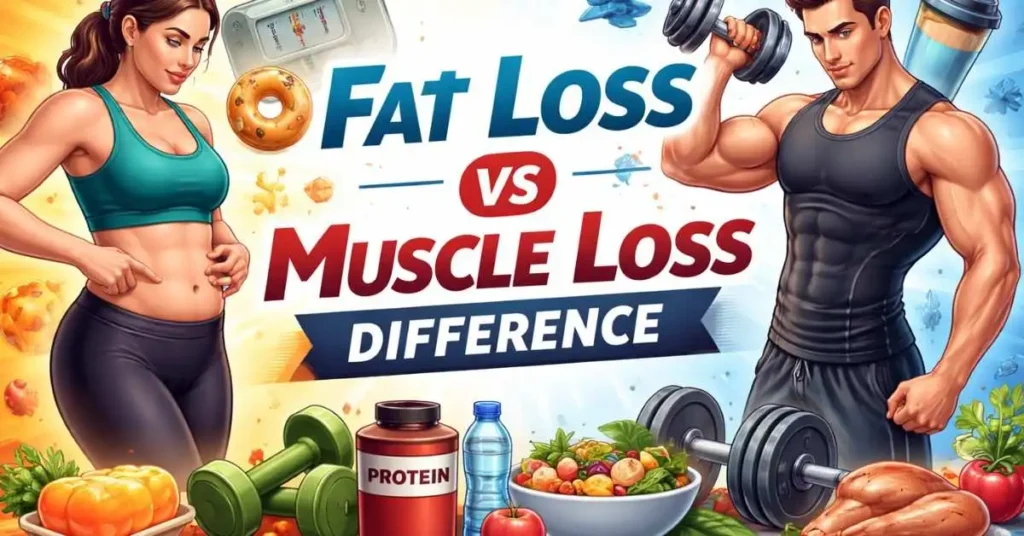
If you’ve ever tried to lose weight, you’ve probably stepped on the scale hoping to see a lower number. But here’s the truth most people don’t realize: losing weight does not always mean losing fat. In many cases, people lose muscle instead, which can harm their metabolism, strength, and overall health.
Understanding the fat loss vs muscle loss difference is essential if you want real, long-lasting results. Without this knowledge, you might follow diets and workouts that give short-term success but long-term damage.
This guide is designed to help you understand exactly how your body works, how to identify what you’re losing, and how to ensure your transformation is healthy, sustainable, and effective.
Confused Between Fat Loss and Muscle Loss?
Losing weight doesn’t always mean losing fat. Without the right diet and strategy, you may lose muscle instead of fat. Understanding the difference is key to achieving a healthy and sustainable body transformation. Get a personalised plan designed for effective fat loss while preserving muscle.
Get Your Fat Loss Diet PlanWhat is Fat Loss?
Fat loss is the process where your body burns stored fat for energy while preserving lean muscle mass. This is the ideal goal for anyone trying to improve body composition, look leaner, and feel healthier.
When your body is in a calorie deficit and supported with proper nutrition, it starts using fat as its primary fuel source. This results in a gradual reduction in body fat percentage while maintaining strength and energy.
Fat loss improves not only your appearance but also your overall health. It helps regulate hormones, reduces the risk of lifestyle diseases, and improves metabolic function.
What is Muscle Loss?
Muscle loss happens when your body breaks down muscle tissue to meet its energy needs. This usually occurs when your diet lacks sufficient protein, your calorie intake is too low, or you are not engaging in strength training.
Unlike fat loss, muscle loss negatively impacts your body. It leads to reduced strength, slower metabolism, and a weaker overall structure.
Many people who follow extreme diets or rely only on cardio experience muscle loss without realizing it. This is why some individuals lose weight but still don’t look toned or fit.
Fat Loss vs Muscle Loss Difference Explained Clearly
The fat loss vs muscle loss difference lies in what your body is actually burning for energy.
When you lose fat, your body becomes leaner while maintaining firmness and strength. Your metabolism stays active, and your energy levels remain stable. You start noticing better body shape, improved confidence, and enhanced performance.
On the other hand, muscle loss leads to weakness, fatigue, and a slower metabolism. Even if the scale shows weight loss, your body may appear less defined and more fragile.
This is why focusing only on weight loss can be misleading. The real goal should always be fat loss while preserving muscle.
Why Most People Lose Muscle Instead of Fat
One of the biggest mistakes people make is choosing quick results over sustainable methods. Crash diets, extremely low-calorie plans, and excessive cardio can push the body into survival mode.
When the body does not receive enough nutrients, it starts breaking down muscle along with fat to generate energy. This leads to rapid weight loss but poor body composition.
Another common reason is lack of strength training. Without resistance exercises, the body does not get a signal to preserve muscle, making it more likely to lose it during a calorie deficit.
The Science Behind Fat Loss and Muscle Preservation
Your body requires energy to function, and this energy comes from calories. When you consume fewer calories than you burn, your body enters a calorie deficit.
In this state, the body looks for stored energy sources, which include fat and muscle. The goal is to guide your body to use fat while protecting muscle.
This can be achieved by maintaining a moderate calorie deficit, consuming enough protein, and engaging in strength training. Protein provides the building blocks for muscle, while resistance training signals the body to maintain it.
When these elements are balanced, your body becomes efficient at burning fat while preserving lean mass.
Signs You Are Losing Fat and Not Muscle
Understanding whether you are losing fat or muscle is crucial for tracking progress correctly.
When you are losing fat, your body measurements decrease, and your clothes fit better. You may notice that your waistline becomes slimmer while your overall shape improves.
Your strength remains stable during workouts, and your energy levels stay consistent. These are strong indicators that your body is burning fat effectively.
Fat loss is usually gradual, but it leads to visible and sustainable results.
Signs You Are Losing Muscle Instead of Fat
Muscle loss often shows up in subtle ways. One of the first signs is a drop in strength. If you find yourself struggling with exercises that were previously easy, it may indicate muscle breakdown.
You may also experience constant fatigue and low energy levels. Rapid weight loss is another major warning sign.
Visually, your body may look smaller but not leaner. There may be a lack of muscle definition, and your overall appearance may seem less firm.
Why Preserving Muscle is Essential for Long-Term Fat Loss
Muscle plays a key role in maintaining metabolism. The more muscle you have, the more calories your body burns at rest.
When you preserve muscle, your body remains efficient at burning fat, making it easier to maintain your results. Losing muscle, on the other hand, slows down metabolism and increases the chances of weight regain.
Muscle also supports strength, posture, and daily functionality. A strong body is not just about appearance but also about overall health and performance.
Confused Between Fat Loss and Muscle Loss?
Losing weight doesn’t always mean losing fat. Without the right diet and strategy, you may lose muscle instead of fat. Understanding the difference is key to achieving a healthy and sustainable body transformation. Get a personalised plan designed for effective fat loss while preserving muscle.
Get Your Fat Loss Diet PlanHow to Lose Fat Without Losing Muscle
Achieving fat loss while preserving muscle requires a balanced approach. The focus should be on consistency rather than extreme measures.
A moderate calorie deficit allows your body to burn fat without entering survival mode. Adequate protein intake supports muscle repair and prevents breakdown.
Strength training is essential because it signals your body to maintain muscle mass. Cardio can be included but should not replace resistance training.
Recovery is equally important. Proper sleep and stress management help maintain hormonal balance and support muscle preservation.
Common Mistakes That Ruin Fat Loss Progress
Many people unknowingly sabotage their progress by following incorrect strategies. Extremely low-calorie diets are one of the biggest mistakes.
Over-reliance on cardio without strength training can also lead to muscle loss. Ignoring protein intake further increases the risk.
Lack of recovery, poor sleep, and high stress levels can negatively impact both fat loss and muscle preservation.
Avoiding these mistakes can significantly improve your results.
Expert Insight: 15+ Years of Practical Experience
Based on years of experience in fitness and nutrition, one thing is clear. Sustainable results come from understanding the fat loss vs muscle loss difference and applying the right strategies consistently.
People who focus only on losing weight often struggle with long-term maintenance. In contrast, those who prioritize fat loss while preserving muscle achieve better results and maintain them easily.
The body responds to smart, consistent efforts. Quick fixes may seem attractive, but they rarely deliver lasting success.
A Quick Recap
The fat loss vs muscle loss difference is the key to achieving a strong, healthy, and sustainable transformation.
If your goal is to look fit, feel energetic, and maintain your results, you need to focus on losing fat while preserving muscle. The number on the scale is just one part of the story.
Your strength, energy, and body composition matter far more. By following a balanced approach, you can achieve results that last a lifetime.
Confused Between Fat Loss and Muscle Loss?
Losing weight doesn’t always mean losing fat. Without the right diet and strategy, you may lose muscle instead of fat. Understanding the difference is key to achieving a healthy and sustainable body transformation. Get a personalised plan designed for effective fat loss while preserving muscle.
Get Your Fat Loss Diet PlanFrequently Asked Questions
The fat loss vs muscle loss difference lies in what your body is losing. Fat loss means your body is burning stored fat while preserving muscle, leading to a lean and toned appearance. Muscle loss occurs when your body breaks down muscle tissue, which reduces strength, slows metabolism, and affects overall health.
You can identify fat loss if your body measurements reduce, clothes fit better, and strength remains stable. Muscle loss is indicated by weakness, fatigue, and rapid weight loss without visible toning. Tracking strength and body composition is more reliable than just checking weight.
Yes, it is possible to lose fat without losing muscle by maintaining a moderate calorie deficit, consuming enough protein, and including strength training in your routine. Proper recovery and sleep also play a key role in muscle preservation.
People lose muscle during weight loss mainly due to extreme dieting, low protein intake, and lack of resistance training. When the body does not get enough nutrients, it breaks down muscle along with fat for energy.
Rapid weight loss is often a combination of both fat and muscle loss. In most cases, a significant portion comes from muscle, especially when weight loss happens too quickly through crash diets or excessive cardio.