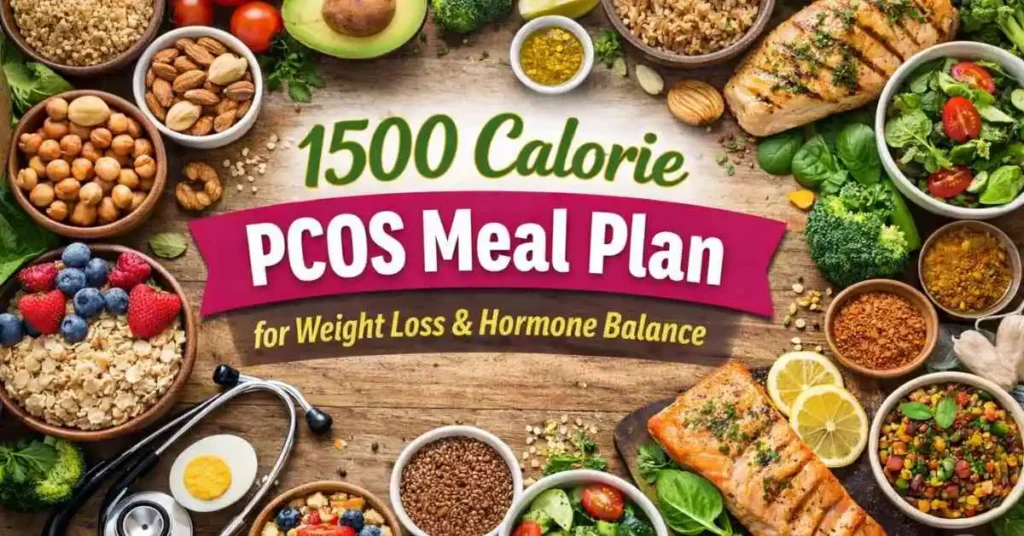
1500 Calorie PCOS Meal Plan for Weight Loss & Hormone Balance
If you have PCOS, you already know how frustrating weight loss can be. You eat less, try different diets, maybe even skip meals, but the scale barely moves. Along with that, symptoms like irregular periods, acne, hair fall, and fatigue continue to affect your daily life.
The problem is not your effort. The problem is the approach.
Most diets fail in PCOS because they ignore the root cause, which is insulin resistance and hormonal imbalance. This is exactly where a properly structured 1500 calorie PCOS meal plan makes a real difference.
Instead of starving your body, this plan focuses on stabilizing blood sugar, improving insulin sensitivity, and supporting hormone balance. When done correctly, it not only helps in weight loss but also improves overall health, energy levels, and menstrual regularity.
This guide is designed to be practical, science-backed, and based on real experience so that you can actually follow it and see results.
Struggling with PCOS Weight Gain and Hormone Imbalance?
A balanced 1500 calorie diet can help manage PCOS symptoms, support weight loss, and improve hormonal balance. The right combination of nutrients, meal timing, and lifestyle changes is key. Get a personalised PCOS diet plan tailored to your body and health goals.
Get Your PCOS Diet PlanWhat is a 1500 Calorie PCOS Meal Plan?
A 1500 calorie PCOS meal plan is a balanced daily eating structure that provides approximately 1500 calories from nutrient-dense foods. It is specifically designed for women dealing with PCOS who want to lose weight without harming their metabolism.
This plan is not about eating less randomly. It is about eating the right combination of protein, healthy fats, and complex carbohydrates at the right time.
The goal is simple. Control insulin, reduce inflammation, and create a sustainable calorie deficit that supports fat loss without triggering hormonal stress.
Why 1500 Calories is Ideal for PCOS Weight Loss
One of the biggest mistakes women with PCOS make is going on extremely low-calorie diets. While this may lead to quick weight loss initially, it slows down metabolism and worsens hormonal imbalance in the long run.
A 1500 calorie PCOS meal plan works because it creates a moderate calorie deficit. This means your body burns stored fat while still getting enough nutrition to function properly.
It also helps in preventing binge eating, mood swings, and energy crashes, which are very common when calories are too low.
For most women, this calorie range supports steady and sustainable fat loss while improving overall metabolic health.
The Science Behind PCOS and Diet
PCOS is closely linked to insulin resistance. When your body cannot use insulin effectively, it produces more insulin. High insulin levels trigger excess androgen production, which leads to symptoms like weight gain, irregular periods, and acne.
This is why what you eat matters more than how much you eat.
A well-designed 1500 calorie PCOS meal plan focuses on low glycemic index foods that prevent blood sugar spikes. It includes high fiber, protein-rich meals, and healthy fats that keep insulin levels stable.
When insulin levels improve, hormones start balancing naturally, which is the key to managing PCOS.
Ideal Nutrient Distribution in a 1500 Calorie PCOS Meal Plan
For best results, your meals should be balanced in the right proportions.
Protein should form a significant part of your diet because it helps control hunger and supports muscle mass. Healthy fats are essential for hormone production and reducing inflammation. Complex carbohydrates provide sustained energy without causing sugar spikes.
Fiber plays a critical role in improving digestion and insulin sensitivity. A diet rich in fiber also helps you stay full longer, reducing unnecessary snacking.
Struggling with PCOS Weight Gain and Hormone Imbalance?
A balanced 1500 calorie diet can help manage PCOS symptoms, support weight loss, and improve hormonal balance. The right combination of nutrients, meal timing, and lifestyle changes is key. Get a personalised PCOS diet plan tailored to your body and health goals.
Get Your PCOS Diet Plan1500 Calorie PCOS Meal Plan (Indian Diet)
This sample plan is designed for practical, everyday use with easily available Indian foods.
Early Morning
Start your day with warm water and lemon or soaked methi seeds. This helps improve digestion and supports metabolism.
Breakfast (350–400 Calories)
A strong breakfast sets the tone for the entire day.
Options include vegetable oats, besan chilla with paneer stuffing, or eggs with multigrain toast. You can also have a smoothie made with spinach, seeds, and unsweetened milk.
Adding protein in breakfast reduces cravings throughout the day.
Mid-Morning Snack (150–200 Calories)
Choose low glycemic fruits like apple, pear, or guava.
Pairing fruit with nuts like almonds or walnuts helps prevent sugar spikes and keeps you full.
Lunch (400–450 Calories)
Lunch should be balanced and satisfying.
Include one or two whole wheat rotis or brown rice, a protein source like dal, chicken, or paneer, a bowl of vegetables, and curd.
This combination ensures steady energy and supports digestion.
Evening Snack (150–200 Calories)
Avoid tea with biscuits.
Instead, go for roasted chana, sprouts salad, or green tea with seeds. This helps control evening cravings and maintains energy levels.
Dinner (300–350 Calories)
Dinner should be light but nutritious.
Options include paneer salad, tofu stir fry, vegetable soup with protein, or grilled fish with vegetables.
Keeping dinner low in refined carbs improves overnight fat burning.
Bedtime
Herbal tea or turmeric milk can help reduce inflammation and improve sleep quality.
Foods to Include in Your 1500 Calorie PCOS Meal Plan
The success of your diet depends on food quality.
Include green leafy vegetables, whole grains like oats and brown rice, lean proteins like eggs, chicken, fish, paneer, and plant-based proteins like lentils and tofu.
Nuts and seeds such as flaxseeds, chia seeds, and almonds provide healthy fats and support hormone balance.
Fermented foods like curd improve gut health, which plays a key role in managing PCOS.
Foods to Avoid for Better Results
Refined sugar and processed foods are the biggest triggers for PCOS symptoms.
Avoid white bread, pastries, sugary drinks, packaged snacks, and deep-fried foods. These foods spike insulin levels and increase inflammation.
Limiting these foods can significantly improve results even without drastic calorie restriction.
How This Plan Helps in Weight Loss
A 1500 calorie PCOS meal plan works by creating a sustainable calorie deficit while stabilizing insulin levels.
Unlike crash diets, it does not slow down metabolism. Instead, it helps your body shift into fat-burning mode.
Over time, this leads to reduction in belly fat, improved energy levels, and better hormonal balance.
Expected Results: What You Will Notice
With consistency, you may start noticing changes within a few weeks.
Energy levels improve, cravings reduce, and digestion becomes better. Over time, weight loss becomes visible, and menstrual cycles may become more regular.
Healthy weight loss in PCOS is gradual but sustainable.
Lifestyle Tips to Boost Results
Diet alone is not enough.
Regular exercise improves insulin sensitivity. Strength training and walking are highly effective.
Sleep plays a major role in hormonal balance. Poor sleep increases cortisol, which worsens PCOS symptoms.
Managing stress through yoga or meditation can further improve results.
Common Mistakes to Avoid
Skipping meals can lead to overeating later.
Following extremely low-calorie diets slows metabolism.
Relying on packaged diet foods often leads to hidden sugar consumption.
Inconsistency is the biggest mistake. Results come from long-term habits, not short-term efforts.
Why Personalization is Important
Every woman with PCOS is different.
Factors like lifestyle, medical history, and hormone levels influence results. A personalized diet plan can address specific concerns more effectively.
A Quick Recap
A 1500 calorie PCOS meal plan is not just a diet. It is a structured approach to improving your health, balancing hormones, and achieving sustainable weight loss.
The key is consistency, правиль nutrition, and a lifestyle that supports long-term results.
When you focus on the right foods and habits, managing PCOS becomes achievable and sustainable.
Struggling with PCOS Weight Gain and Hormone Imbalance?
A balanced 1500 calorie diet can help manage PCOS symptoms, support weight loss, and improve hormonal balance. The right combination of nutrients, meal timing, and lifestyle changes is key. Get a personalised PCOS diet plan tailored to your body and health goals.
Get Your PCOS Diet PlanFrequently Asked Questions
A 1500 calorie PCOS meal plan is a structured diet designed to provide balanced nutrition while creating a calorie deficit. It helps manage insulin resistance, supports hormonal balance, and promotes sustainable weight loss in women with PCOS.
Yes, a 1500 calorie diet is effective for PCOS weight loss because it creates a moderate calorie deficit without slowing metabolism. When combined with high-protein and low glycemic foods, it helps reduce belly fat and improve insulin sensitivity.
Most women can lose around 2 to 4 kg per month with a 1500 calorie PCOS meal plan, depending on consistency, physical activity, and individual metabolism.
Yes, you can lose weight with diet alone, but combining the meal plan with regular exercise like walking or strength training improves results and helps balance hormones faster.
You should include high-protein foods like eggs, paneer, chicken, and lentils, along with fiber-rich vegetables, whole grains, nuts, and healthy fats. These foods help control blood sugar and reduce cravings.