Why Crash Diets Stop Working and Cause Weight Regain Fast
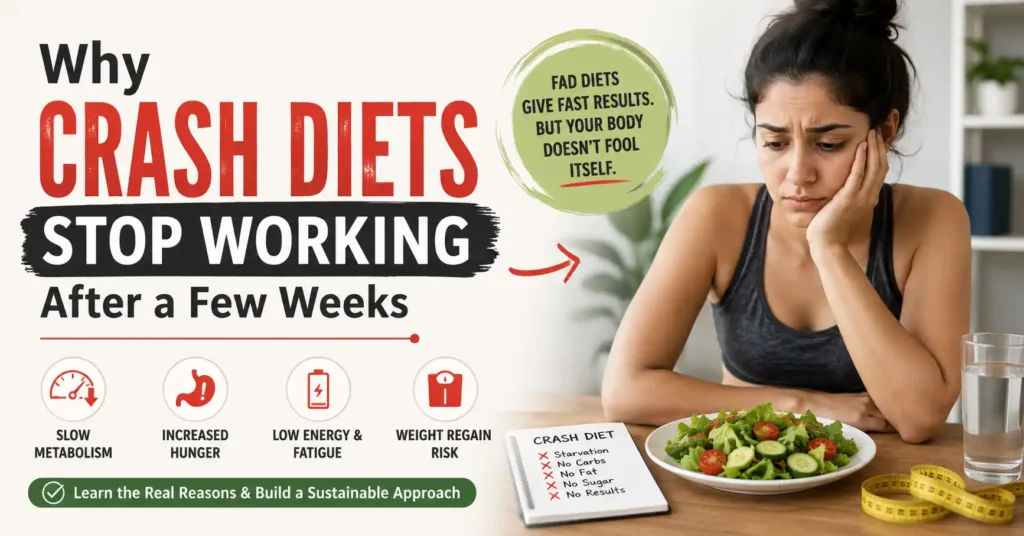
You start a strict diet with full motivation.
Sugar is gone. Carbs are reduced. Meals become smaller. Sometimes you even skip breakfast or dinner completely because you want faster results. During the first week, the weighing scale drops quickly, and it feels like the diet is finally working.
But after a few weeks, everything changes.
The weight loss slows down. Hunger becomes unbearable. Energy levels crash. Cravings increase. You feel irritated, tired, and mentally exhausted. Then suddenly, the lost weight starts coming back.
If this sounds familiar, you are not alone.
One of the biggest reasons many people struggle with long-term weight management is because crash diets stop working after a short period of time. While these diets may promise rapid results, they often create temporary changes instead of sustainable fat loss.
The human body is designed to protect itself during periods of starvation or extreme calorie restriction. When you drastically reduce food intake, your metabolism, hormones, muscle mass, and energy levels begin adapting in ways that eventually slow weight loss.
Understanding why crash diets stop working can help you avoid common mistakes and choose healthier, more sustainable strategies for long-term results.
At Nutridate with Priyanka, the goal is to support healthy eating habits, realistic nutrition plans, and sustainable lifestyle changes that improve overall wellness instead of promoting unhealthy quick fixes.
Frustrated with Weight Regain After Crash Dieting?
Crash diets may give quick results, but they often slow metabolism, increase cravings, and lead to rapid weight regain. Sustainable nutrition and balanced eating habits are the real keys to healthy fat loss. Get a personalised diet plan designed for safe and long-term results.
Start Your Healthy Weight Loss JourneyWhat Are Crash Diets?
Crash diets are extremely restrictive eating plans designed to help people lose weight very quickly.
These diets usually involve:
- severe calorie restriction,
- skipping meals,
- liquid-only meal plans,
- detox diets,
- starvation fasting,
- removing entire food groups,
- eating very little food for several days or weeks.
Most crash diets promise dramatic transformations within a short time. While the early results may look impressive, they are often temporary.
The biggest problem is that crash diets stop working because the body eventually adapts to extreme restriction.
Why Crash Diets Feel Effective in the Beginning
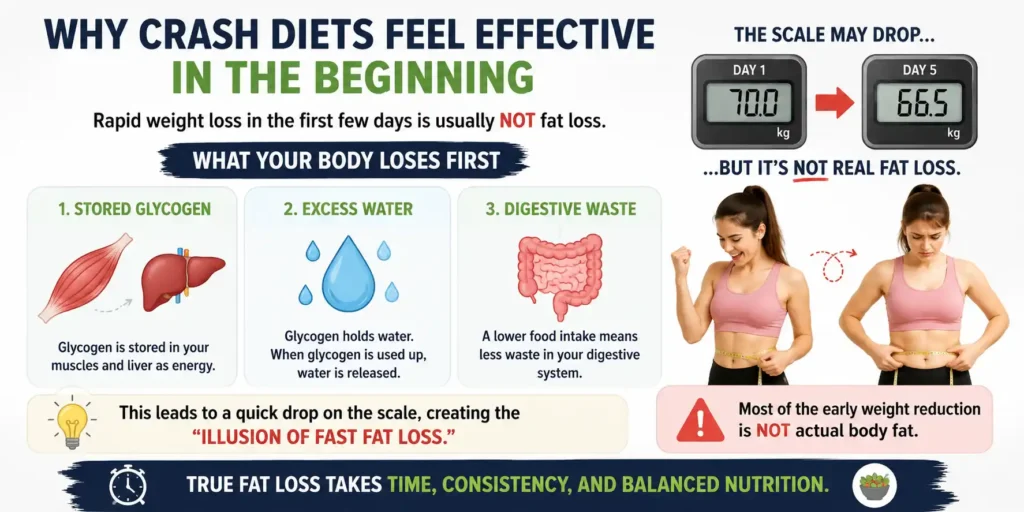
One reason people continue trying crash diets is because they often produce rapid weight loss during the first few days.
This happens mainly because the body loses:
- stored glycogen,
- excess water,
- digestive waste.
Glycogen is a stored form of carbohydrate found in the muscles and liver. Since glycogen holds water, losing glycogen quickly also reduces water weight.
This creates the illusion of fast fat loss.
However, most of the early weight reduction is not actual body fat.
True fat loss takes time, consistency, and balanced nutrition.
Why Crash Diets Stop Working After a Few Weeks
1. Your Metabolism Slows Down
One of the main reasons crash diets stop working is metabolic adaptation.
The body is naturally programmed to survive periods of low food availability. When calorie intake becomes too low, the body tries to conserve energy by slowing down metabolism.
This means:
- fewer calories burned at rest,
- lower energy expenditure,
- slower fat burning,
- increased fatigue.
As the metabolism slows, the body becomes more efficient at using fewer calories.
This is why many people experience a weight loss plateau after a few weeks of restrictive dieting.
Understanding Metabolic Slowdown
When the body senses starvation, it reduces its calorie-burning processes to protect energy reserves.
y=BMR−a(t)
This simplified representation explains how basal metabolic rate decreases over time during prolonged calorie restriction. The longer the crash diet continues, the more the body tries to conserve energy.
This natural survival response is one of the biggest reasons crash diets stop working over time.
Frustrated with Weight Regain After Crash Dieting?
Crash diets may give quick results, but they often slow metabolism, increase cravings, and lead to rapid weight regain. Sustainable nutrition and balanced eating habits are the real keys to healthy fat loss. Get a personalised diet plan designed for safe and long-term results.
Start Your Healthy Weight Loss Journey2. Muscle Loss Makes Weight Loss Harder
Many crash diets are extremely low in protein and overall nutrition.
When the body does not receive enough calories, it may start breaking down muscle tissue for energy along with fat stores.
This becomes a major problem because muscle helps support metabolism.
When muscle mass decreases:
- calorie burning slows down,
- strength reduces,
- body composition worsens,
- long-term fat loss becomes harder.
People often think they are losing only fat, but restrictive diets frequently cause significant muscle loss as well.
3. Hunger Hormones Increase
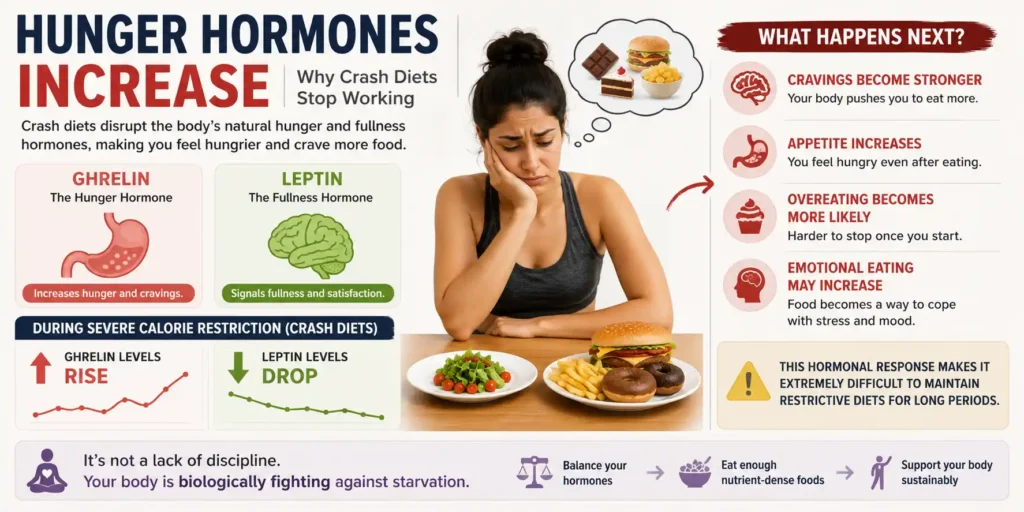
Another reason crash diets stop working is hormonal imbalance.
Two major hormones involved in appetite regulation are:
- ghrelin, which increases hunger,
- leptin, which signals fullness.
During severe calorie restriction:
- ghrelin levels rise,
- leptin levels drop.
As a result:
- cravings become stronger,
- appetite increases,
- overeating becomes more likely,
- emotional eating may increase.
This hormonal response makes it extremely difficult to maintain restrictive diets for long periods.
Many people blame themselves for lacking discipline when, in reality, the body is biologically fighting against starvation.
4. Energy Levels Drop Significantly
Very low-calorie diets often leave people feeling:
- exhausted,
- weak,
- irritable,
- mentally drained,
- unmotivated.
The body simply does not receive enough energy to support normal daily functions properly.
Low energy affects:
- exercise performance,
- work productivity,
- concentration,
- mood,
- sleep quality.
As physical activity decreases, the body burns fewer calories, which further slows weight loss progress.
Frustrated with Weight Regain After Crash Dieting?
Crash diets may give quick results, but they often slow metabolism, increase cravings, and lead to rapid weight regain. Sustainable nutrition and balanced eating habits are the real keys to healthy fat loss. Get a personalised diet plan designed for safe and long-term results.
Start Your Healthy Weight Loss Journey5. Crash Diets Are Difficult to Maintain
One major reason crash diets stop working is that they are unrealistic for long-term life.
Most people cannot maintain:
- constant hunger,
- strict food rules,
- social restrictions,
- low energy levels,
- extreme cravings.
Eventually, the body and mind become exhausted from constant restriction.
Once normal eating resumes, rapid weight regain often follows.
This cycle is commonly known as yo-yo dieting.
The Hidden Problem With Rapid Weight Loss
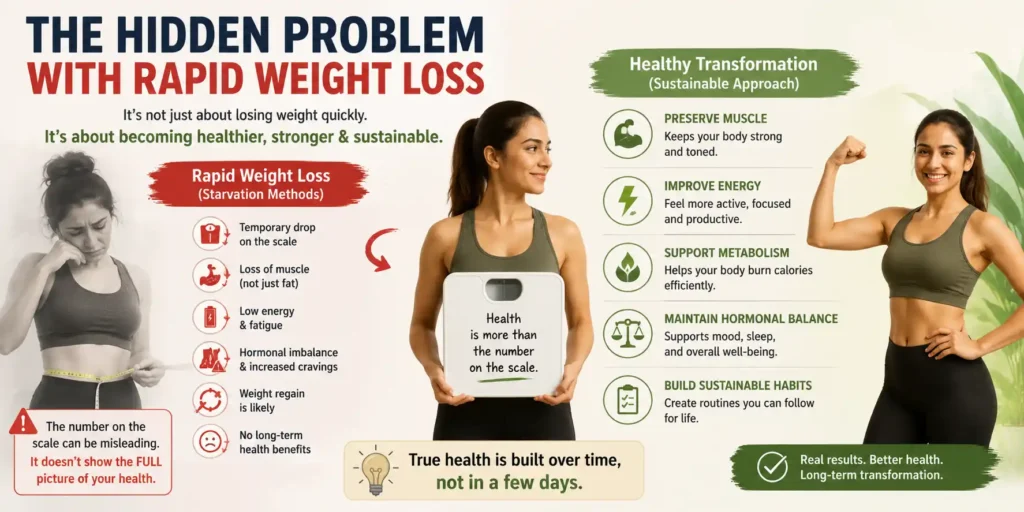
Many people focus only on the number on the weighing scale.
However, healthy transformation is not just about losing weight quickly. It is about:
- preserving muscle,
- improving energy,
- supporting metabolism,
- maintaining hormonal balance,
- building sustainable habits.
Rapid weight loss through starvation methods may temporarily reduce body weight, but it rarely creates long-term health improvements.
Signs Your Crash Diet Is No Longer Healthy
There are several warning signs that indicate restrictive dieting may be negatively affecting the body.
These signs include:
- constant fatigue,
- dizziness,
- increased cravings,
- irritability,
- poor sleep,
- headaches,
- weakness,
- hair thinning,
- mood swings,
- weight loss plateau,
- binge eating episodes.
Ignoring these symptoms may increase the risk of long-term health complications.
Frustrated with Weight Regain After Crash Dieting?
Crash diets may give quick results, but they often slow metabolism, increase cravings, and lead to rapid weight regain. Sustainable nutrition and balanced eating habits are the real keys to healthy fat loss. Get a personalised diet plan designed for safe and long-term results.
Start Your Healthy Weight Loss JourneyWhy Weight Often Comes Back Quickly
Many people regain lost weight shortly after ending a crash diet.
This happens because:
- metabolism has slowed down,
- hunger hormones increase,
- muscle mass decreases,
- cravings become stronger,
- the body stores energy more efficiently after restriction.
Once normal eating resumes, the body rapidly restores lost energy stores.
This is why crash diets often create temporary results instead of sustainable fat loss.
The Difference Between Weight Loss and Fat Loss
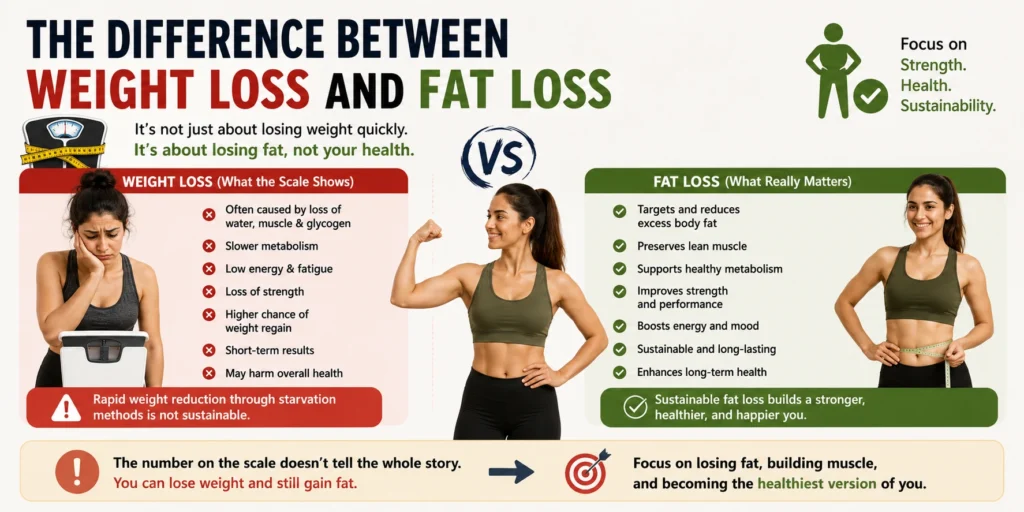
Not all weight loss is healthy fat loss.
Crash diets often reduce:
- water weight,
- muscle mass,
- glycogen stores.
Healthy fat loss focuses on:
- reducing excess body fat,
- preserving muscle,
- maintaining strength,
- improving overall health.
The weighing scale alone does not tell the full story.
The Mental Impact of Crash Dieting
Crash dieting affects emotional health as much as physical health.
Extreme restriction may lead to:
- food guilt,
- anxiety around eating,
- obsessive calorie counting,
- emotional stress,
- binge eating cycles,
- unhealthy relationships with food.
Many people become trapped in a cycle of:
restriction → cravings → overeating → guilt → restarting another diet.
This pattern can become emotionally exhausting over time.
Frustrated with Weight Regain After Crash Dieting?
Crash diets may give quick results, but they often slow metabolism, increase cravings, and lead to rapid weight regain. Sustainable nutrition and balanced eating habits are the real keys to healthy fat loss. Get a personalised diet plan designed for safe and long-term results.
Start Your Healthy Weight Loss JourneyWhy Sustainable Weight Loss Works Better
Healthy and sustainable weight management usually involves gradual lifestyle changes rather than extreme restriction.
Sustainable approaches focus on:
- balanced calorie control,
- adequate protein intake,
- regular physical activity,
- strength training,
- hydration,
- proper sleep,
- stress management.
Slow and steady progress is often easier to maintain long term.
Research consistently shows that sustainable habits are more effective than aggressive short-term dieting.
The Importance of Protein During Weight Loss
Protein is essential for preserving muscle during fat loss.
Adequate protein intake may help:
- improve fullness,
- reduce cravings,
- support metabolism,
- maintain lean muscle,
- improve recovery.
Many crash diets fail because they provide insufficient protein and overall nutrition.
Balanced meal planning is important for healthy and sustainable results.
Why Strength Training Helps Prevent Metabolic Slowdown
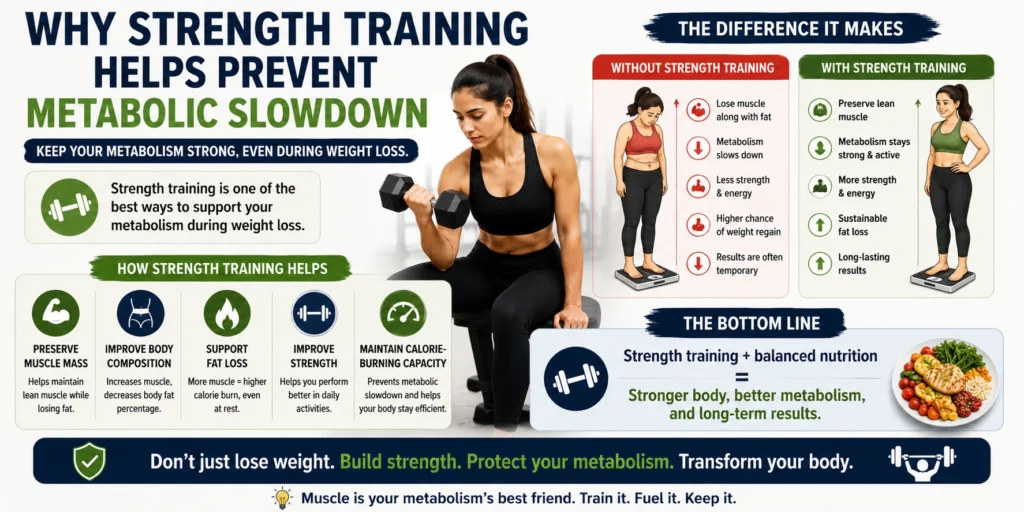
Strength training is one of the best ways to support metabolism during weight loss.
Resistance exercises may help:
- preserve muscle mass,
- improve body composition,
- support fat loss,
- improve strength,
- maintain calorie-burning capacity.
Combining strength training with balanced nutrition often produces healthier and more sustainable results than restrictive dieting alone.
Sleep and Stress Also Affect Weight Loss
Many people underestimate the role of sleep and stress in body weight management.
Poor sleep may increase:
- hunger hormones,
- sugar cravings,
- fatigue,
- emotional eating.
Chronic stress may increase cortisol levels, which can affect:
- appetite,
- fat storage,
- cravings,
- sleep quality.
Crash dieting itself creates stress on the body, making healthy weight management even more difficult.
Frustrated with Weight Regain After Crash Dieting?
Crash diets may give quick results, but they often slow metabolism, increase cravings, and lead to rapid weight regain. Sustainable nutrition and balanced eating habits are the real keys to healthy fat loss. Get a personalised diet plan designed for safe and long-term results.
Start Your Healthy Weight Loss JourneySocial Media Creates Unrealistic Expectations
Social media often promotes:
- extreme transformations,
- unrealistic timelines,
- heavily edited images,
- unhealthy dieting trends.
This creates pressure to lose weight quickly instead of focusing on long-term health.
Healthy body transformation usually requires patience, consistency, and realistic expectations.
Comparing your progress to unrealistic online standards can increase frustration and unhealthy dieting behaviors.
A Better Alternative to Crash Diets
Instead of extreme restriction, healthier approaches focus on realistic lifestyle habits.
Sustainable strategies include:
- eating balanced meals,
- improving portion control,
- increasing physical activity gradually,
- including protein in meals,
- staying hydrated,
- building long-term consistency,
- improving sleep habits.
Healthy progress does not require starving the body.
Small sustainable changes often produce better long-term outcomes than aggressive short-term diets.
Why Personalized Nutrition Matters
Every individual has different:
- lifestyle habits,
- metabolism,
- food preferences,
- activity levels,
- medical history,
- body composition,
- wellness goals.
A personalized approach helps create realistic nutrition habits that are easier to maintain long term.
At Nutridate with Priyanka, personalized nutrition guidance focuses on balanced meal planning, sustainable wellness support, and practical lifestyle changes designed around individual needs and health goals.
Common Myths About Crash Diets
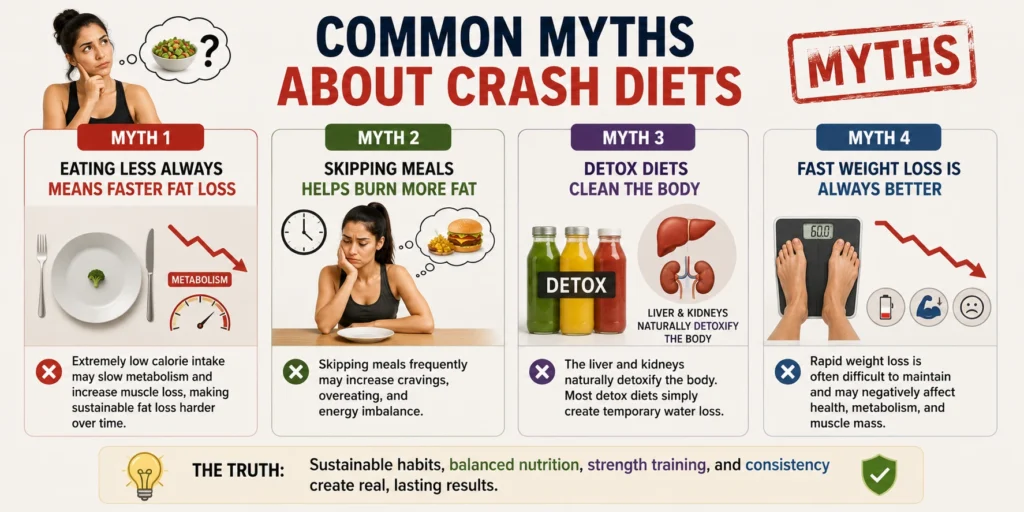
Myth 1: Eating Less Always Means Faster Fat Loss
Extremely low calorie intake may slow metabolism and increase muscle loss over time.
Myth 2: Skipping Meals Is the Best Way to Lose Weight
Skipping meals may increase hunger and lead to overeating later in the day.
Myth 3: Detox Diets Clean the Body
The body already has natural detoxification systems through the liver and kidneys.
Myth 4: Rapid Weight Loss Is Always Healthy
Fast weight loss may increase the risk of muscle loss, nutrient deficiencies, and rebound weight gain.
A Quick Recap
Crash diets may promise rapid results, but they often stop working after a few weeks because the body naturally adapts to extreme restriction.
Metabolism slows down. Hunger hormones increase. Muscle mass decreases. Energy levels drop. Eventually, maintaining the diet becomes physically and mentally exhausting.
Although restrictive diets may produce temporary weight loss, sustainable transformation requires balanced nutrition and long-term healthy habits.
Real progress comes from:
- consistency,
- realistic lifestyle changes,
- proper nutrition,
- regular physical activity,
- patience.
Instead of chasing short-term results through extreme dieting, focusing on sustainable wellness habits can help support healthier outcomes for both body and mind over the long term.
Frustrated with Weight Regain After Crash Dieting?
Crash diets may give quick results, but they often slow metabolism, increase cravings, and lead to rapid weight regain. Sustainable nutrition and balanced eating habits are the real keys to healthy fat loss. Get a personalised diet plan designed for safe and long-term results.
Start Your Healthy Weight Loss JourneyFrequently Asked Questions
Crash diets stop working because the body adapts to extreme calorie restriction. Metabolism slows down, hunger hormones increase, energy levels decrease, and the body begins conserving calories to protect itself from starvation.
Yes, very restrictive diets can slow metabolism over time. When the body receives too few calories, it tries to conserve energy by reducing the number of calories burned throughout the day.
Many people regain weight because crash diets are difficult to maintain long term. After returning to normal eating, the slowed metabolism, increased hunger, and strong cravings can lead to rapid weight regain.
Crash diets may provide temporary weight loss, but they are usually not effective for long-term results. Sustainable lifestyle changes and balanced nutrition are generally more successful for maintaining healthy body weight.
During a crash diet, the body may experience:
muscle loss,
slower metabolism,
fatigue,
nutritional deficiencies,
hormonal imbalance,
increased cravings,
low energy levels.