Emotional Eating in India: Causes, Signs and Practical Solutions
There are days when food feels like more than food.
You finish a stressful meeting and immediately want something sweet. You feel emotionally exhausted and start reaching for snacks even though dinner is already done. You promise yourself that tomorrow will be different, but the same cycle repeats.
If this feels familiar, you are not alone.
Emotional eating in India is becoming increasingly common as modern lifestyles continue to change. Busy work schedules, family responsibilities, irregular meal timing, social pressure, emotional stress, and constantly trying to balance multiple priorities can all influence the way people eat.
For many people, emotional eating does not start because they are hungry. It starts because they are overwhelmed, tired, stressed, lonely, bored, frustrated, or looking for comfort.
This is why emotional eating is often misunderstood.
People frequently blame themselves and think they lack discipline, but emotional eating is usually more complex than simply making poor food choices.
Understanding what emotional eating is, why it happens, and how to respond in healthier ways can help improve eating habits without extreme restrictions or guilt.
Struggling with Emotional Eating?
Stress, anxiety, boredom, work pressure, or emotional ups and downs can often lead to unhealthy eating habits. Get personalized nutrition guidance and practical lifestyle support to build a healthier relationship with food and manage emotional eating effectively.
Book Your Nutrition Consultation TodayWhat Is Emotional Eating?
Emotional eating refers to eating mainly because of emotions rather than physical hunger.
This does not mean enjoying comfort food is unhealthy.
Food naturally has emotional meaning in everyday life. We celebrate with food, connect through meals, and associate certain foods with comfort and memories.
Emotional eating becomes important to notice when eating repeatedly becomes the primary response to difficult emotions.
For example, someone may eat after:
Stress at work
Arguments
Feeling emotionally drained
Loneliness
Boredom
Mental fatigue
Anxiety
Instead of responding to physical hunger, the person may start using food to create temporary emotional relief.
The challenge is that while eating may provide short term comfort, it usually does not resolve the original emotional trigger.
Why Emotional Eating in India Is Becoming More Common
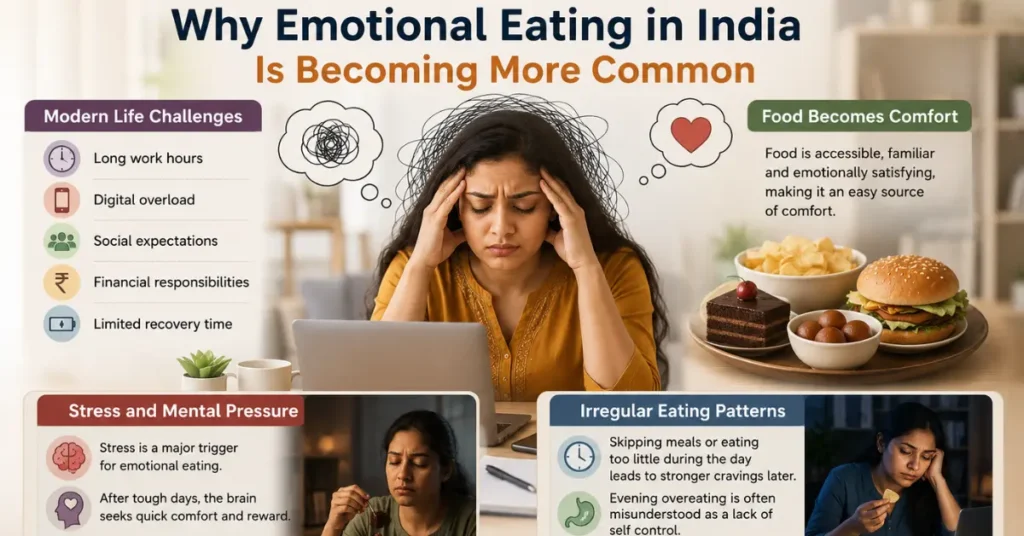
Daily life has changed significantly.
Many people today manage long work hours, digital overload, social expectations, financial responsibilities, and limited recovery time.
Food becomes one of the easiest forms of comfort because it is accessible, familiar, and emotionally satisfying.
Stress and Mental Pressure
Stress remains one of the strongest triggers behind emotional eating.
After emotionally demanding days, the brain naturally looks for quick comfort and reward.
This may increase the desire for foods that feel satisfying and familiar.
Many people notice stronger cravings during stressful periods not because they are weak, but because emotional exhaustion changes how they respond to daily choices.
Irregular Eating Patterns
Skipping meals and eating too little during the day can intensify cravings later.
People often assume evening overeating happens because of poor self control.
In reality, long gaps without eating may make food feel harder to regulate.
Struggling with Emotional Eating?
Stress, anxiety, boredom, work pressure, or emotional ups and downs can often lead to unhealthy eating habits. Get personalized nutrition guidance and practical lifestyle support to build a healthier relationship with food and manage emotional eating effectively.
Book Your Nutrition Consultation TodayEmotional Comfort and Learned Food Habits
Many of us grow up hearing messages like:
Celebrate with food.
Treat yourself.
Eat something sweet and feel better.
These experiences can gradually create emotional associations with eating.
Emotional Hunger vs Physical Hunger
Learning this difference can completely change awareness around eating.
Physical hunger develops gradually.
You are generally open to different foods and satisfaction appears after eating.
Emotional hunger usually appears suddenly.
It often feels urgent and creates cravings for specific comfort foods.
One simple question can help:
Am I hungry in my stomach or am I looking for comfort?
This small pause can improve awareness over time.
Common Signs of Emotional Eating
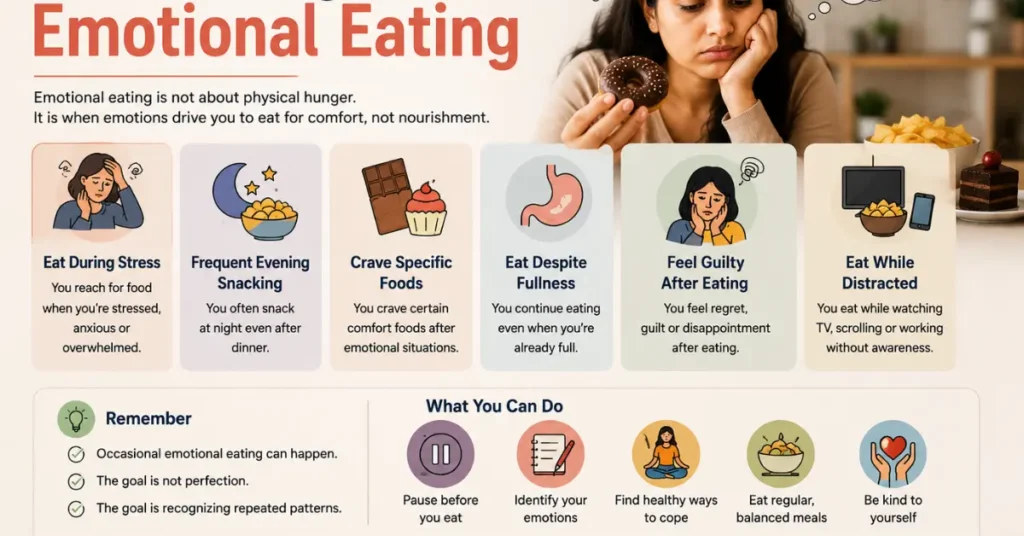
You may notice patterns such as eating during stress, frequent evening snacking, craving specific foods after emotional situations, eating despite fullness, or feeling guilty after eating.
Occasional emotional eating can happen.
The goal is not perfection.
The goal is recognizing repeated patterns.
Practical Solutions for Emotional Eating
Improving emotional eating does not require strict diets.
Sustainable habits are usually more helpful.
Start with regular meals.
Reduce long gaps between eating.
Notice emotional triggers.
Create moments of pause before cravings.
Build additional comfort habits outside food.
Focus on consistency instead of perfection.
Healthier eating patterns often become easier when emotional needs are also acknowledged.
A Quick Recap
Emotional eating in India is not simply about food.
It often reflects stress, changing routines, emotional pressure, and the search for comfort in busy lives.
Creating healthier eating habits starts with understanding emotions instead of fighting them.
Small consistent changes often create more lasting results than strict rules.
Struggling with Emotional Eating?
Stress, anxiety, boredom, work pressure, or emotional ups and downs can often lead to unhealthy eating habits. Get personalized nutrition guidance and practical lifestyle support to build a healthier relationship with food and manage emotional eating effectively.
Book Your Nutrition Consultation TodayFrequently Asked Questions
Emotional eating in India refers to eating mainly because of emotions such as stress, anxiety, boredom, frustration, or emotional exhaustion instead of physical hunger. It often involves cravings for comfort foods and may become more common during stressful routines and irregular eating habits.
Emotional eating in India can be influenced by stress, mental overload, emotional exhaustion, irregular meal timing, restrictive dieting, hormonal changes, and using food as a source of comfort during difficult situations.
Emotional eating usually appears suddenly and often creates cravings for specific foods even when physical hunger is not present. Emotional hunger may continue after fullness and is sometimes followed by guilt or frustration.
Emotional eating can affect anyone, but many women in India experience emotional eating due to busy schedules, multiple responsibilities, changing routines, emotional pressure, and lifestyle factors.
Repeated emotional eating may influence eating patterns, relationship with food, energy levels, and overall wellbeing depending on individual habits and lifestyle factors.