PCOS Weight Loss: My Step-by-Step Guide for Sustainable Results
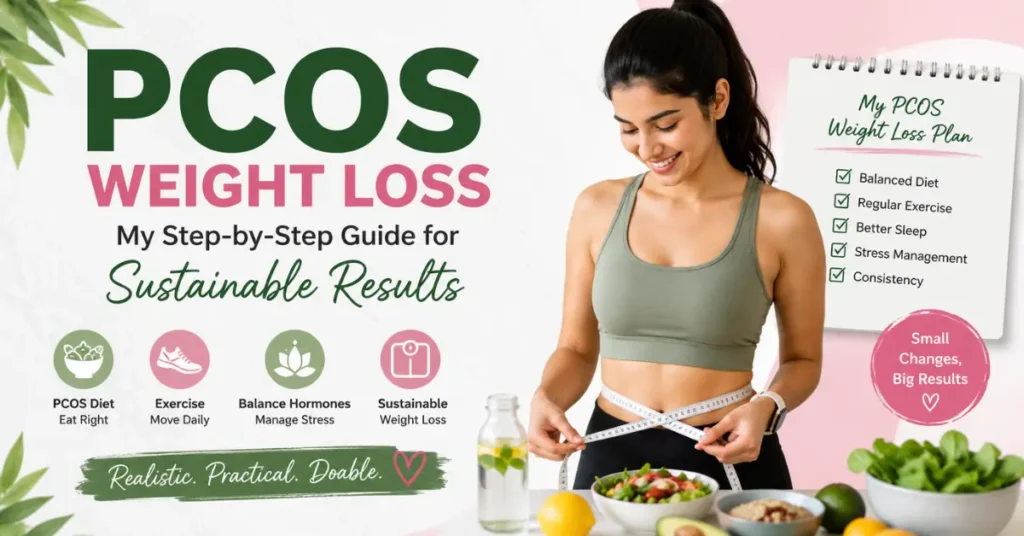
If you have PCOS and feel like your body is not responding even after eating less and exercising more, you are not doing anything wrong. PCOS weight loss works differently because hormones, insulin response, appetite, stress, and metabolism all play a role. I focus on sustainable nutrition, realistic habits, and long-term health instead of extreme dieting. This guide will help you understand exactly how to approach PCOS weight loss in a way that feels practical and achievable.
Many women tell me the same thing.
“I eat less, I exercise, but the scale does not move.”
If this sounds familiar, I want you to know that PCOS weight loss is different from traditional weight loss advice.
Polycystic Ovary Syndrome affects hormones and metabolism, which means strategies that work for others may not work for you.
That is why I focus on improving insulin response, creating balanced eating patterns, supporting hormones, and building habits that stay for life instead of short-term dieting.
If you want structured support, you can explore my personalized PCOS nutrition support
Why Is PCOS Weight Loss So Difficult Even When You Eat Less?
PCOS is not only about body weight. It affects how your body stores energy, responds to food, and regulates hunger.
Struggling with PCOS Weight Loss and Not Seeing Results?
PCOS weight loss is not only about eating less or exercising more. Hormone balance, nutrition choices, sustainable habits, and a personalised approach can support healthy weight management and long term results. Start your journey with expert diet guidance designed for PCOS.
Get Your Personalized PCOS Weight Loss PlanHow Does Insulin Resistance Affect PCOS Weight Loss?
One of the biggest reasons weight loss feels difficult in PCOS is insulin resistance.
When insulin remains elevated:
- Fat storage increases
- Cravings become stronger
- Energy crashes happen more often
- Hunger feels difficult to control
This is why simply eating fewer calories often does not solve the problem.
How Do Hormones Increase Cravings?
Many women experience:
- Constant hunger
- Sugar cravings
- Evening overeating
- Emotional eating patterns
This creates a cycle that makes consistency difficult.
Why Do Stress and Sleep Matter?
Sleep and stress affect hormones involved in hunger and recovery.
When recovery is poor, the body often struggles to maintain healthy eating routines.
If you want a deeper understanding of food structure for hormone balance, read my healthy diet plan for PCOS
Skimmable Summary
PCOS weight loss becomes difficult because insulin resistance, hormone imbalance, cravings, stress, and recovery affect metabolism. Eating less is rarely enough.
How Do I Start PCOS Weight Loss Without Starving Myself?
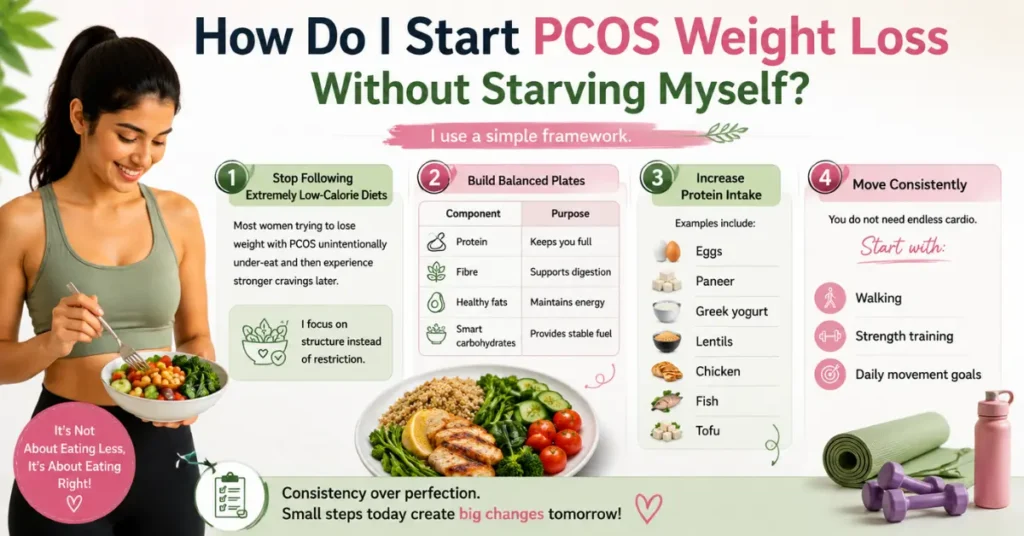
I use a simple framework.
Step 1: Stop Following Extremely Low-Calorie Diets
Most women trying to lose weight with PCOS unintentionally under-eat and then experience stronger cravings later.
I focus on structure instead of restriction.
Step 2: Build Balanced Plates
| Component | Purpose |
|---|---|
| Protein | Keeps you full |
| Fibre | Supports digestion |
| Healthy fats | Maintains energy |
| Smart carbohydrates | Provides stable fuel |
Step 3: Increase Protein Intake
Examples include:
- Eggs
- Paneer
- Greek yogurt
- Lentils
- Chicken
- Fish
- Tofu
Step 4: Move Consistently
You do not need endless cardio.
Start with:
- Walking
- Strength training
- Daily movement goals
Skimmable Summary
Start with meal balance, adequate protein, and consistency instead of starvation.
Struggling with PCOS Weight Loss and Not Seeing Results?
PCOS weight loss is not only about eating less or exercising more. Hormone balance, nutrition choices, sustainable habits, and a personalised approach can support healthy weight management and long term results. Start your journey with expert diet guidance designed for PCOS.
Get Your Personalized PCOS Weight Loss PlanWhat Does an Effective PCOS Weight Loss Diet Actually Look Like?
Many people search for the perfect PCOS weight loss diet.
The reality is that the best diet is the one you can maintain.
Foods I Encourage More Often
| Include More | Reduce Frequency |
|---|---|
| Protein-rich meals | Sugary beverages |
| Vegetables | Processed snacks |
| Fibre-rich foods | Frequent desserts |
| Healthy fats | Constant grazing |
Sample Indian PCOS Meal Structure
| Meal | Example |
|---|---|
| Breakfast | Vegetable omelette + fruit |
| Lunch | Dal + salad + roti |
| Snack | Yogurt + seeds |
| Dinner | Protein + vegetables |
Smart Food Swaps
| Instead Of | Choose |
|---|---|
| Sweet cereal | Protein breakfast |
| Juice | Whole fruit |
| Fried snacks | Roasted snacks |
For practical meal examples, explore my PCOS diet plan with Indian meals
Skimmable Summary
A successful PCOS weight loss diet prioritizes protein, fibre, balanced meals, and long-term consistency.
Can Exercise Really Help PCOS Weight Loss?
Yes.
Exercise supports hormone health and insulin response.
Walking
Start with:
20–30 minutes daily.
Strength Training
Benefits include:
- Better body composition
- Muscle support
- Improved metabolism
Weekly Routine Example
| Day | Activity |
|---|---|
| Monday | Strength |
| Tuesday | Walk |
| Wednesday | Strength |
| Thursday | Walk |
| Friday | Strength |
| Saturday | Recovery |
| Sunday | Rest |
Skimmable Summary
Exercise helps improve insulin sensitivity and body composition instead of simply burning calories.
Do PCOS Weight Loss Tablets or Medication Actually Work?
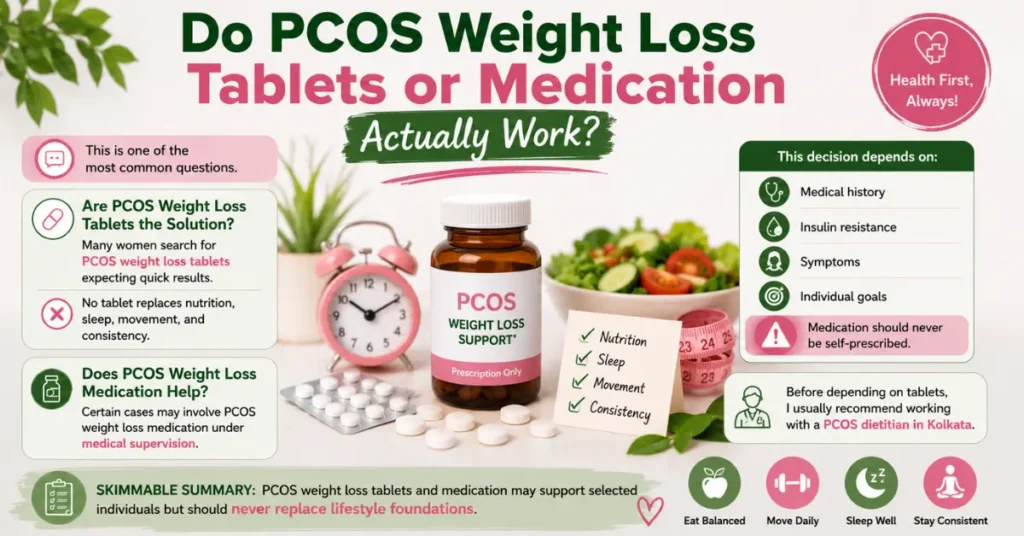
This is one of the most common questions.
Are PCOS Weight Loss Tablets the Solution?
Many women search for PCOS weight loss tablets expecting quick results.
No tablet replaces nutrition, sleep, movement, and consistency.
Does PCOS Weight Loss Medication Help?
Certain cases may involve PCOS weight loss medication under medical supervision.
This decision depends on:
- Medical history
- Insulin resistance
- Symptoms
- Individual goals
Medication should never be self-prescribed.
Before depending on tablets, I usually recommend working with a PCOS dietitian in Kolkata
Skimmable Summary
PCOS weight loss tablets and medication may support selected individuals but should never replace lifestyle foundations.
Struggling with PCOS Weight Loss and Not Seeing Results?
PCOS weight loss is not only about eating less or exercising more. Hormone balance, nutrition choices, sustainable habits, and a personalised approach can support healthy weight management and long term results. Start your journey with expert diet guidance designed for PCOS.
Get Your Personalized PCOS Weight Loss PlanWhich Common PCOS Weight Loss Mistakes Should You Avoid?
Extreme Restriction
Short-term loss often leads to rebound gain.
Removing Entire Food Groups
Restriction usually reduces sustainability.
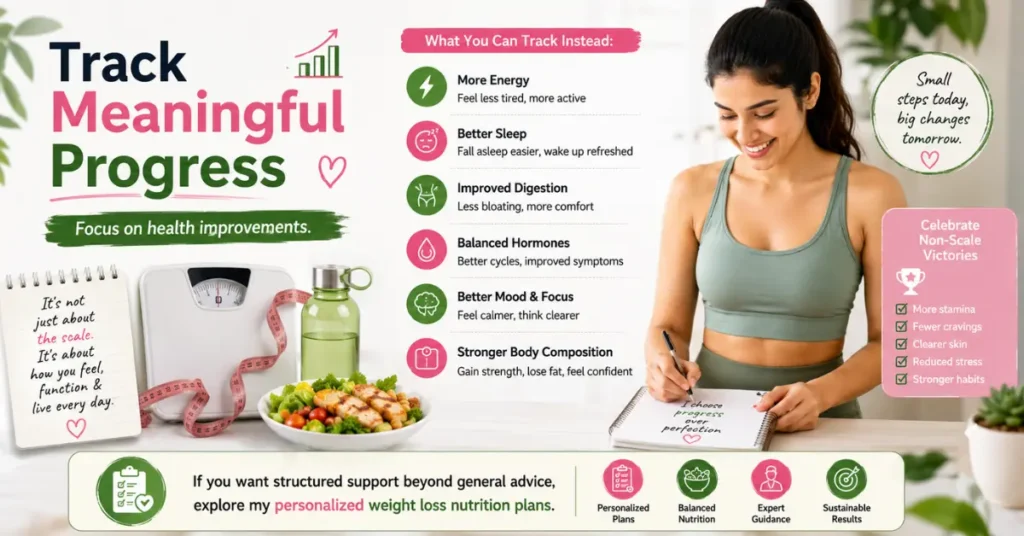
Measuring Progress Only Through Weight
Track:
- Energy
- Strength
- Sleep
- Body measurements
Overtraining
More exercise does not always mean better results.
Skimmable Summary
Avoid extremes. Sustainable routines consistently outperform aggressive approaches.
How Long Does PCOS Weight Loss Usually Take?
Progress depends on:
- Sleep
- Hormonal balance
- Insulin response
- Nutrition consistency
- Activity levels
I encourage women to measure:
- Energy
- Mood
- Strength
- Body changes
Not only the scale.
Skimmable Summary
PCOS weight loss may take longer, but realistic habits create lasting progress.
What Is My Personal Framework for Sustainable PCOS Weight Loss?
This is the framework I use.
Understand the Root Cause
Look beyond calories.
Personalize Nutrition
Avoid generic diet charts.
Build Habits Slowly
Small changes create lasting outcomes.
Track Meaningful Progress
Focus on health improvements.
If you want structured support beyond general advice, explore my personalized weight loss nutrition plans
Frequently Asked Questions
Yes, you can lose weight with PCOS.
PCOS may slow the process because hormones and insulin response affect metabolism, but it does not make weight loss impossible. I usually focus on improving meal quality, protein intake, movement, sleep, and consistency instead of extreme dieting.
The best PCOS weight loss diet is one that balances protein, fibre, healthy fats, and sustainable portions.
I do not recommend removing entire food groups. Instead, I focus on creating meals that improve fullness and support long-term hormone balance.
PCOS weight loss tablets may be appropriate in some cases, but they are not suitable for everyone.
I always recommend consulting a qualified healthcare professional before starting any tablets because the right approach depends on your health history and goals.
PCOS weight loss medication may support progress for selected individuals under medical supervision.
Medication should not replace nutrition, movement, sleep, and lifestyle habits because those remain the foundation of sustainable results.
Focus on sustainable progress instead of rapid weight loss.
Even gradual improvements can positively impact energy levels, metabolic health, and overall wellbeing.