Healthy Office Eating Habits: A Practical Guide for Indian Employees
Why Do Healthy Office Eating Habits Matter More Than You Think?
Healthy Office Eating Habits influence much more than your weight. They affect your energy, focus, productivity, digestion, mood, and long-term health. I often meet working professionals who believe they eat “less” during office hours, but when I review their daily routine, I find frequent tea breaks with biscuits, sugary coffee, packaged snacks, skipped lunches, or late-evening overeating. These small habits gradually add unnecessary calories while providing very little nutrition.
For most Indian Employees, the workday begins early and often ends late. Long commuting hours, deadlines, and continuous screen time make healthy eating an afterthought. Unfortunately, the body doesn’t ignore these patterns. Poor food choices can lead to constant fatigue, brain fog, digestive discomfort, unwanted weight gain, and increased risks of diabetes, high cholesterol, and heart disease.
Rather than focusing on strict diets, I encourage building habits that are realistic and sustainable. Healthy eating at work is about consistency, not perfection.
Finding It Difficult to Eat Healthy During Office Hours?
Long working hours, skipped meals, and unhealthy snacks can affect your energy, productivity, and overall health. Smart meal planning and balanced nutrition can help you stay active, maintain a healthy weight, and perform your best throughout the workday. Get a personalised diet plan that fits your busy lifestyle.
Get Your Personalized Office Nutrition PlanHow unhealthy office eating affects your body
| Unhealthy Habit | Possible Impact |
|---|---|
| Skipping breakfast | Low energy and increased cravings |
| Drinking sugary beverages | Blood sugar spikes and crashes |
| Eating fried snacks daily | Weight gain and poor heart health |
| Drinking too much tea or coffee | Dehydration and disturbed sleep |
| Eating lunch very late | Slower metabolism and overeating |
| Sitting all day without hydration | Poor digestion and headaches |
Quick Takeaway
Healthy Office Eating Habits improve your energy, reduce unnecessary snacking, support better concentration, and lower the risk of lifestyle diseases. Small, consistent changes have a much greater impact than following short-term diets.
How Can You Build Healthy Office Eating Habits Step by Step?
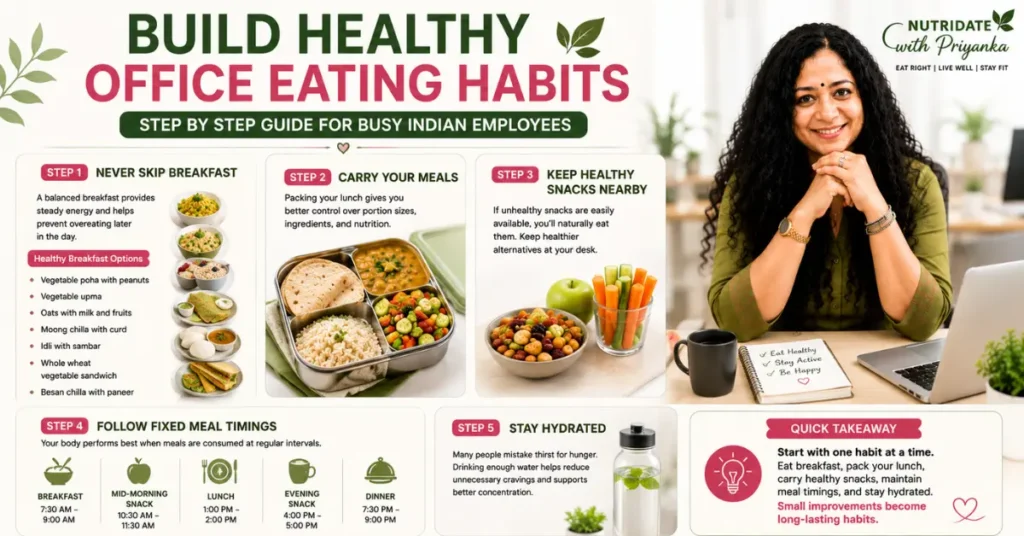
Building healthy habits doesn’t require changing your entire lifestyle overnight. I recommend making one small improvement every week. These gradual changes are easier to maintain and become part of your routine.
Step 1: Never Skip Breakfast
A balanced breakfast provides steady energy and helps prevent overeating later in the day.
Some healthy breakfast options include:
- Vegetable poha with peanuts
- Vegetable upma
- Oats with milk and fruits
- Moong chilla with curd
- Idli with sambar
- Whole wheat vegetable sandwich
- Besan chilla with paneer
Step 2: Carry Your Meals
Packing your lunch gives you better control over portion sizes, ingredients, and nutrition.
Step 3: Keep Healthy Snacks Nearby
If unhealthy snacks are easily available, you’ll naturally eat them. Instead, keep healthier alternatives at your desk.
Step 4: Follow Fixed Meal Timings
Your body performs best when meals are consumed at regular intervals.
| Meal | Recommended Time |
|---|---|
| Breakfast | 7:30 AM–9:00 AM |
| Mid-morning snack | 10:30 AM–11:30 AM |
| Lunch | 1:00 PM–2:00 PM |
| Evening snack | 4:00 PM–5:00 PM |
| Dinner | 7:30 PM–9:00 PM |
Step 5: Stay Hydrated
Many people mistake thirst for hunger. Drinking enough water helps reduce unnecessary cravings and supports better concentration.
Quick Takeaway
Start with one habit at a time. Eat breakfast, pack your lunch, carry healthy snacks, maintain meal timings, and stay hydrated. Small improvements become long-lasting habits.
What Should an Ideal Office Meal Look Like?
An ideal office meal should provide sustained energy without making you feel sluggish. I advise balancing every meal with protein, fibre, complex carbohydrates, and healthy fats.
The Healthy Office Plate Method
| Food Group | Examples |
|---|---|
| Protein | Dal, Paneer, Egg, Chicken, Fish, Soya |
| Whole Grains | Brown rice, Millets, Whole wheat roti |
| Vegetables | Seasonal vegetables, salads |
| Healthy Fats | Nuts, Seeds, Curd |
A colourful plate usually indicates better nutrient diversity.
Healthy Indian Lunch Ideas
| Monday | Rajma + Brown Rice + Salad |
| Tuesday | Roti + Paneer Bhurji + Cucumber |
| Wednesday | Vegetable Khichdi + Curd |
| Thursday | Dal + Roti + Mixed Vegetables |
| Friday | Grilled Chicken + Rice + Vegetables |
| Saturday | Chole + Salad + Roti |
These meals provide a balance of carbohydrates, protein, and fibre to help maintain energy throughout the workday.
Quick Takeaway
Your office lunch doesn’t have to be complicated. Aim for a balanced plate that includes protein, whole grains, vegetables, and healthy fats. Simple Indian meals often work better than trendy diet foods.
How Can Indian Employees Avoid Junk Food During Office Hours?
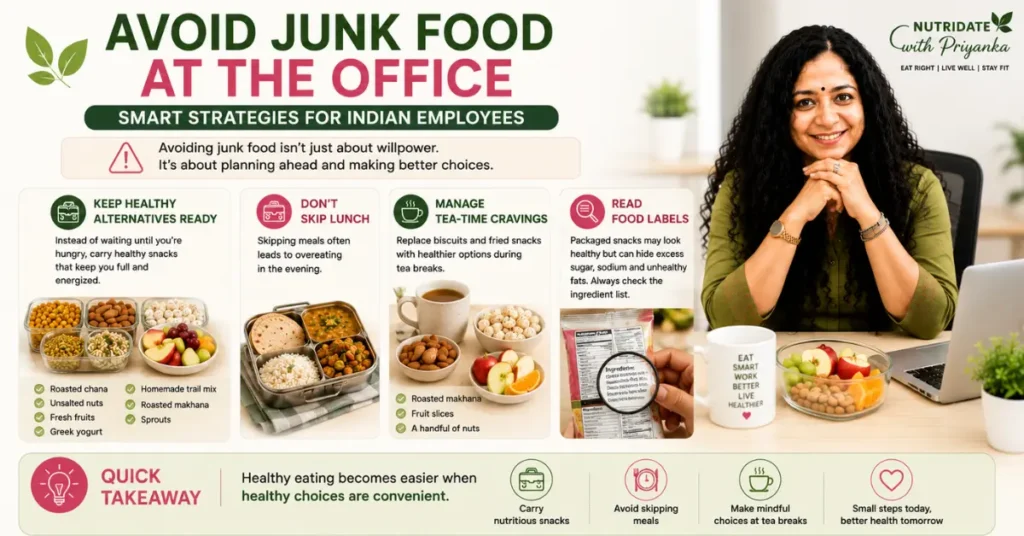
Avoiding junk food isn’t just about willpower. It’s about planning ahead.
Many workplaces have easy access to samosas, chips, sugary drinks, pastries, and instant noodles. If these are your only options when hunger strikes, you’re likely to choose them.
Here are practical strategies I recommend:
Keep Healthy Alternatives Ready
Instead of waiting until you’re hungry, carry:
- Roasted chana
- Unsalted nuts
- Fresh fruits
- Greek yogurt
- Homemade trail mix
- Roasted makhana
- Sprouts
Don’t Skip Lunch
Skipping meals often leads to overeating in the evening.
Manage Tea-Time Cravings
Tea breaks are common in Indian offices. Instead of pairing tea with biscuits every day, choose healthier options like roasted makhana, fruit slices, or a handful of nuts.
Read Food Labels
Packaged snacks may appear healthy but can contain excessive sugar, sodium, and unhealthy fats. Always check ingredient lists before buying.
Quick Takeaway
Healthy eating becomes easier when healthy choices are convenient. Carry nutritious snacks, avoid skipping meals, and make mindful decisions during tea breaks instead of relying on willpower alone.
Finding It Difficult to Eat Healthy During Office Hours?
Long working hours, skipped meals, and unhealthy snacks can affect your energy, productivity, and overall health. Smart meal planning and balanced nutrition can help you stay active, maintain a healthy weight, and perform your best throughout the workday. Get a personalised diet plan that fits your busy lifestyle.
Get Your Personalized Office Nutrition PlanWhich Healthy Snacks Keep You Full Without Weight Gain?
Healthy snacks help bridge the gap between meals, prevent excessive hunger, and reduce the temptation to order fast food. I always tell my clients that snacks should satisfy hunger, not simply entertain the taste buds. A good snack combines protein, fibre, and healthy fats to keep you full for longer.
Best Healthy Office Snacks
| Snack | Why It’s a Good Choice |
|---|---|
| Roasted makhana | Low in calories and high in minerals |
| Roasted chana | Rich in protein and fibre |
| Mixed nuts (unsalted) | Healthy fats and sustained energy |
| Fresh fruits | Natural sugars, vitamins, and hydration |
| Greek yogurt or curd | Protein and gut-friendly probiotics |
| Sprouts chaat | High protein and fibre |
| Vegetable sticks with hummus | Filling and nutrient-dense |
| Boiled eggs | Excellent source of protein |
| Homemade trail mix | Balanced and easy to carry |
Snacks to Limit
- Cream biscuits
- Chips
- Instant noodles
- Sugary cereals
- Pastries
- Sweetened beverages
- Deep-fried namkeen
Skimmable Summary: Choose snacks that combine protein, fibre, and healthy fats. Keep nutritious options at your desk so you don’t rely on vending machines or food delivery apps.
How Much Water Should You Drink at Work?
Hydration is one of the simplest yet most ignored Healthy Office Eating Habits. Even mild dehydration can reduce concentration, increase fatigue, and trigger headaches. Many people mistake thirst for hunger and end up eating unnecessary snacks.
While water needs vary based on age, activity level, and climate, most adults benefit from drinking water consistently throughout the day instead of consuming large amounts at once.
Simple Ways to Stay Hydrated
- Keep a reusable water bottle on your desk.
- Drink a glass of water before every meal.
- Set reminders if you often forget to drink.
- Include water-rich foods like cucumber, watermelon, and oranges.
- Limit sugary drinks and excessive caffeinated beverages.
| Time | Hydration Goal |
|---|---|
| Morning | 1–2 glasses after waking |
| Before lunch | 2–3 glasses |
| Afternoon | 2–3 glasses |
| Evening | 1–2 glasses |
Skimmable Summary: Drink water regularly throughout the day. Proper hydration supports digestion, concentration, energy levels, and helps prevent unnecessary snacking.
How Can Meal Planning Save Time and Improve Your Health?
Meal planning removes the stress of deciding what to eat every day. I have noticed that people who prepare their meals in advance are less likely to order unhealthy food during busy workdays.
Weekend Meal Preparation Tips
- Plan your weekly menu.
- Buy seasonal fruits and vegetables.
- Cook extra portions for the next day.
- Prepare healthy snacks in advance.
- Store meals in portion-sized containers.
Benefits of Meal Planning
| Without Meal Planning | With Meal Planning |
|---|---|
| Frequent food delivery | Home-cooked meals |
| Impulsive eating | Better food choices |
| Higher food expenses | Budget-friendly eating |
| Inconsistent nutrition | Balanced meals |
Skimmable Summary: Meal planning saves time, reduces stress, and helps maintain consistency with healthy eating, even during hectic workweeks.
How Can You Eat Healthy During Office Parties and Team Lunches?
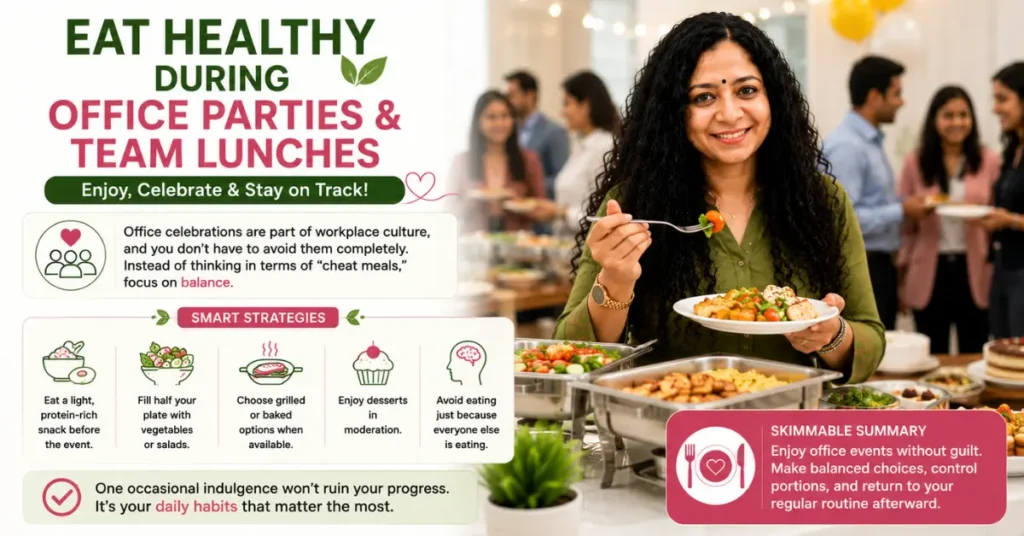
Office celebrations are part of workplace culture, and you don’t have to avoid them completely. Instead of thinking in terms of “cheat meals,” focus on balance.
Smart Strategies
- Eat a light, protein-rich snack before the event.
- Fill half your plate with vegetables or salads.
- Choose grilled or baked options when available.
- Enjoy desserts in moderation.
- Avoid eating just because everyone else is eating.
One occasional indulgence won’t ruin your progress. It’s your daily habits that matter the most.
Skimmable Summary: Enjoy office events without guilt. Make balanced choices, control portions, and return to your regular routine afterward.
What Are the Biggest Mistakes Office Workers Make While Eating?
Many unhealthy eating patterns develop gradually and go unnoticed. Recognising these mistakes is the first step toward building better Habits for Indian Employees.
Common Mistakes
- Skipping breakfast
- Eating lunch very late
- Drinking too much tea or coffee
- Eating while working
- Ignoring portion sizes
- Depending on packaged snacks
- Drinking sugary beverages daily
- Not drinking enough water
- Eating dinner very late after work
Better Alternatives
| Mistake | Better Habit |
|---|---|
| Skip breakfast | Eat a balanced breakfast |
| Eat at desk without awareness | Take a proper lunch break |
| Tea with biscuits multiple times | Fruit or roasted chana |
| Sugary soft drinks | Water or buttermilk |
| Late-night overeating | Eat balanced meals throughout the day |
Skimmable Summary: Most office eating mistakes are habit-based rather than knowledge-based. Small daily corrections can significantly improve your health over time.
How Do Healthy Office Eating Habits Improve Productivity?
Healthy eating doesn’t just benefit your body-it also supports your work performance. Balanced meals provide steady energy, helping you stay focused, think clearly, and avoid the afternoon slump.
When your meals include protein, fibre, and complex carbohydrates, your blood sugar remains more stable, which can improve concentration and reduce fatigue.
Many professionals notice that eating healthier also improves sleep quality, mood, and overall work satisfaction.
Skimmable Summary: Nutritious meals help maintain consistent energy, improve focus, reduce fatigue, and support better productivity throughout the workday.
Finding It Difficult to Eat Healthy During Office Hours?
Long working hours, skipped meals, and unhealthy snacks can affect your energy, productivity, and overall health. Smart meal planning and balanced nutrition can help you stay active, maintain a healthy weight, and perform your best throughout the workday. Get a personalised diet plan that fits your busy lifestyle.
Get Your Personalized Office Nutrition PlanHow Can You Make These Healthy Office Eating Habits Last for Life?
Long-term success comes from building routines you can realistically maintain. I don’t believe in strict diets that eliminate your favourite foods. Instead, I encourage simple habits that naturally fit into your daily schedule.
Start with one change this week, such as carrying a healthy snack or drinking more water. Once that becomes routine, add another healthy habit. Over time, these small actions become effortless.
Remember, consistency always beats perfection.
Skimmable Summary: Sustainable habits are built gradually. Focus on progress rather than perfection, and create routines that fit your lifestyle instead of following restrictive diets.
Frequently Asked Questions
Yes, healthy snacking is completely fine. If you feel hungry between meals, choose snacks such as fruits, roasted chana, nuts, sprouts, or yogurt instead of chips or sweets. I often recommend planned snacks because they help prevent overeating during lunch or dinner.
A balanced lunch containing protein, whole grains, vegetables, and healthy fats is one of the best choices. Meals like dal with roti and vegetables, rajma with brown rice, paneer with whole wheat chapati, or grilled chicken with salad provide sustained energy throughout the day.
Plan your meals and don’t let yourself get overly hungry. I have found that people who skip meals are more likely to crave fried or sugary foods. Carrying healthy snacks and drinking enough water can also reduce cravings.
Moderation is important. Having one or two cups is generally fine for most people, but excessive tea or coffee-especially with sugar and biscuits-can contribute to excess calorie intake and affect hydration.
Yes, absolutely. Consistently choosing balanced meals, controlling portions, staying hydrated, and limiting processed foods can support healthy weight management without extreme dieting.