Best Time to Eat Fruits: Complete Guide for Maximum Health Benefits
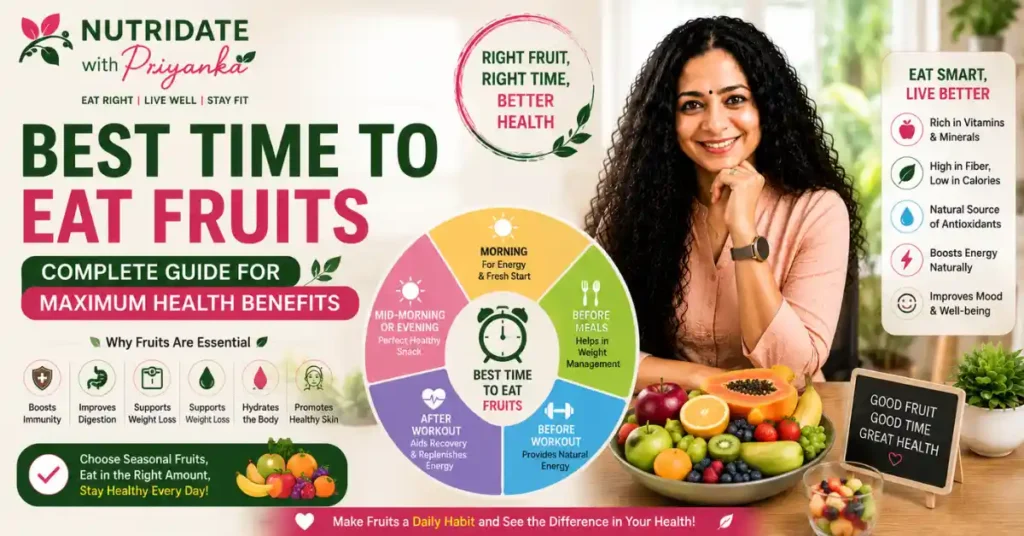
The best time to eat fruits depends on your health goals, daily routine, and medical condition rather than a fixed clock. In my experience as a dietitian, choosing the right fruit at the right time can help improve digestion, support weight loss, manage blood sugar, and keep you energized throughout the day. Instead of following common myths, I always encourage focusing on consistency, portion size, and pairing fruits wisely with your overall diet.
Fruits are among the healthiest foods you can include in your daily diet. They are naturally rich in vitamins, minerals, antioxidants, fiber, and water, making them an excellent choice for people of all ages. Yet one question I hear almost every day from my clients is, “What is the best time to eat fruits?”
Some people believe fruits should only be eaten in the morning, while others avoid them at night because they think fruit sugar leads to weight gain. There are also myths about eating fruits on an empty stomach or immediately after meals. These conflicting opinions often create unnecessary confusion.
The truth is that fruit timing is important only when it supports your individual health goals. If your aim is to improve digestion, lose weight, manage diabetes, or enhance workout performance, small changes in when you eat fruits can make your eating pattern more effective.
In this guide, I will explain when to eat fruits, when to avoid certain habits, and how to make fruit a healthy part of your everyday routine based on science and my practical experience with clients.
What Is the Best Time to Eat Fruits?
There isn’t one universal “best” time that works for everyone. Instead, the ideal time depends on your lifestyle, activity level, health condition, and eating habits.
For most healthy individuals, I recommend eating fruits:
- In the morning after breakfast or as part of breakfast
- Between meals as a healthy snack
- Before a workout for quick natural energy
- Before meals if your goal is weight management
These timings help you enjoy the fiber, natural sugars, vitamins, and antioxidants in fruits without replacing balanced meals.
If you frequently crave sugary snacks during the afternoon, replacing biscuits or packaged snacks with seasonal fruits is one of the easiest changes you can make. Many of my clients notice improved energy and fewer cravings simply by making this switch.
Want to Get the Maximum Benefits from Eating Fruits?
Eating fruits at the right time can support better digestion, improve energy levels, help with weight management, and provide essential vitamins and antioxidants. A personalized nutrition plan can help you choose the best fruits and the right time to enjoy them based on your health goals.
Get Your Personalized Nutrition Plan TodayWhen different timings work best
| Goal | Best Time to Eat Fruits |
|---|---|
| Better digestion | Mid-morning |
| Weight loss | 30–60 minutes before meals |
| Workout energy | 30–45 minutes before exercise |
| Recovery | Within an hour after exercise |
| Healthy snacking | Between meals |
| Hydration | Morning or afternoon |
Skimmable Summary
The best time to eat fruits depends on your goal rather than a universal rule. Morning, between meals, before workouts, and before meals for weight management are practical options for most people.
Does Fruit Timing Really Matter for Your Health?
This is probably the biggest misconception surrounding fruits.
From my experience, what you eat consistently is much more important than the exact time you eat it. However, timing can improve comfort, digestion, appetite control, and energy levels.
For example, eating a fiber-rich apple before lunch may help you feel fuller, while having a banana before exercise provides easily available carbohydrates for energy.
Similarly, someone managing diabetes may benefit from eating fruit alongside a balanced meal instead of consuming large portions on its own.
Fruit timing becomes more relevant when you have specific health goals such as:
Weight Loss
Eating fruit before meals may help reduce overall calorie intake because fiber promotes fullness.
Diabetes
Pairing fruits with protein or healthy fats can help slow glucose absorption.
Sports Performance
Bananas, oranges, and dates provide quick carbohydrates before workouts.
Digestive Health
Papaya, kiwi, and pears can support healthy digestion due to their fiber and natural enzymes.
Skimmable Summary
Fruit timing is a supportive strategy, not a magic solution. Your overall eating pattern, food quality, and consistency have a much greater impact on long-term health.
Should You Eat Fruits on an Empty Stomach?
Yes, many people can comfortably eat fruits on an empty stomach, but it is not essential for everyone.
One myth I often hear is that fruits lose all their nutritional value if they are eaten after meals. There is no strong scientific evidence to support this claim.
Some people feel light and energetic after eating fruits first thing in the morning, while others experience acidity, bloating, or hunger shortly afterward. This usually depends on individual digestive tolerance.
If you have:
- Acid reflux
- Gastritis
- IBS
- Sensitive digestion
you may tolerate fruits better after a balanced breakfast rather than on an empty stomach.
For most healthy adults, eating fruits on an empty stomach is perfectly safe. However, comfort should always guide your choice.
Want to Get the Maximum Benefits from Eating Fruits?
Eating fruits at the right time can support better digestion, improve energy levels, help with weight management, and provide essential vitamins and antioxidants. A personalized nutrition plan can help you choose the best fruits and the right time to enjoy them based on your health goals.
Get Your Personalized Nutrition Plan TodayFruits that are usually well tolerated in the morning
| Fruit | Why It Works Well |
|---|---|
| Papaya | Gentle on digestion |
| Apple | High fiber |
| Pear | Good hydration |
| Kiwi | Vitamin C and fiber |
| Berries | Antioxidants |
Skimmable Summary
Eating fruits on an empty stomach is healthy for many people, but it is not mandatory. If it causes discomfort, enjoy fruits after a balanced meal instead.
Is It Better to Eat Fruits Before or After Meals?
This is another question I receive almost every week.
The answer depends on what you want to achieve.
If your goal is weight management, eating fruits before meals can increase fullness and may naturally reduce portion sizes during the meal.
If your goal is simply to increase your daily fruit intake, eating fruits after meals is also perfectly acceptable, especially if it helps replace desserts high in added sugar.
For people with diabetes, I often recommend pairing fruit with meals or combining it with a source of protein, such as Greek yogurt or a handful of nuts, to support steadier blood sugar levels.
Here is a simple comparison:
| Before Meals | After Meals |
|---|---|
| Helps increase fullness | Can replace sugary desserts |
| May reduce calorie intake | Convenient habit |
| Useful for weight loss | Suitable for most healthy adults |
| Supports portion control | Easier to maintain consistently |
The best option is the one that fits naturally into your routine and helps you eat fruits consistently.
Skimmable Summary
Eating fruits before meals may support appetite control and Eat Fruits for Weight Loss, while eating them after meals can still be a healthy habit if it replaces less nutritious desserts. Consistency matters more than perfection.
What Is the Best Time to Eat Fruits for Weight Loss?
If your goal is weight loss, one of the most common questions you may have is whether eating fruits at a specific time can speed up fat loss. Based on my experience, the best time to eat fruits for weight loss is when they help you control hunger and prevent overeating, not because the clock changes how your body burns calories.
Many of my clients start eating fruits only after they decide to lose weight. Unfortunately, they often replace meals with fruits or avoid fruits completely because they are worried about the natural sugar content. Neither approach is ideal.
Whole fruits contain fiber, water, vitamins, and antioxidants that help you stay fuller for longer. When eaten strategically, they can reduce cravings for sweets and make it easier to maintain a calorie deficit, which is the real driver of weight loss.
Eat Fruits Before Your Main Meals
Eating a fruit about 30 to 45 minutes before lunch or dinner may help reduce hunger. High-fiber fruits slow digestion and increase satiety, making it easier to control portion sizes.
For example, if you often feel extremely hungry before lunch, having an apple or guava beforehand can prevent overeating.
Replace Unhealthy Snacks with Fruits
One habit I encourage is swapping processed snacks with fresh fruits. Instead of reaching for biscuits, chips, or sugary drinks in the afternoon, choose seasonal fruits.
This simple habit often reduces unnecessary calorie intake while improving your intake of fiber and essential nutrients.
Eat Fruits Around Your Workout
If you exercise regularly, fruits can also support your workouts.
Before exercise: Bananas, dates, or apples provide natural carbohydrates for energy.
After exercise: Pair fruits with a protein source like Greek yogurt, milk, or paneer to support recovery.
Best Fruits for Weight Loss
| Fruit | Why It Helps |
|---|---|
| Apple | High fiber and filling |
| Guava | Rich in fiber and vitamin C |
| Orange | Low calorie and hydrating |
| Papaya | Supports digestion |
| Pear | Helps control appetite |
| Berries | High antioxidants and low calories |
| Watermelon | Hydrating and naturally low in calories |
Foods to Pair with Fruits
| Fruit | Healthy Pairing |
|---|---|
| Apple | Peanut butter |
| Banana | Greek yogurt |
| Papaya | Cottage cheese |
| Orange | Mixed nuts |
| Berries | Plain yogurt |
| Guava | Roasted seeds |
These combinations increase satiety and help stabilize blood sugar levels.
Skimmable Summary
The Best Time to Eat Fruits for Weight Loss is before meals, between meals, or around workouts if it helps reduce hunger and supports healthy eating habits. The focus should always be on overall calorie balance rather than fruit timing alone.
Can You Eat Fruits at Night Without Gaining Weight?
Yes, you can.
This is one of the biggest myths I hear from clients.
Eating fruits at night does not automatically lead to weight gain. Your body does not suddenly store fruit as fat just because the sun has set. Weight gain occurs when you consistently consume more calories than your body needs over time.
If eating fruit at night helps you avoid high-calorie desserts, it can actually support your weight-loss journey.
However, there are a few practical points to consider.
If you experience acidity, bloating, or indigestion, very large portions of fruit close to bedtime may not feel comfortable. In such cases, I recommend eating fruit at least one to two hours before sleeping.
Better Fruits for Evening
- Kiwi
- Pear
- Apple
- Guava
- Berries
Fruits to Eat in Moderate Portions at Night
- Mango
- Grapes
- Banana (especially if you have a sedentary lifestyle and large portion sizes)
These fruits are still healthy, but portion control is important.
Skimmable Summary
Eating fruits at night does not cause weight gain. Portion size, total calorie intake, and your overall lifestyle matter much more than the time on the clock.
Want to Get the Maximum Benefits from Eating Fruits?
Eating fruits at the right time can support better digestion, improve energy levels, help with weight management, and provide essential vitamins and antioxidants. A personalized nutrition plan can help you choose the best fruits and the right time to enjoy them based on your health goals.
Get Your Personalized Nutrition Plan TodayWhich Fruits Are Best at Different Times of the Day?
Different fruits can fit naturally into different parts of your day depending on your energy needs and routine.
Morning Fruits
Morning is a good time for fruits that provide hydration, fiber, and vitamins.
Examples include:
- Papaya
- Apple
- Orange
- Kiwi
- Berries
These fruits can be enjoyed with breakfast or as part of a balanced morning snack.
Mid-Morning Fruits
If you often feel hungry between breakfast and lunch, fruits make an excellent snack.
Good choices include:
- Guava
- Pear
- Apple
- Watermelon
- Muskmelon
These fruits help maintain energy while reducing cravings for processed foods.
Pre-Workout Fruits
Choose fruits rich in natural carbohydrates for quick energy.
Best options include:
- Banana
- Dates
- Apple
- Orange
Eat them around 30–60 minutes before exercise.
Post-Workout Fruits
After exercise, fruits can help replenish glycogen stores when paired with protein.
Examples include:
- Banana with yogurt
- Mixed berries with Greek yogurt
- Papaya with cottage cheese
Evening Fruits
Choose lighter fruits if you prefer a healthy evening snack.
Good options include:
- Apple
- Kiwi
- Pear
- Guava
Fruit Timing Chart
| Time | Best Fruits |
|---|---|
| Morning | Papaya, Apple, Orange |
| Mid-Morning | Pear, Guava, Watermelon |
| Before Workout | Banana, Dates |
| After Workout | Banana, Berries |
| Evening | Kiwi, Apple, Pear |
Skimmable Summary
Choosing fruits according to your daily routine can improve convenience, energy, and consistency. There is no universally perfect fruit, only the fruit that fits your lifestyle and health goals.
How Should People with Diabetes, PCOS, or Thyroid Eat Fruits?
Fruit recommendations should always be personalized. The ideal timing and portion size can vary depending on your health condition.
Diabetes
If you have diabetes, you do not need to avoid fruits completely. Instead, focus on portion control and pairing fruits with protein or healthy fats.
Good choices include:
- Apple
- Guava
- Pear
- Berries
- Orange
Avoid drinking fruit juices regularly because they contain less fiber than whole fruits.
PCOS
Women with PCOS can absolutely enjoy fruits as part of a balanced diet. I usually recommend spreading fruit intake throughout the day rather than eating large quantities at once.
Pairing fruits with nuts or yogurt may also help improve satiety.
Thyroid
There is no evidence that most fruits negatively affect thyroid function. A balanced diet with adequate fruits, vegetables, protein, and healthy fats is generally beneficial.
Skimmable Summary
People with diabetes, PCOS, or thyroid conditions can safely include fruits in their diet. The key is choosing whole fruits, watching portions, and pairing them wisely rather than avoiding them altogether.
What Are the Most Common Fruit Eating Mistakes I See?
During consultations, I notice several habits that often prevent people from getting the full benefits of fruits.
Mistake 1: Replacing Complete Meals with Fruits
Fruit is nutritious but does not provide enough protein or healthy fats to replace balanced meals regularly.
Mistake 2: Drinking Fruit Juice Instead of Eating Whole Fruit
Whole fruits provide fiber, which helps regulate blood sugar and keeps you full.
Mistake 3: Eating Very Large Portions
Healthy foods can still contribute excess calories when eaten in very large amounts.
Mistake 4: Believing Fruit Sugar Is Harmful
The natural sugar in whole fruits comes packaged with fiber, vitamins, and antioxidants. This is very different from added sugars in sweets and sugary beverages.
Mistake 5: Ignoring Seasonal Fruits
Seasonal fruits are often fresher, more nutritious, and more affordable.
Want to Get the Maximum Benefits from Eating Fruits?
Eating fruits at the right time can support better digestion, improve energy levels, help with weight management, and provide essential vitamins and antioxidants. A personalized nutrition plan can help you choose the best fruits and the right time to enjoy them based on your health goals.
Get Your Personalized Nutrition Plan TodayMyth vs Reality
| Myth | Reality |
|---|---|
| Fruits at night cause weight gain | False |
| Fruit sugar is unhealthy | Whole fruits are healthy |
| Fruit should never be eaten after meals | Depends on personal preference |
| Juice is equal to fruit | Whole fruit is the better choice |
| More fruit is always better | Portion size still matters |
Skimmable Summary
Avoiding common mistakes such as replacing meals with fruit, drinking fruit juice regularly, or fearing natural fruit sugars can help you enjoy the full health benefits of fruits.
How Can You Build the Perfect Fruit Eating Routine?
Knowing the best time to eat fruits is only one part of the equation. The real benefit comes from building a routine that you can follow consistently. I always remind my clients that healthy eating should fit into their lifestyle, not make life more complicated.
If you are unsure where to begin, follow these simple steps.
Step 1: Choose Whole Fruits Over Juices
Whole fruits contain fiber, which slows down the absorption of natural sugars and helps you stay full for longer. Fruit juices, even when freshly prepared, often lack fiber and can cause a quicker rise in blood sugar.
Step 2: Eat Seasonal and Local Fruits
Seasonal fruits are usually fresher, more nutritious, and easier to include in your daily meals. They also add variety to your diet throughout the year.
Step 3: Spread Fruit Intake Throughout the Day
Instead of eating three or four servings at once, distribute them across the day. This approach helps maintain energy levels and makes it easier to meet your daily fruit intake.
Step 4: Pair Fruits with Protein or Healthy Fats When Needed
If you have diabetes, PCOS, or experience frequent hunger, pairing fruits with a source of protein or healthy fats may improve satiety and support steadier blood sugar levels.
Examples include:
- Apple with peanut butter
- Guava with roasted seeds
- Berries with Greek yogurt
- Banana with unsweetened yogurt
- Pear with almonds
Step 5: Listen to Your Body
Not everyone digests fruits in the same way. Some people feel their best eating fruits in the morning, while others prefer them as an afternoon snack. There is no need to force a routine that does not suit your body.
One of the most valuable lessons I have learned while working with clients is that consistency always beats perfection.
Sample Daily Fruit Timing Plan
| Time | What You Can Eat |
|---|---|
| Breakfast | Papaya or Apple |
| Mid-Morning Snack | Guava or Pear |
| Before Workout | Banana |
| Afternoon Snack | Orange or Watermelon |
| Evening Snack | Kiwi or Apple |
This is only an example. Your routine should always match your health goals, medical conditions, and daily schedule.
Skimmable Summary
Build a sustainable fruit-eating routine by choosing whole fruits, eating seasonal varieties, spreading your intake throughout the day, pairing fruits wisely when needed, and following a routine that fits your lifestyle.
Quick Fruit Timing Cheat Sheet
| Goal | Best Time | Best Fruits |
|---|---|---|
| Weight Loss | Before meals | Apple, Guava, Pear |
| Better Digestion | Morning or Mid-Morning | Papaya, Kiwi |
| Energy | Morning | Banana, Orange |
| Workout | 30–60 Minutes Before Exercise | Banana, Dates |
| Recovery | After Exercise | Banana, Berries |
| Healthy Evening Snack | 1–2 Hours Before Bed | Apple, Kiwi, Pear |
| Diabetes | With or After Balanced Meals | Apple, Guava, Berries |
Key Takeaways
- There is no single perfect time to eat fruits for everyone.
- Your overall diet and consistency matter more than fruit timing alone.
- Morning and between meals are convenient times for most people.
- If your goal is to Eat Fruits for Weight Loss, eating fruits before meals may help manage hunger.
- Eating fruits at night does not automatically cause weight gain.
- Whole fruits are always a better choice than fruit juices.
- Pairing fruits with protein or healthy fats can improve satiety and blood sugar control for some individuals.
- Focus on seasonal, whole fruits and portions that suit your needs.
Frequently Asked Questions
The best time to eat fruits is whenever they fit naturally into your healthy eating routine. Morning, between meals, or before workouts are excellent choices for most people.
I usually advise my clients to choose a time they can follow consistently rather than worrying about finding the “perfect” hour. A healthy habit that lasts is always more beneficial than a strict routine that is difficult to maintain.
The best time to eat fruits for weight loss is before meals or as a healthy snack between meals.
This can help reduce hunger and make it easier to avoid overeating. However, remember that sustainable weight loss depends on your overall calorie intake, physical activity, sleep, and balanced nutrition—not fruit timing alone.
Yes, you can eat fruits at night.
Eating fruits in the evening does not automatically lead to weight gain. If fruit helps you avoid sugary desserts or processed snacks, it can actually support healthier eating habits. Just avoid very large portions right before bedtime if you experience digestive discomfort.
Both options can be healthy depending on your goal.
Eating fruits before meals may help with appetite control, while eating them after meals can be a healthier alternative to desserts. I encourage choosing the option that feels practical and sustainable for your routine.
Yes, people with diabetes can eat whole fruits in appropriate portions.
I recommend choosing fiber-rich fruits like apples, guava, berries, and pears, while pairing them with balanced meals or a source of protein when appropriate. Whole fruits are generally a better choice than fruit juices because they contain more fiber.