76-Year-Old Woman Improved Diabetes & Kidney Health in 8 Weeks
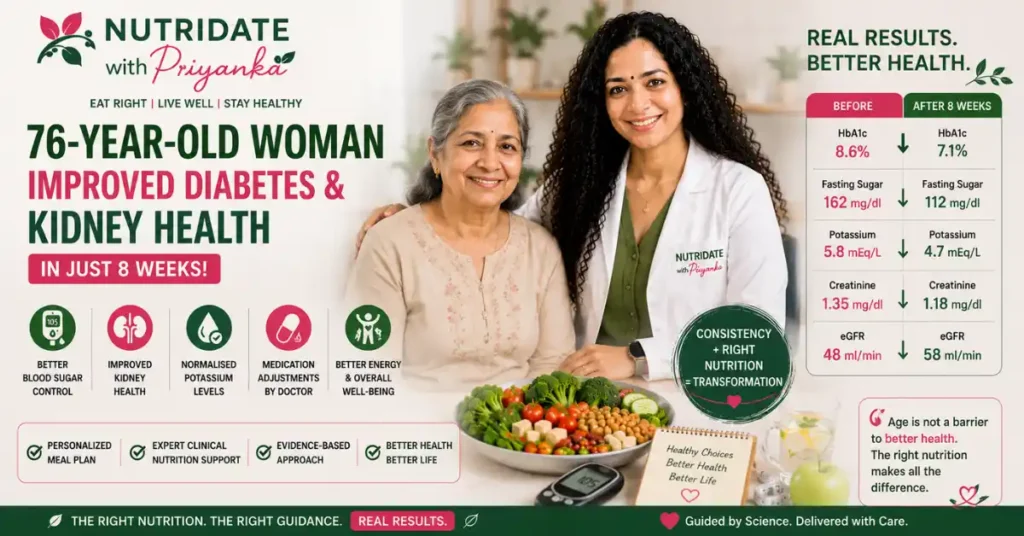
Managing a single medical condition through diet can be challenging. But when a person is living with multiple health conditions that require completely different dietary approaches, the challenge becomes far greater.
This is the real story of a 76-year-old woman who came to Nutridate with Priyanka seeking help for multiple health concerns. She wasn’t looking for a quick fix. She wanted to improve her health, reduce health risks, and regain confidence in her everyday life.
Her remarkable transformation within just eight weeks highlights how evidence-based nutrition, personalized meal planning, and patient commitment can create life-changing results.
The Challenge
When she first consulted us, she was struggling with several interconnected medical conditions, including:
- Long-standing Type 2 Diabetes
- High potassium levels (Hyperkalemia)
- Kidney-related health concerns requiring dietary management
- Multiple medications
- Advanced age requiring careful nutritional planning
Each of these conditions demands a different nutritional approach.
For example:
A diabetes diet focuses on controlling blood sugar.
A kidney-friendly diet often limits certain fruits, vegetables, minerals, and protein intake.
High potassium requires avoiding many foods that are otherwise considered healthy.
Balancing all these requirements without compromising nutrition becomes one of the most difficult aspects of clinical dietetics.
Looking to Manage Diabetes and Improve Kidney Health Naturally?
This inspiring journey of a 76-year-old woman who improved her diabetes and kidney health in just 8 weeks shows that the right nutrition and lifestyle changes can make a real difference. Get a personalized diet plan designed to help manage blood sugar, support kidney function, and improve your overall health safely and sustainably.
Get Your Personalized Diabetes & Kidney Diet PlanWhy This Case Was So Complex
One additional factor made this case even more challenging.
She was a vegetarian.
Vegetarian diets naturally depend on foods like lentils, beans, dairy, fruits, vegetables, nuts, and seeds. Unfortunately, many of these foods either contain high potassium or require careful portion control for people with kidney conditions.
This significantly reduced the available food choices.
Instead of simply removing foods, the objective was to design a meal plan that would:
- Control blood sugar
- Reduce potassium levels
- Support kidney health
- Prevent nutritional deficiencies
- Maintain muscle mass
- Ensure the meals remained enjoyable and sustainable
Clinical nutrition is never about eliminating everything. It is about making the right choices in the right quantities.
A Personalized Nutrition Strategy
Every meal plan was created specifically for her health profile.
Rather than following generic internet diet charts, we carefully analyzed:
- Blood investigation reports
- Medication schedule
- Kidney function
- Blood sugar patterns
- Lifestyle
- Food preferences
- Digestive comfort
- Daily routine
Portion sizes, cooking methods, meal timing, hydration, and food combinations were adjusted carefully.
The goal was not simply to improve laboratory values but to make the diet practical enough that she could follow it every day.
Commitment That Made the Difference
A successful nutrition program always requires teamwork between the dietitian and the patient.
She demonstrated exceptional dedication throughout her journey.
Even during her granddaughter’s wedding celebrations, she continued following the meal plan as closely as possible.
Most people find it difficult to stay consistent during festivals, family gatherings, or weddings. However, she understood that consistency would determine her results.
That commitment became one of the biggest reasons behind her transformation.
The Expected Timeline
Generally, significant improvements in blood investigations are expected after around 90 to 120 days of consistent dietary intervention.
This allows enough time for the body to respond to nutritional changes.
We had prepared for a gradual improvement over several months.
But what happened next exceeded expectations.
Results Within Just Eight Weeks
Only eight weeks after starting her personalized nutrition program, her follow-up blood reports showed remarkable improvements.
Several health parameters had improved significantly.
Her blood investigations reflected positive changes that usually take much longer to achieve.
As a result:
- Blood sugar control improved.
- Potassium levels moved toward a healthier range.
- Overall metabolic health showed significant progress.
- Her treating physician adjusted some of her medications based on the improved reports.
For both the patient and our clinical nutrition team, this was an incredibly rewarding milestone.
Beyond Weight Loss
Many people believe a dietitian’s role is limited to helping people lose or gain weight.
Clinical nutrition goes far beyond that.
A qualified clinical dietitian helps manage chronic diseases through medical nutrition therapy.
This includes conditions such as:
- Diabetes
- Kidney disease
- High cholesterol
- Fatty liver
- Thyroid disorders
- PCOS
- Hypertension
- Heart disease
- Digestive disorders
The right nutrition can improve quality of life, support medical treatment, and help reduce long-term complications.
Looking to Manage Diabetes and Improve Kidney Health Naturally?
This inspiring journey of a 76-year-old woman who improved her diabetes and kidney health in just 8 weeks shows that the right nutrition and lifestyle changes can make a real difference. Get a personalized diet plan designed to help manage blood sugar, support kidney function, and improve your overall health safely and sustainably.
Get Your Personalized Diabetes & Kidney Diet PlanWhy Personalized Nutrition Matters
No two patients are alike.
Two people with diabetes may require completely different meal plans.
Similarly, two kidney patients may have different potassium restrictions, protein requirements, calorie needs, and medication schedules.
This is why generic diet charts downloaded from the internet often fail.
Personalized nutrition considers:
- Medical history
- Current medications
- Blood reports
- Lifestyle
- Age
- Food habits
- Family routine
- Cultural preferences
Only then can a nutrition plan become effective and sustainable.
A Message from Clinical Dietitian Priyanka Shah
One of the most fulfilling aspects of clinical nutrition is witnessing genuine health transformations.
Helping someone improve blood investigations, reduce health risks, regain confidence, and improve everyday living is far more meaningful than simply achieving weight loss.
Every patient teaches us something new.
Every successful case strengthens our commitment to delivering evidence-based nutrition that truly changes lives.
This 76-year-old woman’s journey reminds us that age is never a barrier to better health when science, consistency, and personalized care come together.
Looking for Expert Clinical Nutrition Support?
If you or your loved one is managing conditions like diabetes, kidney disease, high potassium, thyroid disorders, PCOS, obesity, or other metabolic health concerns, professional nutrition guidance can make a significant difference.
At NutriDate with Priyanka Shah, every nutrition plan is personalized according to your medical history, laboratory reports, lifestyle, and long-term health goals.
Good nutrition is not about restrictive eating. It is about choosing the right foods to support better health and a better quality of life.
Looking to Manage Diabetes and Improve Kidney Health Naturally?
This inspiring journey of a 76-year-old woman who improved her diabetes and kidney health in just 8 weeks shows that the right nutrition and lifestyle changes can make a real difference. Get a personalized diet plan designed to help manage blood sugar, support kidney function, and improve your overall health safely and sustainably.
Get Your Personalized Diabetes & Kidney Diet PlanFrequently Asked Questions
Yes. With proper medical nutrition therapy, both conditions can often be managed simultaneously through individualized meal planning and regular monitoring.
High potassium can affect heart rhythm and may become serious if left unmanaged. Dietary modifications can help reduce potassium levels under medical supervision.
Yes. However, careful food selection and portion planning are essential to maintain adequate nutrition while controlling potassium and protein intake.
Every patient is different. Some people notice improvements within weeks, while others may take several months depending on their health condition and consistency.
Absolutely. Medical conditions, medications, age, blood reports, and lifestyle all influence nutritional requirements. Personalized diet plans are usually far more effective than generic diet charts.