Anti Inflammatory Foods India: 10 Best Foods for Inflammation
Inflammation is something we all experience. It is part of the body’s natural response to injury, infection and other challenges. The problem is not inflammation itself, but when inflammatory activity remains elevated over a long period and is associated with poor metabolic health or certain medical conditions.
This is where your everyday food choices can make a meaningful difference.
An anti-inflammatory eating pattern is not about following a strict diet, drinking detox juices or searching for one magical food that can “remove” inflammation from the body. It is about regularly choosing foods that provide fibre, healthy fats, vitamins, minerals and beneficial plant compounds while reducing dependence on highly processed foods.
For people looking for anti inflammatory foods in India, the good news is that you do not need an expensive or imported diet. Many familiar Indian foods, including dal, vegetables, fruits, nuts, seeds and whole grains, can fit beautifully into an inflammation-conscious eating pattern.
So, which foods deserve a place on your plate?
“`htmlLooking for the Best Anti Inflammatory Foods in India?
Adding the right foods to your daily diet can support a healthier lifestyle and help manage inflammation naturally. Discover practical nutrition guidance on Indian foods rich in antioxidants, healthy fats, fiber, and essential nutrients, with personalized advice based on your health goals.
Get Your Personalized Nutrition PlanWhat Is an Anti-Inflammatory Diet?
An anti-inflammatory diet is not one fixed meal plan. It is an overall pattern of eating that prioritises vegetables, fruits, legumes, whole grains, nuts, seeds, fish and other minimally processed foods.
One of the best-studied examples is the Mediterranean-style dietary pattern, which is rich in vegetables, fruits, legumes, whole grains, nuts, fish and unsaturated fats. Research suggests that Mediterranean-style eating may improve some markers associated with inflammation, although results can vary depending on the population, health condition and study design.
The important takeaway is that your overall dietary pattern matters more than any single food.
Adding blueberries to an otherwise highly processed diet will not suddenly make the diet anti-inflammatory. Similarly, you do not need to completely eliminate every food that you enjoy.
The goal is consistency, balance and variety.
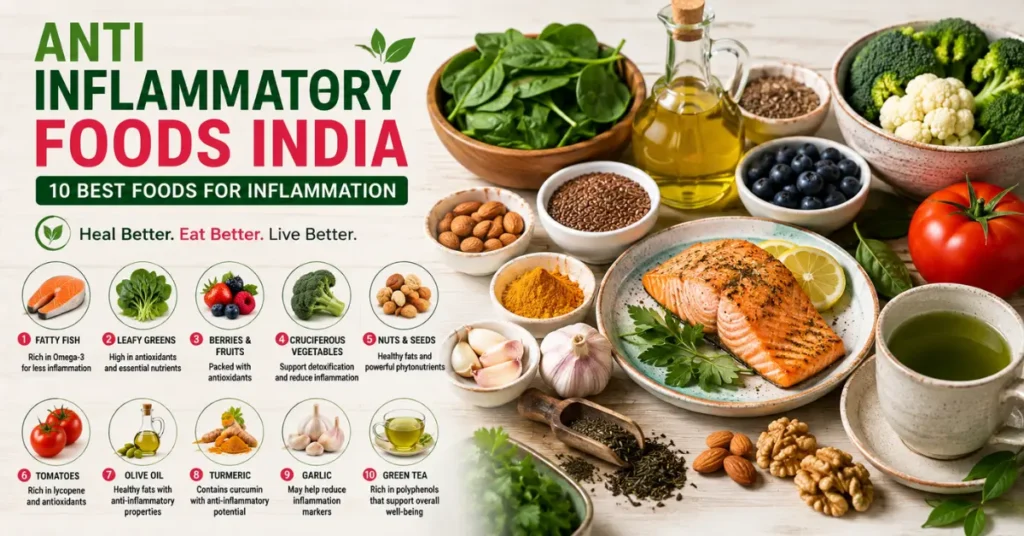
10 Best Anti Inflammatory Foods India to Include in Your Diet
1. Fatty Fish
Fatty fish are among the most useful foods to include in a balanced anti-inflammatory eating pattern because they provide the omega-3 fatty acids EPA and DHA.
Good choices include salmon, sardines, mackerel and other oily fish. Omega-3 fatty acids participate in biological pathways involved in the regulation of inflammatory responses.
For an Indian meal, fish curry prepared with a moderate amount of oil, grilled fish with vegetables or baked fish with herbs can be simple options.
If you are vegetarian, flaxseeds, chia seeds and walnuts provide plant-based alpha-linolenic acid (ALA). However, ALA is converted to EPA and DHA only to a limited extent, so plant and marine omega-3 sources are not nutritionally identical.
2. Leafy Green Vegetables
Spinach, methi, mustard greens, amaranth leaves and other leafy vegetables are some of the most practical anti inflammatory foods in India.
They provide fibre and a variety of vitamins, minerals and naturally occurring plant compounds. Rather than focusing on one particular vegetable, aim for variety across the week.
You can add leafy greens to dal, sabzi, soups, cheela or other homemade meals.
A simple habit is to make vegetables a regular part of both lunch and dinner instead of treating them as an occasional side dish.
3. Berries and Other Colourful Fruits
Berries such as strawberries, blueberries, raspberries and blackberries contain fibre and polyphenols that have been studied for their potential biological effects.
But you do not have to depend on imported berries.
Indian fruits can also contribute valuable nutrients and plant compounds. Guava, amla, pomegranate, oranges, papaya and other colourful fruits can all contribute to a varied, nutrient-rich diet.
The key is to eat whole fruit more often instead of relying on juices or sweetened fruit beverages.
4. Broccoli and Cruciferous Vegetables
Broccoli, cauliflower, cabbage and other cruciferous vegetables contain fibre and phytochemicals that have attracted considerable scientific interest.
Their benefit is best understood as part of an overall vegetable-rich diet rather than as a standalone treatment for inflammation.
Try adding broccoli or cauliflower to mixed vegetable preparations, soups, stir-fries or homemade meals.
And if broccoli is not available or affordable, there is no reason to worry. Cabbage, cauliflower and other locally available vegetables can provide variety too.
5. Nuts and Seeds
Walnuts, almonds, pistachios, chia seeds and flaxseeds can add healthy fats, fibre, minerals and plant compounds to your diet.
Walnuts and flaxseeds are particularly useful sources of plant-based omega-3 ALA.
A small portion of nuts can make a convenient snack, while ground flaxseed or chia seeds can be added to oats, curd or smoothies.
There is one important point to remember: nuts and seeds are nutrient-dense but also energy-dense. Eating large quantities simply because a food is considered “healthy” can still increase your overall calorie intake.
For most people, sensible portions work better than unlimited portions.
6. Tomatoes
Tomatoes are affordable, versatile and easy to include in Indian cooking.
They provide lycopene, a carotenoid that has been studied for its antioxidant and potential anti-inflammatory properties. However, research on individual foods should not be interpreted as proof that tomatoes can treat chronic inflammation or disease.
You can enjoy tomatoes in salads, sabzi, soups, chutneys and homemade gravies.
Their versatility makes them an easy everyday addition to a balanced diet.
“`htmlLooking for the Best Anti Inflammatory Foods in India?
Adding the right foods to your daily diet can support a healthier lifestyle and help manage inflammation naturally. Discover practical nutrition guidance on Indian foods rich in antioxidants, healthy fats, fiber, and essential nutrients, with personalized advice based on your health goals.
Get Your Personalized Nutrition Plan7. Extra-Virgin Olive Oil
Extra-virgin olive oil is rich in monounsaturated fat and contains naturally occurring phenolic compounds. It is also a major component of Mediterranean-style eating patterns.
Research has investigated olive oil’s relationship with inflammatory markers, with some studies suggesting potential benefits but not enough evidence to treat olive oil as a medicine for inflammation.
You can use a small amount as a salad dressing, drizzle it over cooked vegetables or use it in suitable recipes.
Remember that olive oil is still calorie-dense. Healthy fat does not mean unlimited fat.
8. Dal, Beans and Other Legumes
For an Indian audience, this may be one of the most important foods on the list.
Dal, rajma, chana, black beans, peas and other legumes provide fibre, plant protein, minerals and other nutrients.
They can also make meals more satisfying, which can be useful when you are trying to build a balanced eating pattern.
A bowl of dal with vegetables, chana salad, rajma with rice or a mixed-legume preparation can easily become part of an Indian anti-inflammatory diet.
This is a good example of why you do not need expensive “superfoods” to improve the quality of your diet.
9. Avocado
Avocado provides monounsaturated fat, fibre and several micronutrients.
It can be useful when incorporated into a balanced diet, particularly when it replaces foods that are higher in saturated fat.
You can add avocado to salads, spread it on whole-grain toast or combine it with vegetables.
Avocado is nutritious, but it is also energy-dense. If your goal includes weight management, portion size still matters.
10. Green Tea
Green tea contains polyphenols, including epigallocatechin gallate (EGCG), which have been widely studied for their biological properties.
That does not mean green tea is a “detox drink” or a cure for chronic inflammation.
Think of it as one possible beverage choice within a healthy lifestyle.
Unsweetened green tea can be a useful alternative to sugar-sweetened beverages if you enjoy it and tolerate caffeine well.
Which Indian Foods Can Be Part of an Anti-Inflammatory Diet?
One of the biggest misconceptions about healthy eating is that you need to completely change your cuisine.
You don’t.
Many traditional Indian foods can fit into a nutrient-rich, anti-inflammatory eating pattern.
Dal, rajma, chana, vegetables, leafy greens, fruits, whole grains, nuts, seeds, curd and spices can all have a place in a balanced diet.
For example, instead of having a meal based mainly on refined carbohydrates, you can combine roti or rice with dal, vegetables, salad and a suitable protein source.
Instead of making packaged snacks your everyday option, you can choose fruit, nuts or another minimally processed snack more often.
Healthy eating becomes much easier when you improve the structure of your existing meals rather than trying to follow a completely unfamiliar diet.
Foods to Limit for Better Inflammation Management
Adding nutritious foods is only one part of the picture.
If most of your diet consists of highly processed foods, sugar-sweetened beverages, processed meats and other foods that are high in calories but relatively low in nutritional value, simply adding one “anti-inflammatory” food may not make much difference to the overall quality of your diet.
This does not mean that you must permanently ban sweets, fried foods or restaurant meals.
A more realistic approach is to reduce how frequently they appear in your everyday diet.
Think about your diet across an entire week rather than judging one meal.
If most meals are based on vegetables, fruits, legumes, whole grains, healthy fats and appropriate protein sources, there is room for flexibility.
Can an Anti-Inflammatory Diet Be Vegetarian?
Yes.
A vegetarian anti-inflammatory eating pattern can include dal, rajma, chana, vegetables, leafy greens, fruits, nuts, seeds, whole grains and dairy foods where appropriate.
Vegetarian diets can provide plenty of fibre and plant compounds, but protein, vitamin B12, iron, calcium, omega-3 fats and overall energy intake should still be considered according to individual needs.
There is no requirement to eat fish to follow a healthy anti-inflammatory dietary pattern.
Can You Follow an Anti-Inflammatory Diet With Indian Breakfast Foods?
Absolutely.
Your breakfast does not need to look like a Western health-food menu.
Vegetable poha, vegetable upma, besan chilla, oats with fruit and nuts, eggs with vegetables, idli with appropriate accompaniments or other balanced homemade options can all be adapted according to your nutritional needs.
The important question is not whether a food is traditionally “Indian” or “Western.”
The better question is whether your overall meal provides appropriate portions of protein, fibre-rich foods, vegetables or fruit and healthy fats while fitting your individual energy needs.
“`htmlLooking for the Best Anti Inflammatory Foods in India?
Adding the right foods to your daily diet can support a healthier lifestyle and help manage inflammation naturally. Discover practical nutrition guidance on Indian foods rich in antioxidants, healthy fats, fiber, and essential nutrients, with personalized advice based on your health goals.
Get Your Personalized Nutrition PlanA Simple Indian Anti-Inflammatory Meal Pattern
A practical day could look something like this.
Breakfast: Vegetable poha with curd or a protein-rich accompaniment, depending on individual needs.
Mid-morning: A whole fruit.
Lunch: Dal or another protein source with vegetables, salad and a suitable portion of roti or rice.
Evening: Unsweetened green tea with a small portion of nuts or another suitable snack.
Dinner: Vegetables with paneer, dal, fish or another appropriate protein source, along with a suitable carbohydrate portion.
This is not a universal meal plan. Portion sizes and food choices need to be adjusted according to your age, activity level, body composition, food preferences, health conditions and nutritional goals.
How Long Does It Take for Diet to Affect Inflammation?
There is no universal timeline.
Some changes in diet can influence metabolic and physiological markers relatively quickly, but improvements in health outcomes depend on the individual, their existing diet, lifestyle, medical conditions and consistency.
It is therefore better to think of an anti-inflammatory eating pattern as a long-term lifestyle approach, not a short-term detox.
If someone promises that a particular food, juice or supplement will “flush inflammation out” within a few days, be cautious.
Nutrition is more powerful when it is sustainable.
Anti Inflammatory Foods India: The Most Important Takeaway
If you are searching for Anti Inflammatory Foods India, you do not need a complicated list of imported ingredients or expensive supplements.
Start with the foods you can realistically eat every week.
Choose more vegetables and fruits. Include dal and other legumes regularly. Add nuts and seeds in sensible portions. Choose fish if it suits your diet. Use healthy fats appropriately. Choose whole or minimally processed foods more often and reduce your dependence on highly processed foods.
Most importantly, focus on the overall pattern of your diet rather than expecting one food to solve a health problem.
Food can support health, but persistent inflammation or symptoms should not be self-diagnosed through diet alone. Conditions such as autoimmune diseases, inflammatory bowel disease, infections and other medical problems require appropriate professional evaluation.
Personalised Nutrition Support With Nutridate With Priyanka
There is no single food list that works equally well for everyone.
Your ideal diet depends on your food preferences, lifestyle, activity level, nutritional requirements, health goals and any existing medical or dietary concerns.
At Nutridate with Priyanka, the focus is on making nutrition practical, personalised and sustainable rather than promoting restrictive food rules or unrealistic diet trends.
If you want help creating a balanced eating pattern around your individual goals, personalised nutrition guidance can help you understand which foods, portions and meal combinations are appropriate for your routine.
If you have persistent symptoms or a diagnosed medical condition, consult an appropriately qualified healthcare professional for individual assessment rather than relying on dietary changes alone.
Frequently Asked Questions
Some of the most useful choices include leafy green vegetables, dal and other legumes, fatty fish, nuts, seeds, tomatoes, fruits, cruciferous vegetables and healthy unsaturated fats. The best choices are those that you can regularly include in a balanced and varied diet.
Indian foods such as dal, rajma, chana, leafy vegetables, seasonal fruits, nuts, seeds and vegetables can contribute to a nutrient-rich eating pattern. Spices such as turmeric and ginger can also be used as part of normal cooking, but they should not be treated as substitutes for medical treatment.
There is no single list that applies to everyone. However, it is generally sensible to reduce frequent consumption of highly processed foods, processed meats and foods high in added sugars while prioritising minimally processed, fibre-rich foods.
Turmeric contains curcumin, a compound that has been extensively researched. However, evidence about concentrated curcumin supplements should not be confused with evidence that adding culinary amounts of turmeric to food can treat a medical condition. Turmeric can be used as a flavourful spice as part of a balanced diet.
It can support healthier eating and weight management when it emphasises nutrient-dense foods, adequate protein, fibre and appropriate portions. However, an anti-inflammatory diet is not automatically a weight-loss diet. Weight management depends on several factors, including overall energy intake, physical activity, sleep, health status and individual nutritional needs.