Healthy Travel Diet: Indian Dietitian’s Guide to Eating Well
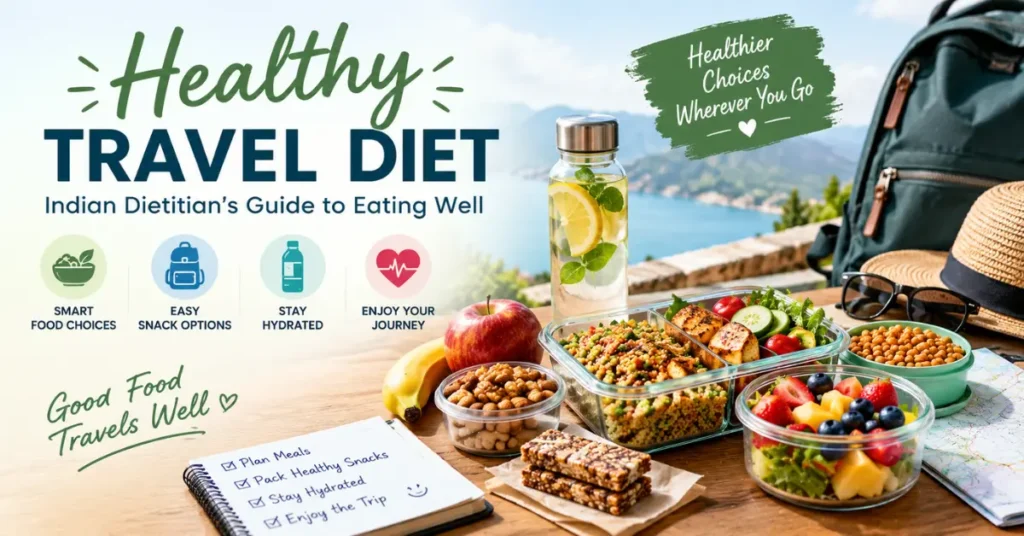
Travelling gives you a chance to explore new places, experience different cultures, spend time with family and friends, and enjoy foods you may not eat every day. But maintaining healthy eating habits while travelling can sometimes feel challenging.
Irregular meal timings, long journeys, airport food, restaurant meals, hotel buffets, packaged snacks and tempting local dishes can easily disrupt your usual routine.
The good news is that you do not need to follow a strict diet while travelling.
A healthy travel diet is about making practical and balanced food choices while still enjoying your journey. As an Indian dietitian, I believe healthy eating should fit into real life, including vacations, business trips, road trips and family holidays.
Whether you are travelling within India or going abroad, this guide will help you understand how to plan your meals, choose healthier travel snacks, eat better at airports and hotels, manage portions, stay hydrated and enjoy local food without unnecessary guilt.
Want to Eat Healthy While Travelling?
Travelling does not mean you have to compromise on your nutrition goals. With the right food choices, smart meal planning, and simple healthy habits, you can enjoy your trip while staying on track with your health and wellness. Get practical guidance from an Indian dietitian for healthier eating wherever you travel.
Get Your Personalized Diet PlanWhat Is a Healthy Travel Diet?
A healthy travel diet is not a rigid meal plan that you must follow perfectly throughout your trip.
Instead, it is a flexible approach to eating that helps you get adequate nutrition while adapting to different schedules, food options and destinations.
A balanced travel meal generally includes a good source of protein, vegetables or fruit, a suitable carbohydrate and some healthy fats according to your individual needs.
For an Indian traveller, healthy eating could be as simple as choosing dal with roti and vegetables, idli with sambar, eggs with toast, curd with a balanced meal, grilled paneer with vegetables or a suitable rice-based meal.
The goal is not to make every meal perfect.
The goal is to make better choices consistently while enjoying your trip.
Why Is Healthy Eating Difficult While Travelling?
Your normal eating routine can change as soon as your journey begins.
You may wake up earlier for a flight, skip breakfast because of a busy schedule, spend hours sitting in a car, eat at restaurants more frequently or snack simply because food is available.
Travelling can also affect your hunger cues.
When you are tired, stressed or busy, it becomes easier to rely on highly processed foods, sugary drinks or large restaurant portions.
Another common problem is the all-or-nothing mindset.
Some people think that because they are on vacation, their normal eating habits no longer matter. They may overeat for several days and then try to compensate by skipping meals when they return home.
A healthier approach is to enjoy special foods while keeping a few basic nutrition habits in place.
How to Plan a Healthy Travel Diet Before Your Trip
A healthy travel diet starts before you leave home.
You do not need to plan every single meal, but knowing what to expect can make healthier choices much easier.
Think about the length of your journey, transportation, meal timings, accommodation and food availability at your destination.
If you are staying in a hotel, check whether breakfast is included and whether there is a refrigerator or kitchen facility. If you are travelling to a new city, you can also check nearby restaurants or grocery stores before arriving.
If you have specific dietary requirements, identify suitable food options in advance.
Planning is particularly useful when travelling with children, managing a health condition or following a personalized nutrition plan.
The purpose of planning is not restriction. It is to avoid reaching a point where you are extremely hungry and have no suitable option available.
Want to Eat Healthy While Travelling?
Travelling does not mean you have to compromise on your nutrition goals. With the right food choices, smart meal planning, and simple healthy habits, you can enjoy your trip while staying on track with your health and wellness. Get practical guidance from an Indian dietitian for healthier eating wherever you travel.
Get Your Personalized Diet PlanWhat Should You Eat Before Travelling?
Your pre-travel meal can influence how you feel during the first part of your journey.
Instead of leaving home after eating very little, consider having a balanced meal containing protein, fibre and a suitable carbohydrate.
For example, you could choose:
- Vegetable poha with curd
- Idli with sambar
- Eggs with whole-grain toast and vegetables
- Dal with roti and vegetables
- Oats with fruit and nuts
- Paneer with roti and vegetables
The right option depends on your individual dietary requirements.
A balanced meal can help you stay satisfied for longer and may reduce the temptation to continuously snack during the journey.
Healthy Travel Snacks to Carry
One of the simplest healthy travel diet strategies is to carry your own snacks.
Having nutritious options available can be especially useful during long journeys, unexpected delays or situations where healthier food choices are limited.
Indian-friendly travel snacks can include roasted chana, makhana, unsalted nuts, seeds, fresh fruit, suitable protein-rich snacks and homemade foods that can be stored safely.
For a more satisfying snack, consider combining protein or healthy fats with fibre-rich carbohydrates.
For example, fruit with a small portion of nuts can be more satisfying than relying on a sugary snack alone.
However, food safety should always be considered when carrying food. Perishable foods need appropriate temperature control and should not be left unrefrigerated for extended periods.
How to Follow a Healthy Travel Diet at the Airport
Airport food can be challenging because you may have limited time and fewer choices.
Instead of looking for a completely perfect meal, focus on building the best available combination.
Depending on the airport and available options, you may find foods such as idli and sambar, eggs, grilled items, fruit, curd, sandwiches or simple rice-based meals.
Try to include a protein source where possible and avoid relying entirely on fried snacks and sugary beverages.
If you have a long flight, having a balanced meal before boarding can also help you avoid becoming excessively hungry later.
Carrying permitted non-perishable snacks can give you more control over your food choices during the journey.
What to Eat on a Long Flight
Long flights can disrupt your normal meal schedule, but there is no need to stop eating normally.
Try to eat according to your hunger and the length of the journey rather than eating continuously simply because food is available.
When choosing meals, look for options that provide protein and fibre where possible.
Hydration is also important during long journeys. Keep water available and drink regularly according to your individual needs.
Very heavy, greasy or highly salty meals may make some people feel uncomfortable during a long flight.
If you have diabetes, food allergies, digestive problems or another health condition, your travel diet may need to be personalized with advice from your doctor or dietitian.
Want to Eat Healthy While Travelling?
Travelling does not mean you have to compromise on your nutrition goals. With the right food choices, smart meal planning, and simple healthy habits, you can enjoy your trip while staying on track with your health and wellness. Get practical guidance from an Indian dietitian for healthier eating wherever you travel.
Get Your Personalized Diet PlanHealthy Travel Diet for Indian Road Trips
Road trips are often associated with roadside restaurants, dhabas, petrol stations and packaged snacks.
You do not have to avoid Indian food during a road trip.
In fact, many traditional Indian foods can fit into a healthy travel diet.
Depending on the restaurant and preparation methods, options such as dal, roti, vegetables, curd and grilled or tandoori dishes may provide a more balanced meal than choosing only fried foods.
Be mindful of foods that have been sitting out for long periods.
Food safety is particularly important during road trips because improper storage or temperature control can increase the risk of foodborne illness.
If you carry homemade food, make sure foods that require refrigeration are stored appropriately.
How to Eat Healthy at a Hotel
Hotel breakfasts and buffets can be tempting because there are so many choices.
Instead of filling your plate with everything available, take a moment to decide what you actually want to eat.
A balanced hotel breakfast could include eggs or another protein source, fruit, vegetables where available and a suitable carbohydrate such as oats, idli or whole-grain options.
You do not need to avoid traditional Indian breakfast foods.
Foods such as poha, idli, dosa or paratha can be part of your diet. Portion size, preparation method and the overall meal matter.
If you want to enjoy a local speciality, have it because you genuinely want it rather than simply because it is available at the buffet.
Healthy Eating at Restaurants While Travelling
Restaurant meals often contain more oil, salt, sugar and larger portions than meals prepared at home.
That does not mean you need to stop eating at restaurants.
Instead, pay attention to how your meal is prepared.
Grilled, baked, steamed or lightly cooked dishes may be suitable alternatives to heavily fried options.
You can also ask for sauces, dressings or extra gravies separately when possible.
Adding vegetables or a salad can improve the overall balance of a meal.
Most importantly, listen to your hunger and fullness rather than feeling that you need to finish everything on your plate.
Indian Foods That Can Fit Into a Healthy Travel Diet
Indian cuisine offers plenty of nutritious choices.
Depending on your individual needs, meals containing dal, rajma, chana, vegetables, curd, paneer, eggs, roti, rice, idli, dosa, poha and fruits can all contribute to a balanced eating pattern.
However, the preparation method matters.
For example, a vegetable-rich meal with dal and roti is different from a meal dominated by deep-fried foods and sugary drinks.
Instead of asking whether a particular cuisine is healthy or unhealthy, ask yourself:
What ingredients does this meal contain?
How has it been prepared?
How much do I need?
These questions can help you make better choices without unnecessarily restricting your diet.
How to Control Portions While Travelling
Portion control does not mean eating tiny meals.
It means becoming more aware of how much food your body actually needs.
Restaurant portions and hotel buffets can be considerably larger than your usual meals.
Try starting with a moderate portion and eat slowly. If you are still hungry, you can always have more.
Sharing a large dessert or ordering a smaller portion can also help if you want to enjoy a rich food without overeating.
You do not need to eliminate your favourite foods.
The goal is to enjoy them mindfully.
How to Stay Hydrated While Travelling
Hydration is an important part of a healthy travel diet.
During hot weather, physical activity or long journeys, your fluid needs may increase.
Carry water whenever practical and make drinking regularly part of your routine.
Try not to rely heavily on sugary drinks simply because they are convenient.
Coconut water, plain water and other suitable beverages can be useful depending on the destination and your individual health needs.
If you are travelling internationally or visiting an area where tap water may not be safe, follow local food and water safety recommendations.
Safe drinking water is particularly important because contaminated water can cause gastrointestinal illness.
Food Safety Tips for Travelling
Healthy eating is not only about calories and nutrients.
Food safety matters too.
When travelling, especially internationally, be careful with raw or undercooked foods and foods that may have been stored at unsafe temperatures.
Freshly prepared foods served hot are generally a safer choice in destinations where food hygiene may be uncertain.
You should also pay attention to drinking water and ice.
If the safety of tap water is uncertain, use an appropriate safe water source for drinking and other activities where water may be swallowed.
Good hand hygiene before eating can also help reduce the risk of illness.
Travellers with certain health conditions, children, pregnant women and older adults may need additional precautions.
How to Maintain a Healthy Travel Diet for Weight Loss
Travelling does not automatically mean you have to stop working toward your weight-management goals.
At the same time, trying to follow an extremely restrictive diet during a holiday may make the experience stressful.
Instead, focus on maintaining a few important habits.
Include protein in your meals, choose vegetables and fruit when available, be mindful of portions, stay hydrated and remain physically active.
Walking is an easy way to stay active while exploring a new destination.
You can also enjoy local foods without feeling guilty.
If you eat a rich meal at lunch, there is no need to continue eating heavily throughout the rest of the day.
Think about your overall eating pattern rather than judging yourself based on one meal.
Healthy Travel Diet Tips for People With PCOS
Travelling with PCOS can become easier when you focus on consistency rather than perfection.
Try to avoid long periods of intentional restriction followed by excessive eating.
Balanced meals containing protein, fibre-rich carbohydrates, vegetables and healthy fats can help create a more satisfying eating pattern.
However, PCOS is different for every person.
If you are following a personalized PCOS nutrition plan, speak with your dietitian about how to adapt your routine during travel.
Your travel plan should fit your destination, schedule, food preferences and individual nutritional needs.
Healthy Travel Diet Tips for People With Diabetes
People with diabetes may need more careful travel planning.
Meal timing, carbohydrate intake, medication schedules, hydration and access to appropriate food can all be important.
Before travelling, discuss your plans with your doctor or qualified dietitian, particularly if you are travelling internationally or for an extended period.
Carry necessary medications and suitable food or snacks according to your healthcare provider’s advice.
A generic travel diet should not replace individualized diabetes management.
What If You Overeat While Travelling?
Almost everyone overeats occasionally while travelling.
Maybe you tried a famous dessert, enjoyed a large restaurant meal or sampled several local dishes.
That does not mean your entire diet is ruined.
The best response is to return to your normal routine at the next meal.
Do not skip meals to compensate.
Instead, drink water, eat a balanced meal, include vegetables and protein, and continue your normal physical activity.
One meal does not determine your health.
Your overall pattern matters much more.
Can You Enjoy Desserts and Local Foods on a Healthy Travel Diet?
Absolutely.
Food is part of the travel experience.
If a particular dish or dessert is famous in the destination, enjoying it can be part of a healthy relationship with food.
The key is to eat it intentionally rather than automatically.
You can share a dessert, choose a smaller portion or simply enjoy a favourite dish without adding several unnecessary extras around it.
Healthy eating should not remove pleasure from food.
A sustainable diet is one that allows flexibility.
A Simple Healthy Travel Diet Formula
When you are unsure what to order while travelling, use a simple approach:
Protein + vegetables or fruit + suitable carbohydrate + healthy fat according to your needs.
For breakfast, this could be eggs with vegetables and toast or idli with sambar.
For lunch, you might choose dal, vegetables and roti or rice.
For dinner, you could select paneer, eggs, another suitable protein source, vegetables and a carbohydrate.
For snacks, fruit with nuts, roasted chana or another suitable option can help manage hunger.
You do not need to follow the same foods every day.
The framework is more important than a fixed menu.
Want to Eat Healthy While Travelling?
Travelling does not mean you have to compromise on your nutrition goals. With the right food choices, smart meal planning, and simple healthy habits, you can enjoy your trip while staying on track with your health and wellness. Get practical guidance from an Indian dietitian for healthier eating wherever you travel.
Get Your Personalized Diet PlanCommon Healthy Travel Diet Mistakes to Avoid
Trying to be perfect is one of the biggest mistakes people make while travelling.
Skipping breakfast to “save calories” for dinner can leave you extremely hungry later.
Relying on sugary drinks can increase your calorie intake without providing much satiety.
Constantly snacking because food is available can turn boredom into unnecessary eating.
Ignoring hydration can leave you feeling tired and uncomfortable.
Another common mistake is labelling foods as simply “good” or “bad.”
A healthier approach is to consider the overall meal, portion, preparation and frequency.
Finally, do not ignore food safety simply because a food looks appealing.
A Sample Healthy Travel Diet for One Day
A healthy travel day does not have to look like a strict diet chart.
For breakfast, you could have idli with sambar, eggs with toast, poha with curd or another balanced local meal.
For a snack, fruit with a small portion of nuts can be a convenient option.
Lunch could include dal, vegetables, roti or rice along with a suitable protein source.
An evening snack could be roasted chana, makhana, fruit or another practical option.
Dinner could include protein, vegetables and a suitable carbohydrate.
If you want to enjoy a local dessert, include it and enjoy it mindfully.
This is what flexible nutrition looks like in real life.
How a Dietitian Can Help With Your Travel Diet
A healthy travel diet becomes much easier when your overall nutrition plan is realistic.
At Nutridate with Priyanka, nutrition guidance is designed around individual lifestyles, food preferences, routines and health goals rather than relying on a one-size-fits-all approach.
Whether your goal is weight management, PCOS nutrition, diabetes management, improved fitness or general wellness, personalized nutrition guidance can help you understand how to adapt your eating habits to real-life situations such as travel, restaurants, celebrations and busy schedules.
The goal is not to make you afraid of food while travelling.
The goal is to help you feel confident about your choices wherever you are.
Eat Well, Travel Freely and Enjoy Your Journey
A healthy travel diet should never make your holiday feel restrictive.
You can enjoy local cuisines, try new dishes, eat at restaurants and have desserts while still maintaining healthy habits.
Plan ahead when possible. Carry practical snacks. Stay hydrated. Include protein and fibre in your meals. Be mindful of portions. Pay attention to food safety and keep moving throughout your trip.
Most importantly, do not let one indulgent meal turn into an “I have already ruined my diet” mindset.
Healthy eating is not about being perfect for a few days.
It is about building habits that can work in real life.
With the right approach, you can travel, enjoy food and continue taking care of your health at the same time.
If you want a nutrition plan designed around your lifestyle, food preferences and health goals, personalized guidance from Nutridate with Priyanka can help you develop an approach that works both at home and while travelling.
Medical Disclaimer: This article provides general nutrition information and is not a substitute for individualized medical or dietary advice. If you have diabetes, PCOS, food allergies, pregnancy-related nutritional needs, digestive conditions or another medical concern, consult a qualified healthcare professional for personalized guidance.
Frequently Asked Questions
There is no single diet that works for everyone while travelling. A practical approach is to choose balanced meals containing protein, fibre-rich carbohydrates, vegetables or fruit and appropriate fats while allowing room for local foods and occasional treats.
Roasted chana, makhana, nuts, seeds, fresh fruit and suitable protein-rich snacks can be convenient choices. Select snacks based on your dietary needs, journey length and storage conditions.
Choose balanced Indian meals such as dal with roti and vegetables, idli with sambar, poha with curd, eggs with vegetables or suitable paneer-based meals. Pay attention to portions, preparation methods, hydration and food safety.
Avoid skipping meals to compensate for a future meal. Eat slowly, pay attention to hunger and fullness, choose reasonable portions and enjoy special foods mindfully.
Yes. Restaurant food can fit into a healthy eating pattern. Look for balanced meals, consider grilled or lightly cooked options, add vegetables when available and be mindful of sauces, fried foods and portion sizes.