A glass of mango or banana smoothie looks like the healthiest breakfast you could ask for. It’s fruit, it’s quick, and it feels light. Yet many women with PCOS find they’re hungry again within an hour.
The fruit isn’t the problem; the way the smoothie is built usually is. With a few changes, a smoothie can stay on your menu and sit more comfortably with your blood sugar.
Can You Have Fruit Smoothies With PCOS?
Yes, most people with PCOS can enjoy fruit smoothies. The key is balance: a moderate portion of fruit, combined with protein, fibre and a little healthy fat, and no added sugar. A smoothie built this way tends to digest more slowly and keep you fuller than one made with fruit and juice alone.
Insulin resistance is common in PCOS, which means the body may have to work harder to manage blood sugar. That makes the overall mix of a meal more important than any single ingredient.
Why Some Fruit Smoothies May Affect Blood Sugar
When fruit is blended, its fibre is broken into much smaller pieces, and it becomes very easy to drink a lot of it quickly. Two bananas and a cup of mango go down in minutes; eaten whole, they would take far longer and fill you up.
Many café and packaged smoothies add honey, sugar syrup, sweetened yoghurt or ice cream, leaving a drink full of quickly available carbohydrate with little to slow it down.
Choosing the Right Fruits for PCOS
Should people with PCOS avoid fruit? No. Whole fruit brings fibre, vitamins and antioxidants, and there’s no need to cut it out. The better question is which fruits and how much. For a smoothie, fruits that are higher in fibre and less concentrated in sugar are generally easier to balance.
Good fruits for PCOS smoothies include:
- berries such as strawberries or blueberries (fresh or frozen)
- guava, apple or pear, with the skin where possible
- papaya, orange segments or kiwi
- a small piece of banana for creaminess
Mango, chikoo, grapes and very ripe bananas aren’t off-limits, but they are easier to overdo in a blender. Treat them as a smaller part of the glass rather than the whole base. Dates and dried fruit are concentrated, so use them sparingly.
For a wider view of food choices, our healthy diet plan for PCOS explains how everyday Indian meals can support hormonal balance.
The Simple Formula for a Balanced PCOS Smoothie
How do I balance carbs in a smoothie? Keep fruit to about one small portion, then add a protein, a fibre source and a small amount of healthy fat. Use unsweetened milk, curd or water as the liquid, and skip added sugar. This combination helps slow digestion and keeps you full longer.
A simple way to remember it:
- Fruit: one small portion, such as a handful of berries or half an apple
- Protein: curd, hung curd, paneer, unsweetened milk or soy milk
- Fibre: chia seeds, flaxseed powder, oats or a few spinach leaves
- Healthy fat: a few almonds or walnuts, or a teaspoon of peanut butter
- Flavour: cinnamon, cardamom, mint or a squeeze of lemon
How Protein, Fibre and Healthy Fats Change the Smoothie
Protein, fibre and fat each slow digestion in their own way. Protein adds staying power, so you’re less likely to reach for biscuits at 11 am. Soluble fibre from chia or oats thickens the smoothie and slows how fast sugars are absorbed.
The result isn’t a “sugar-free” drink. It’s a more balanced one, closer to a proper meal than a glass of dessert.
Understanding Diabetic Diet Carbs in Smoothies
Can smoothies fit into a diabetic diet? They can, with care. In a diabetes-conscious eating pattern, what matters most is the total carbohydrate in the glass, the type of carbohydrate and what it’s paired with.
Thinking about diabetic diet carbs in a smoothie means counting everything: fruit, milk, oats and any sweetener. A smoothie with fruit, oats, banana and honey can add up quickly even if each ingredient seems healthy. If you take medication for diabetes, speak with your doctor or dietitian before changing your breakfast pattern. Structured guidance such as Nutridate’s Diabetes Management Program can help you plan meals around your own readings and routine.
Example PCOS-Friendly Smoothie Combinations
Berry Curd Smoothie
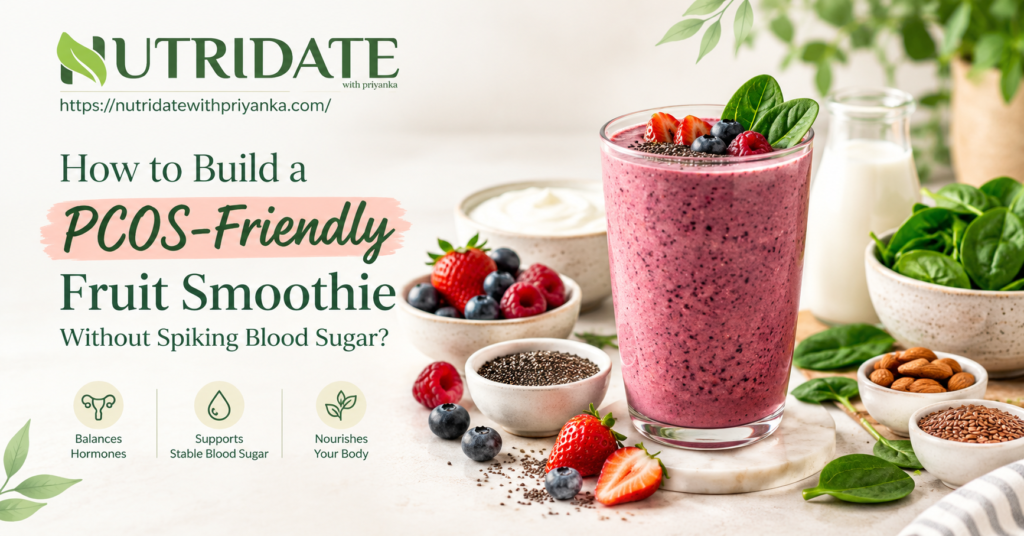
A handful of frozen strawberries or blueberries, three to four tablespoons of thick curd, a teaspoon of soaked chia seeds, four almonds, a pinch of cinnamon and some water or unsweetened milk to blend.
Guava Spinach Cooler
Half a ripe guava (deseeded), a few spinach leaves, a small piece of paneer or a scoop of unsweetened curd, a teaspoon of flaxseed powder, mint and a squeeze of lemon, blended with chilled water.
Adjust quantities to your hunger and health needs.
Common Smoothie Mistakes to Avoid
The usual culprits: honey or jaggery “just for taste”, juice as the base, three or four fruits in one glass, and treating a meal-sized smoothie as a snack. For other between-meal ideas, see Nutridate’s guide to healthy snacks for weight loss.
When Personalised Nutrition Advice Can Help
Two women with PCOS may respond very differently to the same smoothie, depending on insulin resistance, activity, sleep and medication. General tips can’t account for your reports or routine. That’s where the benefits of a personalised diet plan become clear. If you’ve tried to make changes and still feel unsure, working with a qualified dietician in Kolkata can help you understand what suits you.
How Nutridate with Priyanka Can Support Personalised Nutrition
Nutridate with Priyanka, led by Dt. Priyanka Shah, focuses on personalised nutrition that takes into account your health goals, lifestyle, food preferences and medical conditions. The PCOS/PCOD Specialized Program includes nutrition plans tailored to your symptoms, customised workouts and stress-management strategies, with ongoing support after the initial consultation. Consultations are available in person in Kolkata and online. For many readers searching for the best dietician in Kolkata, the value lies in a plan built around real meals, including the occasional smoothie.
Frequently Asked Questions
Can I drink fruit smoothies if I have PCOS?
Yes, in most cases. Choose one moderate portion of fruit, add protein, fibre and healthy fat, and avoid added sugar or juice.
Which fruits are good for PCOS smoothies?
Berries, guava, apple, pear, papaya, orange and kiwi are easy to balance. Mango, grapes and ripe banana can be used in smaller amounts.
How can I make a smoothie lower in added sugar?
Skip honey, jaggery, syrups and sweetened yoghurt. Use unsweetened milk or curd, and add flavour with cinnamon, cardamom, mint or lemon.
Is a whole fruit better than a smoothie?
Whole fruit is usually more filling and harder to overeat. A balanced smoothie can still be a good option when it includes protein and fibre.
Can a dietician in Kolkata help me plan PCOS-friendly meals?
Yes. A top dietician in Kolkata can create a personalised plan based on your symptoms, reports and routine, including breakfasts and snacks you enjoy.
How do I book a consultation with Nutridate with Priyanka?
You can reach the team through the Nutridate contact page to book an in-person or online consultation.