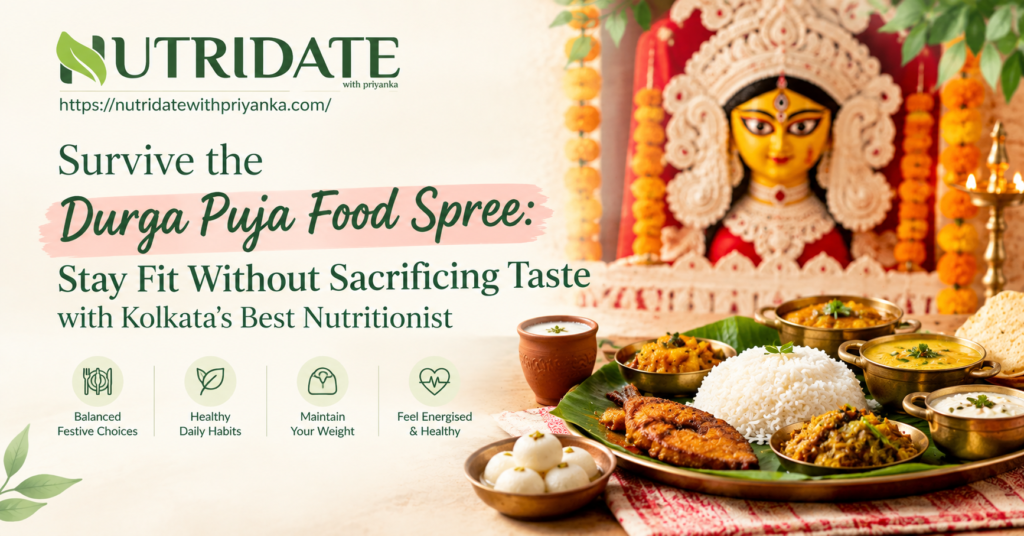
For five days every autumn, Kolkata eats differently. Mornings start with anjali and bhog, afternoons drift into family lunches, and nights stretch across pandals with egg rolls, phuchka and a box of sandesh somewhere in between. Nobody wants to spend Puja counting calories, and nobody should have to.
Yet many people finish the festival feeling heavy and tired, then spend weeks undoing it. The aim isn’t to skip the food that makes Puja special. It’s to enjoy it in a way your body can keep up with.
Why Healthy Eating Gets So Hard During Durga Puja
It isn’t one big meal that causes trouble. It’s the pattern. Meal times disappear, sleep shrinks, and you spend hours on your feet in crowds with little water. Food arrives constantly – at a relative’s house, the pandal, a stall on the way home. Each item feels small, yet by midnight it adds up to far more than a normal day.
Enjoy Bhog Without the Guilt
Bhog is devotion, not junk food. Khichuri with labra, a little beguni and chutney, payesh at the end – it’s a meal that deserves to be eaten with a clear conscience.
Khichuri, made from rice, dal and vegetables, is fairly balanced. What tips it over is the second helping and the extra fries. Take one proper serving, enjoy the labra for its vegetables, and have the beguni and payesh in small amounts. You’ll feel satisfied, not sluggish.
Make Peace with Mishti
Sweets are everywhere during Puja, and refusing every rosogolla or sandesh can feel rude. You don’t need to. A few simple rules help:
- Pick your favourite. If nolen gur sandesh is what you look forward to, have that and let the rest go.
- Eat it after a meal, not on an empty stomach. Sweets after food tend to be easier to stop at one.
- Share a box. Split a plate of sweets with family rather than finishing a whole serving each.
- Don’t stock up at home. Leftover boxes quietly become breakfast for the next week.
If you’re living with diabetes, sweets need more careful planning during the festival. Speak to your doctor, and consider structured support such as a diabetes management programme that builds festive meals into your plan rather than ignoring them.
Eat Before You Go Pandal Hopping
What should you eat before pandal hopping? Have a balanced meal or filling snack with protein and fibre an hour or two before heading out – for example, eggs with toast, chana chaat, a bowl of curd with fruit, or dal with rice and vegetables. Arriving hungry at a food stall is the fastest route to overeating fried snacks.
Carry roasted chana, makhana or a banana for long pandal queues. For more options, NutriDate’s guide to healthy snacks for weight loss has several that travel well.
Don’t Forget to Drink Water
Puja afternoons can be warm and humid, and hours in crowds leave many people dehydrated. Thirst is often mistaken for hunger, which means more snacking.
Carry a bottle and sip through the evening. Water, coconut water or unsweetened nimbu pani are better choices than sweetened drinks and cold coffees, which add sugar without making you feel full.
Smarter Choices When Eating Out
Restaurants and stalls are part of the fun. A few choices make a real difference:
- Choose grilled, tandoori or steamed dishes over deep-fried ones where you can.
- Order one rich dish, such as biryani or kosha mangsho, and share it at the table.
- Add a salad, raita or dal to balance the plate.
- Go for one roll instead of two, or pick momos over fried snacks.
- Stop when you feel comfortably full, not when the plate is empty.
The idea of balancing a plate rather than removing foods is explained well in the Indian weight loss plate method, and it works just as well at a Puja lunch as at home.
Balance the Rest of the Day
If you know a heavy dinner is coming, keep breakfast and lunch lighter and simpler, with more vegetables, protein and fruit. That doesn’t mean skipping meals. Going without food all day usually means eating twice as much at night.
Drop the “Already Ruined” Mindset
Many people eat one large meal and decide the day is lost, so they may as well keep going. One heavy meal doesn’t undo weeks of healthy habits. The next meal is simply a fresh choice. Have a lighter dinner, drink water, sleep a little earlier if you can, and move on.
Keep Moving
Pandal hopping already means plenty of walking, so use it. Skip the cab for short distances, and if you usually exercise, fit in a short morning walk on a few Puja days. Even 20 minutes keeps the routine alive for when the festival ends.
When a Dietician Can Help
A few sensible habits are enough for most people. But if you’re managing PCOS, diabetes or a thyroid condition, or if festive eating tends to spiral into weeks of weight gain, a dietician in Kolkata can help you plan around the season rather than fear it.
At NutriDate with Priyanka, plans begin with a consultation to understand your health and routine, followed by a personalised diet plan and ongoing support. The emphasis is on sustainable habits rather than crash diets, which suits festive months well. Many people look for the best dietician in Kolkata only after Puja, but starting before the festival makes planning easier.
Frequently Asked Questions
How can I enjoy Durga Puja food without gaining weight?
Eat balanced meals before heading out, choose your favourite indulgences rather than everything, share rich dishes, stay hydrated and keep walking. Returning to regular meals the next day matters more than any single festive meal.
Can I eat bhog while following a healthy diet?
Yes. Khichuri and labra can fit into a balanced diet. Keep to one serving, go easy on fried sides, and have payesh in a small portion.
How do I control sweets during Durga Puja?
Pick one or two sweets you truly enjoy, eat them after meals rather than on an empty stomach, share portions and avoid keeping extra boxes at home.
What should I eat before pandal hopping?
A meal or snack with protein and fibre, such as eggs, chana, curd with fruit or dal and rice with vegetables, eaten an hour or two before you leave.
Can a dietician in Kolkata help with festive weight management?
Yes. A top dietician in Kolkata can create a personalised plan that includes festive foods, adjusts meals around celebrations and supports you through the season, especially if you have diabetes, PCOS or other health concerns.
Enjoy the Festival, Then Carry On
Durga Puja is meant to be enjoyed – the food, the lights and the time with family. A little planning lets you have all of it and still feel good when the dhak goes quiet. If you’d like guidance that fits your food habits and your health, you can book a consultation with NutriDate with Priyanka and plan the season ahead with a dietician in Kolkata who understands both.