Acid Reflux Diet Plan: Foods to Eat and Avoid for Relief
If you are struggling with frequent heartburn, bloating, or a burning sensation in your chest after meals, your diet may be the root cause. Acid reflux has become increasingly common due to unhealthy eating habits, stress, and irregular lifestyles. The good news is that with the right acid reflux diet, you can control and even significantly reduce these symptoms naturally.
Over the years, I have observed that people often look for quick fixes, but the real solution lies in understanding how food affects your digestive system. A properly planned acid reflux diet is not just about avoiding certain foods. It is about building a sustainable eating pattern that supports digestion, reduces acid production, and heals your gut over time.
This guide is designed to be practical, easy to follow, and aligned with Google’s latest content guidelines, focusing on real value, experience, and user intent.
Struggling with Acidity, Heartburn, or Acid Reflux?
Frequent acidity and acid reflux can disrupt your digestion and daily comfort. The right diet, meal timing, and food choices can help reduce symptoms and improve gut health. Get a personalised diet plan to manage acid reflux naturally and effectively.
Get Your Acid Reflux Relief Diet PlanWhat Is Acid Reflux and Why Your Diet Matters
Acid reflux occurs when stomach acid flows back into the esophagus. This usually happens when the lower esophageal sphincter becomes weak or relaxes at the wrong time. As a result, acid irritates the lining of the esophagus and causes discomfort.
Your daily diet plays a critical role in this condition. Certain foods increase acid production, while others slow down digestion or trigger inflammation. Poor eating habits such as overeating, eating late at night, or consuming processed foods make the situation worse.
A well-structured acid reflux diet helps by reducing triggers, improving digestion, and maintaining a healthy balance in your stomach.
Common Signs You Need an Acid Reflux Diet
Many people ignore early symptoms until the condition becomes severe. Recognizing these signs early can help you manage acid reflux effectively.
If you frequently experience heartburn, especially after meals, it is a clear signal. A burning sensation in the chest or throat, sour taste in the mouth, or frequent burping are also common symptoms.
Some people may experience bloating, nausea, or difficulty swallowing. If these symptoms occur regularly, it is time to shift to a proper acid reflux diet.
How an Acid Reflux Diet Works
An acid reflux diet focuses on three main principles. First, it reduces acid production by avoiding trigger foods. Second, it improves digestion by including fiber-rich and easy-to-digest foods. Third, it prevents pressure on the stomach by promoting smaller, balanced meals.
When followed consistently, this diet not only reduces symptoms but also improves overall digestive health.
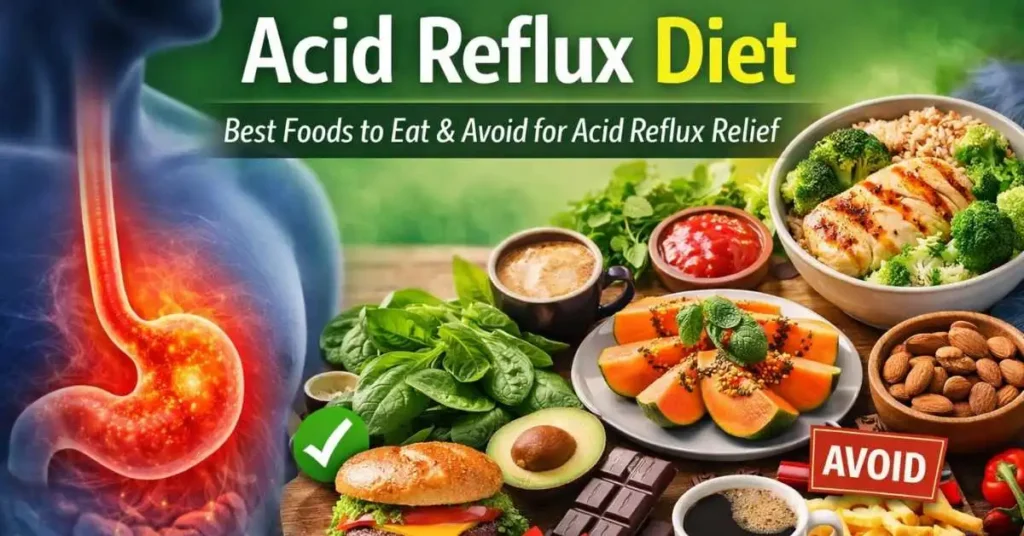
Best Foods to Include in an Acid Reflux Diet
Choosing the right foods is the foundation of managing acid reflux. These foods are gentle on the stomach and support digestion.
Low-Acid Fruits
Bananas are one of the best foods for acid reflux because they help neutralize stomach acid. Apples, pears, melons, and papaya are also excellent options.
These fruits are easy to digest and provide essential nutrients without triggering acidity.
Fiber-Rich Foods
Fiber improves digestion and prevents acid buildup. Oats are highly recommended for breakfast as they are light and filling.
Other good options include brown rice, whole grains, carrots, beans, and leafy vegetables. These foods keep your digestive system active and reduce reflux episodes.
Lean Protein Sources
Protein is essential, but heavy and fatty protein sources can worsen acid reflux. Choose lean options like boiled chicken, grilled fish, tofu, and lentils.
These are easier to digest and do not increase acid production.
Green and Alkaline Vegetables
Vegetables like spinach, broccoli, cucumber, bottle gourd, and beans help maintain an alkaline balance in the body.
They are low in acid and rich in nutrients, making them ideal for an acid reflux diet.
Healthy Fats in Moderation
Healthy fats such as almonds, walnuts, flaxseeds, and olive oil support digestion when consumed in small amounts.
Avoid excessive oil as it can slow digestion and trigger reflux.
Struggling with Acidity, Heartburn, or Acid Reflux?
Frequent acidity and acid reflux can disrupt your digestion and daily comfort. The right diet, meal timing, and food choices can help reduce symptoms and improve gut health. Get a personalised diet plan to manage acid reflux naturally and effectively.
Get Your Acid Reflux Relief Diet PlanFoods to Avoid in an Acid Reflux Diet
Avoiding trigger foods is just as important as including the right ones.
Spicy foods irritate the stomach lining and worsen symptoms. Fried and oily foods slow down digestion and increase pressure on the stomach.
Citrus fruits such as oranges and lemons are highly acidic and should be limited. Tomatoes and tomato-based products can also trigger reflux.
Caffeine, including tea and coffee, relaxes the esophageal sphincter and leads to acid reflux. Carbonated drinks increase gas and pressure in the stomach.
Chocolate, processed foods, and sugary desserts disrupt digestion and should be avoided.
Acid Reflux Diet Chart (Indian Meal Plan)
A structured diet plan makes it easier to follow consistently.
Early Morning
Warm water with soaked almonds
Breakfast
Oats porridge with banana or vegetable poha
Mid-Morning
Papaya or apple
Lunch
Brown rice or chapati with dal, green vegetables, and curd
Evening Snack
Herbal tea with roasted chana
Dinner
Vegetable khichdi or light sabzi with chapati
Before Bed
Warm milk or chamomile tea
This simple Indian meal plan supports digestion and helps reduce acidity naturally.
Lifestyle Habits That Improve Acid Reflux
Diet alone is not enough. Your lifestyle plays a major role in managing acid reflux.
Eating smaller meals helps reduce pressure on the stomach. Large meals can trigger reflux.
Avoid lying down immediately after eating. Wait at least two to three hours before sleeping.
Maintaining a healthy weight reduces abdominal pressure and improves digestion.
Drink water throughout the day, but avoid large amounts during meals.
Eating slowly and chewing food properly can significantly reduce symptoms.
Natural Remedies to Support Acid Reflux Diet
Certain natural remedies can enhance the effects of your diet.
Ginger helps improve digestion and reduce inflammation. Fennel seeds can reduce bloating and support gut health.
Coconut water is soothing and helps maintain hydration. Aloe vera juice, in small quantities, may help calm the digestive system.
These remedies should be used in moderation along with a proper diet.
How Long Does It Take to See Results
Most people start noticing improvements within one to two weeks of following an acid reflux diet. Symptoms such as heartburn and bloating become less frequent.
For long-term relief, consistency is essential. Regularly consuming trigger foods can bring symptoms back.
Expert Tips Based on Experience
From years of observing dietary patterns, one common mistake people make is inconsistency. Following the diet strictly for a few days and then returning to unhealthy habits does not provide long-term results.
Another important point is portion control. Even healthy foods can trigger reflux if consumed in large quantities.
Simple, home-cooked meals work best for managing acid reflux.
When to Consult a Dietitian
If your symptoms are severe or do not improve with dietary changes, it is important to seek professional guidance.
A personalized acid reflux diet plan can help identify triggers and provide a structured approach to managing the condition.
Long-Term Prevention Tips
Preventing acid reflux is easier than treating it.
Maintain regular meal timings and avoid skipping meals. Manage stress through yoga or meditation as it directly affects digestion.
Avoid smoking and alcohol as they weaken the digestive system.
Focus on a balanced, natural diet for long-term health.
A Quick Recap
Acid reflux can affect your daily life, but it is highly manageable with the right approach. A well-planned acid reflux diet focuses on simple, nutritious foods that support digestion and reduce acid production.
By making consistent dietary and lifestyle changes, you can take control of your symptoms and improve your overall well-being naturally.
Struggling with Acidity, Heartburn, or Acid Reflux?
Frequent acidity and acid reflux can disrupt your digestion and daily comfort. The right diet, meal timing, and food choices can help reduce symptoms and improve gut health. Get a personalised diet plan to manage acid reflux naturally and effectively.
Get Your Acid Reflux Relief Diet PlanFrequently Asked Questions
A diet rich in fiber, low-acid fruits, lean proteins, and green vegetables is best for managing acid reflux.
Yes, plain rice is easy to digest and does not trigger acidity.
Low-fat milk can help soothe the stomach when consumed in moderation.
Follow a proper acid reflux diet, avoid trigger foods, eat small meals, and maintain healthy habits.
It may not always be permanently cured, but it can be effectively managed with the right diet and lifestyle.