Dietitian-Approved Diabetes Friendly Indian Breakfast Options You Can Trust
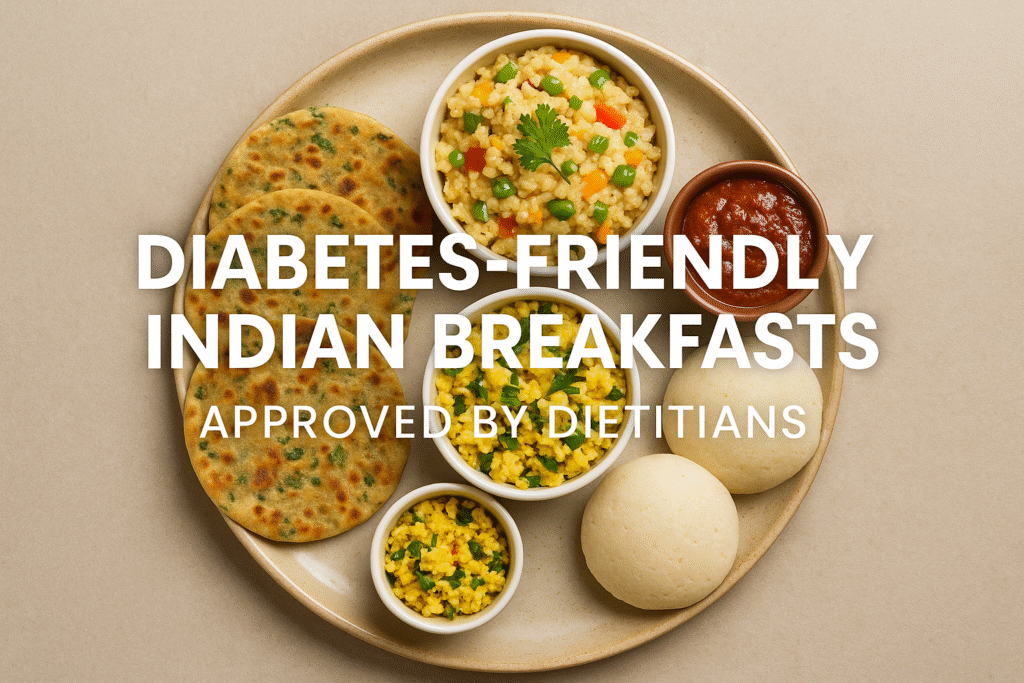
Below are proven and practical breakfast ideas that fit well into an Indian lifestyle while supporting glucose balance.
1. Vegetable Oats Upma
Oats contain beta-glucan, a soluble fiber known to support healthier glucose absorption.
Why it’s diabetes friendly:
- Low GI
- High fiber
- Easy to digest
- Works as a savory alternative to semolina upma
Additions like curry leaves, mustard seeds, and mixed vegetables improve flavor and nutrition.
2. Moong Dal Cheela
A protein-rich breakfast made from soaked moong dal blended into a smooth batter.
Why dietitians prefer it:
- High protein slows glucose rise
- Light on digestion
- Suitable for weight management
- Can be paired with chutney or curd
3. Besan Spinach Chilla
Made with chickpea flour and fresh spinach, this dish is filling and naturally gluten-free.
Benefits:
- Moderate GI
- High fiber and protein
- Supports stable glucose levels
Add grated vegetables for extra nutrients.
4. Vegetable Daliya
Broken wheat cooked with vegetables becomes a wholesome, hearty, and slow-digesting meal.
Why it’s effective:
- High in complex carbs
- Rich in fiber
- Ideal for sustained energy release
Mixing a small portion of moong dal increases protein content.
5. Rava Vegetable Upma (With Portion Control)
Semolina on its own digests quickly, but when combined with vegetables and limited portions, it becomes a workable option.
Why it fits:
- Balanced with fiber
- Can be made in small servings
- Easy to pair with curd for extra protein
6. Ragi Dosa or Ragi Porridge
Ragi is naturally rich in fiber, calcium, and essential minerals.
Why ragi supports diabetes management:
- Low GI
- High satiety
- Helps maintain steady sugar levels
Add vegetables to the batter for extra fiber.
7. Sprouts Poha
A twist on classic poha with added protein from sprouts.
Why it’s diabetes friendly:
- Medium GI but improves with sprouts
- High in fiber
- Light yet filling
Add lemon juice and coriander for freshness.
8. Oats or Ragi Idli
Replacing rice with oats or ragi creates a breakfast that is lighter and more stable for blood sugar.
Benefits:
- Low GI alternative
- Better fiber profile
- Easy to pair with sambar or chutney
9. Egg Bhurji with Vegetables
A strong protein source that keeps you full and balances glucose.
Why it works:
- Zero sugar impact
- High satiation
- Great option for people who prefer a low-carb morning meal
Pair with sautéed vegetables or a small multigrain roti.
10. Paneer Veg Sandwich on Whole Grain Bread
A more balanced way to start your morning.
Why it’s diabetes friendly:
- Whole grain bread offers slow-release carbs
- Paneer adds protein
- Fresh vegetables increase fiber
Grill lightly with minimal oil.
11. Millet Upma
Foxtail, little millet, and barnyard millet offer slow-digesting carbs suitable for diabetes.
Dietitian insights:
- Low GI
- Helps blood sugar stability
- Nourishing and gut-friendly
12. Homemade Masala Oats
Preparing masala oats at home avoids the additives found in packaged versions.
Why it’s better:
- No preservatives
- Lower sodium
- Customizable vegetable content
13. Quinoa Upma or Quinoa Veg Bowl
A modern but highly effective option.
Benefits:
- High protein
- Lower GI
- Suitable for individuals needing gluten-free meals
14. Stuffed Vegetable Paratha (Whole Wheat)
Comfort foods can still be diabetes friendly when balanced correctly.
How to make it work:
- Use minimal oil
- Choose high-fiber stuffing (methi, cabbage, cauliflower)
- Serve with curd for added protein
15. Tofu Scramble with Vegetables
Ideal for plant-based or vegan eaters.
Why it fits:
- Very low carb
- High protein
- Keeps hunger away for hours
Tips to Build a Diabetes Friendly Indian Breakfast Daily
1. Keep GI and GL in mind
Glycemic Index shows how fast a food raises sugar.
Glycemic Load considers the portion size.
Both matter for diabetes control.
2. Avoid sugary drinks and sweetened tea
Even small amounts of added sugar can cause morning spikes.
3. Include protein in every breakfast
At least 12–20g of protein improves satiety and glucose stability.
4. Add vegetables whenever possible
Vegetables increase bulk, fiber, and micronutrients.
5. Use healthy fats in small amounts
Nuts and seeds support hormonal balance and glucose response.
6. Practice portion awareness
A diabetes friendly Indian breakfast depends as much on quantity as on ingredients.
Sample Breakfast Plate Ideas
Balanced Plate 1
- Moong dal chilla
- Mint chutney
- Sliced cucumber
Balanced Plate 2
- Ragi dosa
- Coconut chutney
- Lemon water
Balanced Plate 3
- Vegetable oats upma
- A small bowl of curd
Balanced Plate 4
- Oats idli
- Sambar
- Steamed spinach