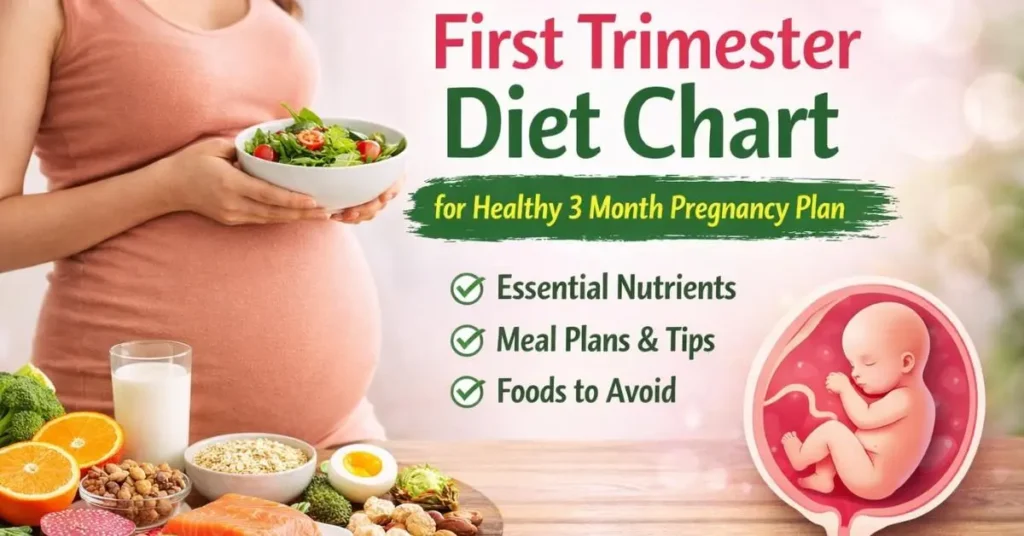
First Trimester Diet Chart for Healthy 3 Month Pregnancy Plan
Pregnancy begins long before the baby bump shows. The first twelve weeks quietly shape your baby’s brain, spine, heart, and vital organs. During this powerful phase, following a well planned First trimester diet chart is not optional. It is foundational.
If you are newly pregnant, confused about what to eat, struggling with nausea, or worried about whether you are nourishing your baby properly, this detailed guide will give you clarity. This blog is designed to be practical, science backed, culturally relevant, and easy to follow.
With over a decade of experience in creating pregnancy nutrition frameworks, I can confidently say that a structured First trimester diet chart reduces complications, improves maternal energy, and supports healthy fetal growth.
Let us build your foundation the right way.
Why a First Trimester Diet Chart Is Critical
The first trimester covers week 1 to week 12. This is when:
The neural tube develops into the brain and spinal cord
The placenta forms
The heart begins to beat
Hormones rise rapidly
Blood volume starts increasing
During this time, even before many women confirm pregnancy, nutrient deficiencies can affect development.
Contrary to the myth of eating for two, the first trimester is about nutrient density, not extra calories. You do not need large portions. You need the right nutrients at the right time.
A structured First trimester diet chart helps you:
Stabilize blood sugar levels
Reduce morning sickness
Prevent anemia
Support fetal brain development
Maintain healthy digestion
Avoid unnecessary weight gain
When meals are planned correctly, your body feels supported instead of overwhelmed.
Planning a Healthy First Trimester Diet?
The first three months of pregnancy are crucial for your baby’s development. A balanced diet rich in folic acid, iron, protein, and essential nutrients supports a healthy pregnancy. Get a personalised first trimester diet chart designed to manage nausea, boost energy, and ensure proper nourishment.
Get Your First Trimester Diet PlanNutritional Requirements in the First Trimester
To optimize your First trimester diet chart, focus on the following essential nutrients.
Folic Acid
Folic acid prevents neural tube defects. The recommended intake is 400 to 800 micrograms daily.
Natural sources include spinach, methi leaves, broccoli, lentils, black chana, chickpeas, oranges, and fortified grains.
Even if you are taking supplements, food based folate is equally important.
Iron
Iron supports increased blood production. Pregnancy increases blood volume by almost 50 percent.
Include beetroot, dates, jaggery, green leafy vegetables, rajma, chole, egg yolks, and lean meat.
Always combine iron rich foods with vitamin C like lemon or amla for better absorption.
Protein
Protein builds the baby’s tissues and supports the placenta.
Include paneer, tofu, curd, dal, sprouts, eggs, fish, chicken, soy products, and quinoa.
Calcium
Calcium supports bone development and maternal bone strength.
Milk, curd, paneer, sesame seeds, ragi, and almonds are excellent additions to your First trimester diet chart.
Vitamin B6
Vitamin B6 helps reduce nausea. Bananas, potatoes, nuts, and whole grains are beneficial.
Omega 3 Fatty Acids
Omega 3 supports brain development. Include walnuts, flaxseeds, chia seeds, and low mercury fish.
How Many Calories Are Required
In the first trimester, most women do not require extra calories. The focus should be on balanced macronutrients.
Complex carbohydrates for sustained energy
High quality protein for tissue growth
Healthy fats for hormonal balance
Overeating processed foods increases inflammation and fatigue.
Your First trimester diet chart should emphasize quality over quantity.
Complete Indian First Trimester Diet Chart
Here is a practical and realistic daily First trimester diet chart designed for Indian households.
Early Morning
Warm water with soaked almonds and walnuts
Or coconut water
Or jeera water for digestion
Breakfast
Vegetable poha with peanuts and curd
Or vegetable upma with sprouts
Or oats porridge with nuts and seeds
Or 2 boiled eggs with multigrain toast
Add one seasonal fruit.
Mid Morning Snack
Pomegranate bowl
Or orange
Or roasted chana
Or sprouts salad
Lunch
1 to 2 multigrain rotis or brown rice
Dal or rajma or chole
Seasonal green vegetable
Curd
Fresh salad
Non vegetarian option: grilled chicken or fish
Evening Snack
Buttermilk
Or lemon water
Handful of makhana
Or mixed nuts
Dinner
Vegetable khichdi
Or paneer bhurji with roti
Or tofu stir fry
Or grilled fish with sautéed vegetables
Bedtime
Warm milk with turmeric
This structured First trimester diet chart ensures stable energy and reduces acidity.
Weekly Food Rotation for Better Nutrient Coverage
To maximize micronutrient diversity:
Monday: Spinach dal and ragi roti
Tuesday: Rajma and brown rice
Wednesday: Paneer bhurji and multigrain roti
Thursday: Chole and salad
Friday: Lemon rice and curd
Saturday: Vegetable oats and sprouts
Sunday: Grilled fish or soy chunk pulao
Food diversity improves gut health and nutrient absorption.
Planning a Healthy First Trimester Diet?
The first three months of pregnancy are crucial for your baby’s development. A balanced diet rich in folic acid, iron, protein, and essential nutrients supports a healthy pregnancy. Get a personalised first trimester diet chart designed to manage nausea, boost energy, and ensure proper nourishment.
Get Your First Trimester Diet PlanManaging Morning Sickness Through Diet
Morning sickness is common and often worst in the first trimester.
To manage it effectively:
Eat small meals every two to three hours
Avoid greasy and spicy foods
Keep dry crackers beside your bed
Sip fluids slowly between meals
Include ginger in moderation
Avoid strong food odors
A well spaced First trimester diet chart prevents an empty stomach, which reduces nausea severity.
Vegetarian First Trimester Diet Chart Tips
If you are vegetarian, focus on:
Combining cereals and pulses
Including paneer and tofu daily
Adding flaxseed powder to meals
Using sesame seeds for calcium
Eating sprouts regularly
Vegetarian diets can fully support pregnancy when properly structured.
Foods to Avoid in the First Trimester
Avoid raw or undercooked eggs and meat
Avoid unpasteurized dairy
Limit caffeine to under 200 mg daily
Avoid alcohol completely
Reduce packaged and ultra processed foods
Avoid high mercury fish
Food safety prevents infections and protects fetal development.
Hydration Guidelines
Drink 2.5 to 3 liters of fluids daily.
Include:
Plain water
Coconut water
Buttermilk
Lemon water
Clear soups
Dehydration worsens fatigue and nausea.
Weight Gain Expectations
Minimal weight gain is normal in the first trimester. Some women lose slight weight due to nausea.
Focus on nourishment, not numbers.
Common Mistakes in First Trimester Nutrition
Skipping meals due to nausea
Overeating junk food during cravings
Ignoring iron rich foods
Relying only on supplements
Following restrictive diet trends
A balanced First trimester diet chart prevents these errors.
Sample High Protein Vegetarian Day Plan
Breakfast: Moong dal chilla with curd
Snack: Fruit and nuts
Lunch: Brown rice, rajma, spinach
Snack: Buttermilk and roasted makhana
Dinner: Paneer stir fry and roti
Sample Non Vegetarian Day Plan
Breakfast: Eggs and whole grain toast
Snack: Pomegranate
Lunch: Roti, dal, grilled chicken
Snack: Coconut water and nuts
Dinner: Fish curry and brown rice
A Quick Recap
The first trimester builds the blueprint for your baby’s lifelong health. A structured First trimester diet chart ensures that every meal contributes to healthy organ development, stable maternal energy, and reduced complications.
Nutrition in early pregnancy is not about restriction. It is about nourishment. By focusing on balanced meals, hydration, and mindful eating, you create the healthiest environment for your growing baby.
Every pregnancy is unique. If you want a customized First trimester diet chart tailored to your body type, health history, and lifestyle, professional guidance can make a significant difference.
Start strong. Eat smart. Build the foundation right.
Planning a Healthy First Trimester Diet?
The first three months of pregnancy are crucial for your baby’s development. A balanced diet rich in folic acid, iron, protein, and essential nutrients supports a healthy pregnancy. Get a personalised first trimester diet chart designed to manage nausea, boost energy, and ensure proper nourishment.
Get Your First Trimester Diet PlanFrequently Asked Questions
A First trimester diet chart should include folic acid rich foods, iron sources, high quality protein, calcium, omega 3 fatty acids, and complex carbohydrates. It should also focus on small frequent meals to manage nausea and maintain stable blood sugar levels.
No, most women do not need additional calories in the first trimester. The focus should be on nutrient dense foods rather than eating larger portions. Quality matters more than quantity during early pregnancy.
Fruits like pomegranate, orange, apple, banana, guava, and kiwi are excellent choices. They provide fiber, vitamin C, antioxidants, and natural energy that support early pregnancy health.
Eat small meals every two to three hours, avoid oily and spicy foods, include dry crackers in the morning, sip fluids slowly, and add ginger in moderation. A well structured First trimester diet chart helps reduce nausea by preventing an empty stomach.
Yes, but caffeine intake should be limited to under 200 mg per day. Excess caffeine may increase pregnancy risks, so moderation is important.