Hearing the words “gestational diabetes” can make every meal feel like a test. Many women respond by cutting out rice, roti and fruit altogether, worried that any carbohydrate will push their sugar up.
Your body and your baby still need carbohydrates. What helps is choosing the right kind, in the right amount, and pairing them with protein, fibre and healthy fats so each meal is easier on your blood sugar. That’s what a balanced pregnancy plate is really about.
What Is Gestational Diabetes?
Gestational diabetes is high blood sugar that develops during pregnancy in someone who did not have diabetes before. Pregnancy hormones make the body less responsive to insulin, and in some women the body can’t make enough extra insulin to keep up. It is usually picked up through a glucose test during pregnancy and often settles after delivery, though your doctor will advise on follow-up testing.
It’s common and manageable. Food changes are usually the first step, sometimes alongside activity and, when needed, medication.
Why Carbohydrates Still Matter During Pregnancy
Carbohydrates are a major source of energy for you and your growing baby. Cutting them too far can leave you tired and undernourished. The goal is steadier carbohydrates, not none.
In practice, that means spreading them across the day instead of having a large amount at once, and choosing forms with more fibre, such as whole grains, millets, dal and whole fruit. White rice, maida, sweets and sugary drinks tend to raise blood sugar faster, so they need more portion awareness.
How Protein Helps Build a Balanced Pregnancy Plate
Protein supports your baby’s growth and helps you feel full. When eaten with carbohydrates, it also tends to slow how quickly glucose enters the blood. Indian kitchens already have plenty of good options:
- dal, rajma, chana and sprouts
- paneer, curd, buttermilk and milk
- eggs, and well-cooked fish or chicken
- tofu and soya chunks
Try to include some protein at every meal and snack, not just at lunch.
The Perfect Pregnancy Plate for Gestational Diabetes
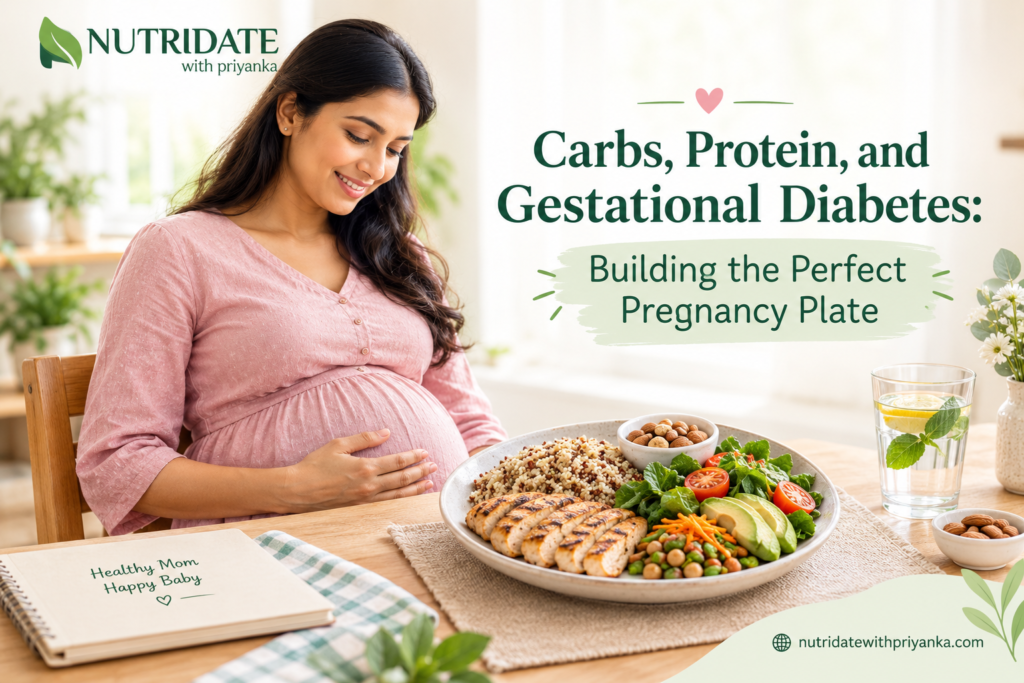
A simple way to build a healthy diet for gestational diabetes during pregnancy is to think in sections rather than counting every gram:
- Half the plate: non-starchy vegetables, such as lauki, palak, beans, cabbage, cauliflower or a cucumber-tomato salad
- A quarter: protein, such as dal, paneer, fish, egg or chicken
- A quarter: carbohydrate, such as roti, a measured portion of rice or millets
- A little healthy fat: ghee or mustard oil in cooking, a few nuts or seeds
Fibre from vegetables, whole grains and pulses slows digestion further. The exact portions depend on your stage of pregnancy, sugar readings and appetite, so treat this as a visual guide, not a fixed rule.
Indian Foods That Can Fit Into a Gestational Diabetes Diet
Everyday Indian meals work well with small adjustments:
- multigrain or whole wheat roti, jowar or bajra roti
- besan chilla, moong dal chilla or vegetable oats upma
- dalia, brown rice or a smaller portion of white rice with extra dal and sabzi
- sprouts chaat, roasted chana or makhana
- whole fruits like guava, apple, pear or orange, in moderate portions
Rice doesn’t have to disappear either. A smaller portion, eaten with dal, vegetables and a protein, is very different from a large plate of rice on its own.
Iron-Rich Foods During Pregnancy
Iron needs rise during pregnancy because your blood volume increases and your baby needs iron for growth. Low iron can leave you tired and breathless. Useful iron rich foods for pregnancy include:
- Vegetarian: palak, methi and other green leafy vegetables, rajma, chana, lentils, soya, sesame seeds (til) and ragi
- Non-vegetarian: eggs, chicken and well-cooked fish
Plant iron is absorbed better with vitamin C, so add lemon, amla, tomato or guava to meals. Keeping tea and coffee away from mealtimes also helps. Many women are prescribed iron supplements, so take them as your doctor advises. Calcium matters too, and Nutridate’s guide to calcium rich Indian foods has practical options.
How to Build a Practical Indian Pregnancy Diet Chart
A good pregnancy diet chart indian families can actually follow uses the foods already cooked at home. Most women with gestational diabetes do better with three moderate meals and two or three small snacks, spaced evenly through the day.
Requirements vary with your trimester, weight, blood glucose readings, activity and any medication. Your obstetrician and dietitian may also ask you to test sugar at certain times, which helps show how your body responds to particular meals. For stage-by-stage guidance, see this trimester-wise Indian diet guide and, for the early months, the first trimester diet chart.
Example of a Balanced Day of Meals
This is an educational example only, not a personalised prescription. Your own plan should come from your doctor and dietitian.
- Breakfast: two moong dal chillas with mint chutney and a small bowl of curd
- Mid-morning: a guava or an apple with a few almonds
- Lunch: one or two multigrain rotis, dal, a vegetable sabzi, salad and fish or paneer
- Evening: roasted chana or sprouts chaat, with buttermilk
- Dinner: a small portion of rice or dalia with vegetables and chicken, egg curry or tofu
- Bedtime (if advised): a glass of milk or a small protein-rich snack
When You Should Seek Professional Nutrition Guidance
General tips help, but gestational diabetes needs individual attention. Your sugar readings, weight gain, cravings, nausea and cultural food habits all shape what works. A qualified dietician in Kolkata can build a pregnancy diet plan around your reports and routine, and adjust it as your pregnancy progresses.
Nutridate with Priyanka offers personalised nutrition plans after an initial consultation, with ongoing support, and lists prenatal and postnatal nutrition among its areas of guidance alongside its Diabetes Management Program. Whether you are searching for the best dietician in Kolkata or simply someone who understands Indian home food, look for a professional who works alongside your obstetrician rather than replacing their advice. You can read more about Priyanka’s approach or book a consultation, in person or online.
Frequently Asked Questions
Can I eat rice if I have gestational diabetes?
Often, yes, in a controlled portion. Pair it with dal, vegetables and protein, and follow your dietitian’s advice based on your sugar readings.
What should a gestational diabetes breakfast look like?
Include protein and fibre with a modest carbohydrate portion – for example, besan or moong dal chilla with curd, or vegetable oats with an egg. Avoid sweetened cereals and juices.
Which Indian foods are high in protein during pregnancy?
Dal, rajma, chana, sprouts, paneer, curd, milk, eggs, soya, tofu and well-cooked fish or chicken.
What are some iron rich foods for pregnancy?
Green leafy vegetables, rajma, chana, lentils, soya, sesame seeds, ragi, eggs and chicken. Pair plant sources with vitamin C foods.
Can I follow a pregnancy diet plan if I have gestational diabetes?
Yes, but it should be adjusted for blood sugar management and reviewed by your doctor and a qualified dietitian. A top dietician in Kolkata can personalise it.
Should every pregnant woman follow the same diet chart?
No. Needs differ by trimester, weight, activity, blood sugar and medical history, so plans should be individual.