Best Hydration Foods and Drinks During Indian Summers
Indian summers can be hot, humid, and exhausting. As temperatures rise, your body loses more fluid through sweating, especially when you spend time outdoors, exercise, travel, or work in the heat. Drinking enough water is essential, but hydration is not limited to what you drink.
Many everyday foods also contain a significant amount of water. Fruits such as watermelon and oranges, vegetables such as cucumber and tomatoes, and foods such as curd can contribute to your overall fluid intake. Choosing the right hydration foods can therefore make your summer diet both refreshing and nutritious.
But there is an important distinction: not every summer drink is a good hydration choice. A beverage may contain plenty of water but also large amounts of added sugar. Similarly, electrolyte-rich foods and drinks may be useful in certain situations but are not automatically necessary for everyone.
This guide explains the best hydration foods and drinks for Indian summers, how to include them in your daily diet, and what to consider when your hydration needs increase.
Looking for the Best Foods and Drinks to Stay Hydrated This Summer?
Indian summers can increase your body’s fluid needs and make dehydration more likely. The right hydration foods and drinks can help support fluid balance, energy, digestion, and overall wellbeing. Get practical nutrition guidance tailored to your lifestyle, health needs, and daily routine.
Get Your Personalized Nutrition PlanWhat Are Hydration Foods?
Hydration foods are foods that contain a high amount of water and can contribute to your overall fluid intake.
They include many fruits and vegetables, along with certain dairy and other foods. Besides water, these foods can provide fibre, vitamins, minerals, protein, and other nutrients.
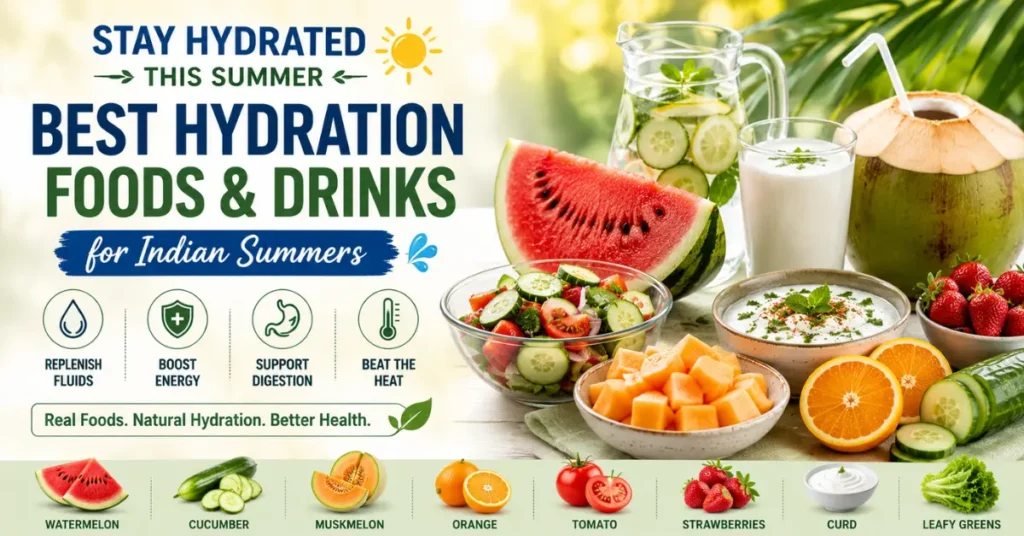
Some of the best-known hydration foods include watermelon, cucumber, muskmelon, oranges, tomatoes, strawberries, curd, and other water-rich seasonal produce.
However, hydration foods should complement your fluid intake rather than replace drinking water.
Why Are Hydration Foods Important During Indian Summers?
During hot weather, sweating can increase your body’s fluid losses. If you are physically active or spend several hours outdoors, your fluid requirements may be higher than usual.
Adequate hydration supports normal body functions such as temperature regulation, digestion, circulation, and physical performance.
A simple summer hydration routine can therefore include three things: regular fluids, water-rich foods, and balanced meals.
The goal is not to find one “superfood” for hydration. It is to create consistent habits that provide enough fluids throughout the day.
Best Hydration Foods for Indian Summers
1. Watermelon
Watermelon is one of the most popular hydration foods for summer because it has a high water content and is naturally refreshing.
It can be eaten as a whole fruit, added to a fruit bowl, or served as a chilled snack. Eating the whole fruit also provides fibre, which is reduced when fruit is turned into strained juice.
For a more balanced snack, pair watermelon with curd, nuts, seeds, or another nutritious food according to your dietary needs.
2. Cucumber
Cucumber is a simple and versatile hydration food that can easily become part of everyday Indian meals.
Add it to salads, raita, sandwiches, wraps, or lunch plates. You can also combine cucumber with mint and lemon for a refreshing homemade beverage.
Because cucumber is naturally light and water-rich, it can add volume and freshness to meals without contributing many calories.
3. Muskmelon
Muskmelon is another seasonal fruit that can contribute to hydration during summer.
It can be enjoyed on its own or added to a fruit bowl. It also provides nutrients such as vitamin C and carotenoids.
Choose fresh whole fruit more often than packaged fruit beverages, particularly when you want to keep added sugar low.
4. Oranges
Oranges provide both water and important nutrients such as vitamin C and fibre.
Eating an orange whole is generally more beneficial than drinking filtered orange juice because the whole fruit retains its fibre.
Oranges can make a convenient mid-morning or afternoon summer snack.
5. Tomatoes
Tomatoes are often discussed as vegetables in everyday cooking, but botanically they are fruits. They also contain a high proportion of water.
Use them in salads, raita, sandwiches, wraps, curries, soups, or homemade salsa.
Combining tomatoes with cucumber and other seasonal vegetables can create a simple water-rich side dish for summer meals.
6. Strawberries
Strawberries are another water-rich fruit that can contribute to your daily fluid intake.
They provide vitamin C and other plant compounds and can be eaten whole or added to plain curd.
If you’re trying to make a healthier summer snack, avoid adding large amounts of sugar, syrup, or sweetened cream to naturally nutritious fruit.
7. Curd
Curd is an especially useful food in Indian summer diets.
It contains water along with protein and other nutrients. You can eat it with meals, prepare raita, or use it to make chaas or lassi.
For everyday hydration, plain or lightly prepared curd-based options are generally more suitable than heavily sweetened versions.
8. Lettuce and Leafy Vegetables
Several salad vegetables contain substantial amounts of water and can contribute to overall hydration.
Lettuce, cucumber, tomatoes, and other fresh vegetables can be combined into a simple summer salad.
Adding these foods to meals also increases your intake of fibre and micronutrients.
Looking for the Best Foods and Drinks to Stay Hydrated This Summer?
Indian summers can increase your body’s fluid needs and make dehydration more likely. The right hydration foods and drinks can help support fluid balance, energy, digestion, and overall wellbeing. Get practical nutrition guidance tailored to your lifestyle, health needs, and daily routine.
Get Your Personalized Nutrition PlanBest Hydration Drinks for Indian Summers
Food is only one part of hydration. Drinks remain an important source of fluids, with plain water being the simplest everyday option.
1. Plain Water
Water should form the foundation of your hydration routine.
Keep water accessible during the day and drink regularly. Your individual fluid needs can vary based on temperature, physical activity, diet, body size, and health conditions.
Instead of waiting until you feel extremely thirsty, make drinking water a regular part of your daily routine.
2. Coconut Water
Tender coconut water is a popular summer beverage in India.
It provides fluids and naturally occurring electrolytes, including potassium. It can be a refreshing choice after everyday activities.
However, coconut water is not automatically better than plain water. People with kidney disease or conditions requiring potassium restriction should discuss their intake with their healthcare professional.
3. Chaas
Chaas, or buttermilk, combines curd and water and is often flavoured with cumin, coriander, mint, or a small amount of salt.
It provides fluids and can also contribute protein and other nutrients from curd.
A homemade, unsweetened or lightly seasoned version can be a practical addition to a summer meal.
4. Nimbu Pani
Nimbu pani is one of the simplest Indian summer drinks.
Water, lemon juice, and optional salt or a small amount of sweetener can create a refreshing beverage in minutes.
One thing to watch is added sugar. A drink that starts as a simple hydration option can become a high-sugar beverage when several teaspoons of sugar or syrup are added.
For regular consumption, consider using little or no added sugar according to your taste and dietary requirements.
5. Sattu Drink
Sattu is traditionally made from roasted gram and can be prepared as a savoury or lightly sweetened drink.
Compared with many sugary summer beverages, a savoury sattu drink can provide protein and fibre, making it a more filling option.
Try combining sattu with water, lemon, cumin, coriander, and an appropriate amount of salt.
6. Unsweetened Lassi
Lassi made with curd and water can provide fluids and protein.
The main nutritional consideration is added sugar. Sweetened lassi can become calorie-dense depending on the recipe.
For an everyday option, plain or lightly sweetened lassi can be a better choice than heavily sweetened versions.
7. Aam Panna
Aam panna is a traditional Indian summer drink prepared from raw mango, water, spices, and usually a sweetener.
It can be refreshing and is deeply associated with summer food traditions in many parts of India.
When preparing it at home, control the amount of added sugar. Aam panna can contribute to fluid intake, but it should not be considered a treatment for dehydration or heat-related illness.
Looking for the Best Foods and Drinks to Stay Hydrated This Summer?
Indian summers can increase your body’s fluid needs and make dehydration more likely. The right hydration foods and drinks can help support fluid balance, energy, digestion, and overall wellbeing. Get practical nutrition guidance tailored to your lifestyle, health needs, and daily routine.
Get Your Personalized Nutrition PlanHydration Foods vs Hydration Drinks: Which Is Better?
You don’t have to choose between foods and drinks.
The best approach is to use both.
| Hydration option | Main contribution | Easy way to include it |
|---|---|---|
| Watermelon | Water + fibre | Snack or fruit bowl |
| Cucumber | Water + fibre | Salad or raita |
| Orange | Water + vitamin C + fibre | Whole fruit |
| Curd | Water + protein | Raita or meal accompaniment |
| Coconut water | Fluids + electrolytes | Standalone beverage |
| Chaas | Fluids + protein | With lunch |
| Nimbu pani | Fluids + flavour | Homemade drink |
| Sattu | Fluids + protein + fibre | Savoury summer drink |
There is no single best hydration food or drink for everyone. Your choice should depend on your activity level, diet, climate, health requirements, and personal preferences.
Which Hydration Foods Are Best After Sweating?
If you have been exercising, working outdoors, or spending a long time in hot weather, you may lose more fluid through sweat.
For normal daily activities, water and balanced meals are often sufficient for healthy adults.
After prolonged or intense exercise, electrolyte replacement may become more relevant because sweat contains sodium and other electrolytes.
Depending on the situation, options may include water, coconut water, chaas, a balanced meal, or an appropriately formulated electrolyte beverage.
However, people with kidney, heart, blood pressure, or other medical conditions may have different electrolyte or fluid requirements.
Best Hydration Foods for Weight Management
Hydration and weight management can complement each other without relying on detox drinks or restrictive diets.
Water-rich foods such as cucumber, watermelon, muskmelon, oranges, tomatoes, and other seasonal produce can add volume and nutrients to meals.
Plain water is also useful because it provides hydration without added calories.
The bigger issue is often what gets added to summer beverages.
Sugar, syrups, ice cream, sweetened condensed milk, and large quantities of sweetened flavourings can significantly increase the calorie content of an otherwise nutritious drink.
Choosing whole fruit instead of sugary fruit beverages can also provide more fibre and may be more filling.
Best Hydration Foods and Drinks for People With Diabetes
People with diabetes can include many summer foods and drinks, but added sugar and overall carbohydrate intake deserve attention.
Better everyday choices may include:
Plain water
Unsweetened chaas
Unsweetened lemon water
Plain curd
Whole fruits in appropriate portions
Water-rich vegetables
A homemade beverage with controlled added sugar
Sweetened juices, sharbat, sweet lassi, and sugary soft drinks can add substantial amounts of sugar.
If you have diabetes, your individual meal plan, medications, activity level, and carbohydrate requirements should be considered when choosing summer foods and drinks.
Hydration Foods for Exercise and Outdoor Activities
Your hydration needs can increase when you exercise or work outdoors in hot conditions.
For shorter and moderate activities, water may be sufficient for many people.
For prolonged, intense exercise or heavy sweating, fluids and electrolytes may both need greater attention.
A practical routine includes drinking fluids regularly, carrying water during outdoor activities, replacing fluids after heavy sweating, and considering electrolytes when the activity and sweat losses justify them.
More electrolytes are not always better. Individual requirements vary.
Summer Foods and Drinks to Limit
Not every refreshing drink is an ideal everyday hydration choice.
Sugary Soft Drinks
They provide fluids but often contain substantial amounts of added sugar.
Sweetened Fruit Drinks
Fruit-based beverages can become high in sugar when additional sweeteners are added.
Excessively Sweetened Sharbats
Traditional drinks can be part of your diet, but the quantity of added sugar matters.
Large Amounts of Sweetened Lassi
Lassi can be nutritious, but sugar and other additions can significantly change its calorie content.
Alcohol
Alcohol should not be used as a hydration drink and can be particularly inappropriate during significant heat exposure.
Common Hydration Mistakes During Indian Summers
Drinking Water Only When You Feel Very Thirsty
Make hydration a regular habit, particularly when you are outdoors or physically active.
Assuming Every Fruit Juice Is Healthy
Whole fruits generally provide fibre that is lost or reduced when fruit is processed into juice.
Adding Too Much Sugar to Homemade Drinks
Homemade does not automatically mean low-sugar.
Ignoring Electrolytes After Heavy Sweating
During prolonged intense activity, electrolyte losses can matter. However, supplementation should be appropriate to the situation.
Forgetting About Water-Rich Foods
Hydration is not only about beverages. Including fruits, vegetables, and curd can make your summer diet more fluid-rich.
Following the Same Hydration Routine Every Day
Fluid needs can change with weather, exercise, travel, illness, and other circumstances.
How Can You Tell If You Are Dehydrated?
Possible signs of dehydration include increased thirst, dry mouth, fatigue, headache, dizziness, dark or concentrated urine, and reduced urination.
The severity of symptoms matters.
If someone experiences confusion, fainting, severe weakness, unusually high body temperature, or other serious symptoms after heat exposure, they may need urgent medical care.
Food and drinks should not be considered a substitute for medical treatment in cases of significant heat illness.
A Simple Indian Summer Hydration Routine
A practical summer hydration routine does not have to be complicated.
Start your day with water.
Include a water-rich fruit such as watermelon or muskmelon with breakfast or as a snack.
Add cucumber, tomatoes, raita, or other fresh vegetables to your meals.
Keep water available throughout the day.
Choose chaas, coconut water, or an appropriate homemade summer beverage when it fits your dietary needs.
After prolonged exercise or heavy sweating, pay attention to both fluid and electrolyte replacement.
Keep added sugar under control.
Most importantly, adjust your hydration habits according to the weather, activity level, and your individual nutritional needs.
Make Hydration Part of Your Summer Nutrition
Staying hydrated during an Indian summer does not require complicated detox plans or a single “perfect” drink.
The most effective approach is consistent and balanced: drink water regularly, include water-rich fruits and vegetables, choose nutritious beverages such as chaas when appropriate, and pay attention to electrolytes when heavy sweating increases your needs.
Hydration foods can make this routine easier while adding valuable nutrients to your diet.
If you have diabetes, kidney disease, heart disease, blood pressure concerns, or another condition that affects your fluid or electrolyte needs, personalized nutritional advice is important.
A well-planned summer diet should not only help you stay hydrated but also support your energy, digestion, nutritional needs, and overall wellbeing throughout the hotter months.
Looking for the Best Foods and Drinks to Stay Hydrated This Summer?
Indian summers can increase your body’s fluid needs and make dehydration more likely. The right hydration foods and drinks can help support fluid balance, energy, digestion, and overall wellbeing. Get practical nutrition guidance tailored to your lifestyle, health needs, and daily routine.
Get Your Personalized Nutrition PlanFrequently Asked Questions
Watermelon, cucumber, muskmelon, oranges, tomatoes, strawberries, curd, and other water-rich fruits and vegetables are useful hydration foods. They can contribute to your overall fluid intake while providing fibre, vitamins, minerals, and other nutrients.
Many fruits and vegetables have a high water content, including watermelon, cucumber, muskmelon, oranges, and tomatoes. Rather than focusing on one food, include a variety of water-rich foods in your diet.
Plain water is the simplest everyday hydration choice. Chaas, coconut water, nimbu pani, and other homemade beverages can also contribute fluids depending on their ingredients and your individual dietary needs.
Not necessarily. Coconut water provides fluids and potassium, while plain water is a simple and effective everyday hydration choice. Coconut water may be useful in some situations, but it is not universally better.
Yes. Watermelon contains a high proportion of water and can contribute to overall fluid intake. Eating it as a whole fruit also provides fibre.