Mediterranean Diet vs Indian Diet: Which One Is Best for Health
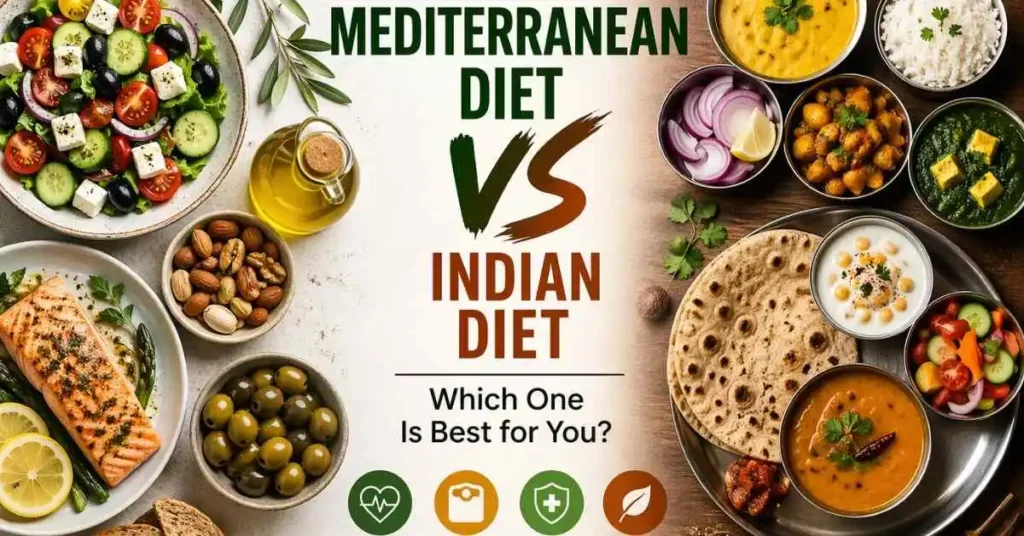
The discussion around the Mediterranean diet vs Indian diet is becoming increasingly popular, especially among people who want to improve heart health, lose weight, and build a sustainable eating lifestyle. But here is the truth most blogs miss. The answer is not about choosing a winner. It is about choosing what actually works for you in real life.
Confused Between Mediterranean and Indian Diet?
Both Mediterranean and Indian diets offer powerful health benefits, but choosing the right approach depends on your lifestyle, goals, and preferences. Get expert guidance to find the best diet plan tailored specifically for your body and long-term health.
Get Your Personalized Diet PlanWhat Is the Mediterranean Diet?
The Mediterranean diet is inspired by the traditional eating habits of countries like Greece, Italy, and Spain. It is widely considered one of the healthiest diets in the world, especially for heart health and longevity.
At its core, the Mediterranean diet focuses on simplicity and balance. It includes a high intake of fresh vegetables, fruits, whole grains, legumes, nuts, and seeds. Olive oil is the primary fat source, replacing butter and refined oils. Fish and seafood are consumed regularly, while red meat is limited.
What makes this diet powerful is not just what you eat, but how you eat. Meals are often slow, mindful, and social. This reduces overeating and improves digestion.
The Mediterranean diet is not about restriction. It is about choosing better quality foods consistently.
What Is the Traditional Indian Diet?
The Indian diet is incredibly diverse and deeply rooted in tradition. It varies across regions, but the foundation remains the same. Home-cooked meals made with grains, lentils, vegetables, dairy, and spices.
A typical Indian meal includes roti or rice, dal, sabzi, curd, and sometimes pickles or chutneys. Spices like turmeric, cumin, coriander, and ginger add both flavor and health benefits.
Traditionally, the Indian diet is balanced and nutritious. It naturally includes fiber, plant-based protein, and essential micronutrients. However, the modern version of the Indian diet has shifted. Processed foods, excess oil, sugar, and refined flour have replaced many traditional elements.
This shift is the real problem, not the diet itself.
Mediterranean Diet vs Indian Diet: Key Differences That Matter
When comparing the Mediterranean diet vs Indian diet, the differences are not just about ingredients. They are about structure, lifestyle, and long-term sustainability.
The Mediterranean diet focuses heavily on healthy fats, especially from olive oil and nuts. These fats support heart health and reduce inflammation. The Indian diet uses a variety of fats such as ghee, mustard oil, and coconut oil. These can be healthy, but only when used in moderation.
Protein intake is another important difference. The Mediterranean diet includes fish and lean meats regularly, providing high-quality protein. The Indian diet, especially vegetarian versions, relies on lentils, legumes, and dairy. While nutritious, protein intake can sometimes be insufficient if meals are not planned properly.
Vegetable consumption also differs. The Mediterranean diet includes a lot of raw vegetables and salads. The Indian diet mainly includes cooked vegetables, which may reduce some nutrients but improve digestibility.
Carbohydrates in the Mediterranean diet come mostly from whole grains. In contrast, the Indian diet often includes refined carbs like white rice and maida, especially in modern eating patterns.
Confused Between Mediterranean and Indian Diet?
Both Mediterranean and Indian diets offer powerful health benefits, but choosing the right approach depends on your lifestyle, goals, and preferences. Get expert guidance to find the best diet plan tailored specifically for your body and long-term health.
Get Your Personalized Diet PlanWhich Diet Is Better for Heart Health?
If we strictly compare the Mediterranean diet vs Indian diet for heart health, the Mediterranean diet has stronger scientific backing. It is known to reduce bad cholesterol, improve blood pressure, and lower the risk of heart disease.
However, this does not mean the Indian diet is inferior. A traditional Indian diet, when followed correctly, can also support heart health. The problem arises when meals include too much oil, fried foods, and refined carbohydrates.
By making small changes such as reducing oil, increasing vegetables, and choosing whole grains, the Indian diet can become just as heart-friendly.
Mediterranean Diet vs Indian Diet for Weight Loss
Weight loss depends more on consistency than the type of diet. Still, understanding how each diet works can help you choose better.
The Mediterranean diet promotes weight loss by keeping you full for longer. Healthy fats and fiber reduce hunger and prevent overeating. It naturally controls calorie intake without strict dieting.
The Indian diet can also support weight loss if it is balanced. Including protein-rich foods like dal, paneer, and sprouts can improve results. Controlling portion size and reducing fried foods plays a major role.
In the comparison of Mediterranean diet vs Indian diet, both can work for weight loss. The real difference is how you follow them.
The Hidden Problem with Modern Diets
Today, the biggest issue is not choosing between the Mediterranean diet vs Indian diet. The real issue is the rise of processed and convenience foods.
Packaged snacks, sugary drinks, fast food, and irregular eating habits are the main reasons behind obesity and lifestyle diseases. Both the Mediterranean and traditional Indian diets naturally avoid these problems.
They focus on real food, home cooking, and balanced nutrition. This is the biggest lesson you should take from both.
The Smartest Approach: Combine Both Diets
Instead of choosing one, the best strategy is to combine the strengths of both diets.
You can follow an Indian diet while applying Mediterranean principles. For example, use healthier oils, include more raw vegetables, add nuts and seeds, and reduce processed foods.
This hybrid approach makes your diet more practical, enjoyable, and sustainable. It allows you to maintain your cultural food habits while improving your health.
This is exactly what works best in real life.
Practical Daily Changes That Actually Work
You do not need a complicated diet plan to improve your health. Small, consistent changes can create long-term results.
Start by adding a salad before your meals. This helps reduce overeating. Replace fried snacks with nuts or fruits. Use less oil while cooking. Choose whole grains instead of refined ones.
Make sure every meal includes a source of protein. Eat slowly and avoid distractions while eating. These simple habits can completely transform your health over time.
Which Diet Should You Choose?
The answer to the Mediterranean diet vs Indian diet debate depends on your lifestyle.
If you prefer familiar food and home-cooked meals, improving your Indian diet is the best option. If you enjoy experimenting with global foods, adding Mediterranean elements can be beneficial.
The goal is not perfection. The goal is consistency.
Choose a diet that you can follow every day without feeling restricted.
A Quick Recap
The comparison between the Mediterranean diet vs Indian diet is not about finding a winner. Both diets are powerful in their own way.
The Mediterranean diet teaches us the importance of healthy fats, fresh foods, and mindful eating. The Indian diet offers diversity, rich nutrition, and cultural comfort.
The best results come when you combine the strengths of both. Focus on whole foods, reduce processed items, and maintain balance. This is the real secret to long-term health.
Confused Between Mediterranean and Indian Diet?
Both Mediterranean and Indian diets offer powerful health benefits, but choosing the right approach depends on your lifestyle, goals, and preferences. Get expert guidance to find the best diet plan tailored specifically for your body and long-term health.
Get Your Personalized Diet PlanFrequently Asked Questions
The main difference between the Mediterranean diet vs Indian diet is the type of fats and protein sources used. The Mediterranean diet focuses on olive oil, fish, and raw vegetables, while the Indian diet includes ghee, lentils, dairy, and mostly cooked foods.
Both diets are healthy when followed correctly. The Mediterranean diet is proven for heart health, while a balanced Indian diet provides rich nutrients through spices, legumes, and whole foods.
Yes, but instead of fully switching, it is better to adapt Mediterranean principles into Indian meals, such as using healthy oils, adding salads, and reducing processed foods.
Both diets can help with weight loss. The Mediterranean diet controls hunger with healthy fats, while the Indian diet works well when portions are controlled and meals are balanced.
Yes, combining both diets is the best approach. You can follow Indian meals while including Mediterranean habits like eating more raw vegetables, nuts, and healthy fats.Mediterranean diet vs Indian diet