Night Shift Diet Plan: What to Eat Before, During and After Work
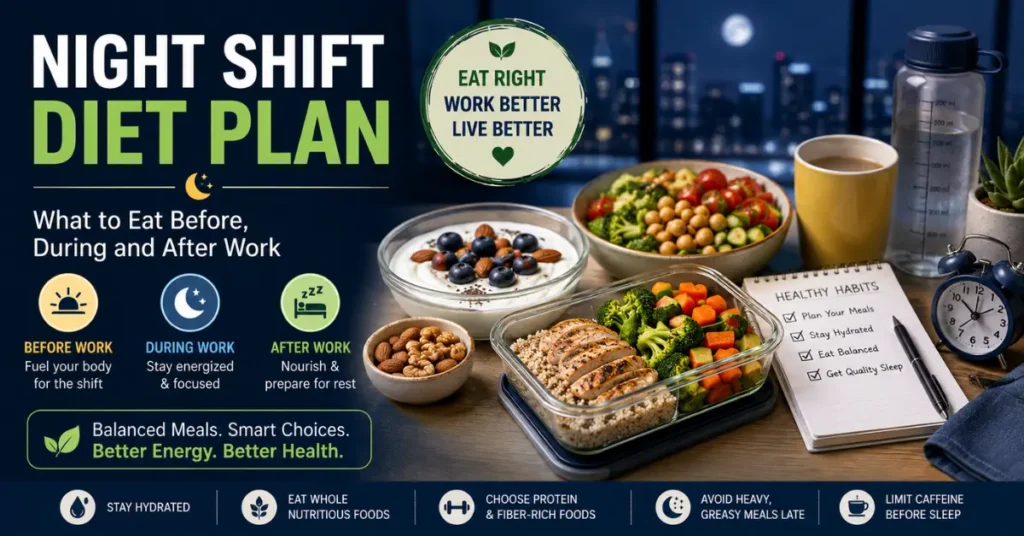
Working a night shift can make healthy eating feel much harder than it should. When most people are having dinner and getting ready for bed, you may be starting work, taking your meal break or trying to stay awake with another cup of coffee.
Irregular working hours can affect when you eat, what you choose and how much you eat. Night-shift employees may also find themselves relying on tea, coffee, biscuits, fried snacks, instant noodles or packaged foods because they are convenient during a busy shift.
A well-planned Night Shift Diet Plan does not mean starving yourself at night or following a strict diet chart. It means creating a practical eating routine that fits your working hours, sleep schedule, hunger, activity level and health goals.
Meal timing may also matter. Research from the National Institutes of Health suggests that eating at night can affect glucose metabolism, although more research is needed to determine how these findings translate to people working real-world night shifts.
So, what should you eat before a night shift? What is a good meal during the shift? Should you eat after work before going to sleep?
Let’s break it down.
Struggling to Eat Healthy During Night Shifts?
Working night shifts can make healthy eating difficult and may affect your energy, digestion, sleep, and weight management. A well-planned night shift diet can help you choose the right foods before, during, and after work while keeping your routine balanced and sustainable.
Get Your Personalized Diet PlanWhat Is a Night Shift Diet Plan?
A Night Shift Diet Plan is a structured approach to eating that helps overnight workers organize their meals and snacks around their work and sleep schedule.
Instead of treating midnight as the beginning of a new day, think about your nutrition across your entire 24-hour routine.
A practical night shift eating pattern generally focuses on:
- Having a balanced meal before starting work
- Choosing lighter meals during the overnight hours
- Including protein and fiber-rich foods
- Keeping healthy snacks available
- Drinking enough water
- Being thoughtful about caffeine timing
- Avoiding frequent reliance on sugary and highly processed foods
- Avoiding very large meals close to your main sleep period
There is no single diet that works for every night-shift employee. A nurse working 7 p.m. to 7 a.m. may need a different routine from someone working 10 p.m. to 6 a.m.
Your diet should fit your actual schedule.
Why Does Night Shift Work Affect Eating Habits?
Your body has an internal biological clock called the circadian rhythm. It helps regulate sleep, wakefulness and several other body functions, including aspects of metabolism.
Night work can disturb the normal relationship between sleeping, waking, eating and light exposure. Research has found that simulated night work can alter metabolic rhythms, and controlled studies have shown that nighttime eating can increase glucose levels compared with eating during the daytime.
This does not mean that every night-shift worker must completely stop eating at night.
Instead, it highlights why meal timing, food quality and portion size deserve attention when you work overnight.
A 2026 scoping review also found that shift workers commonly experience disruptions in both dietary quality and meal timing, although the evidence varies considerably between individuals and work patterns.
What Should You Eat Before a Night Shift?
Your meal before work is one of the most important parts of your night shift eating routine.
Rather than beginning your shift already hungry, have a balanced meal before leaving for work.
A good pre-shift meal can contain:
Protein: Eggs, chicken, fish, paneer, tofu, curd, dal or beans
Vegetables: Cooked vegetables, leafy greens or salad
Carbohydrates: Roti, brown rice, oats, whole grains, potatoes or other minimally processed carbohydrate sources
Healthy fats: Nuts, seeds or suitable cooking oils in moderate quantities
For an Indian meal, this could be dal, roti and sabzi with curd, or grilled chicken with rice and vegetables.
The goal is not to eliminate carbohydrates. It is to build a balanced plate instead of starting your shift with a meal dominated by refined carbohydrates, fried foods or sugary drinks.
What Should You Eat During a Night Shift?
If you become hungry during your shift, you do not have to ignore it.
The better strategy is to plan what you will eat instead of waiting until you are extremely hungry and then choosing whatever food is easiest to find.
Good options can include:
- Vegetable and paneer sandwich
- Boiled eggs
- Curd or unsweetened yogurt
- Roasted chana
- Fruit with a small portion of nuts
- Sprouts
- Dal with vegetables
- Homemade vegetable or chicken soup
- Whole-grain roti with a protein-rich filling
If you have a long shift, splitting your food into a planned meal and a small snack may feel more comfortable than eating one very large meal in the middle of the night.
Research in simulated night-shift conditions has also found that a smaller snack at night could reduce hunger without producing the same sleepiness reported after a larger meal, although individual responses vary.
What Is the Best Night Shift Diet Plan for Weight Loss?
If your goal is weight loss, working at night does not make weight management impossible.
The biggest mistake is often trying to compensate for night work by severely restricting food during the day and then overeating during the shift.
A better approach is to create a sustainable calorie-controlled eating pattern that provides enough protein, fiber and nutrient-dense foods while fitting your working schedule.
For weight management, focus on:
Balanced portions: You do not need to remove entire food groups.
Protein at meals: Include suitable protein sources regularly.
More vegetables: Use vegetables to add volume and nutrients to meals.
High-fiber foods: Choose whole grains, pulses, vegetables and fruits according to your tolerance.
Planned snacks: Keep healthier options ready before hunger becomes intense.
Fewer liquid calories: Limit frequent sugary drinks and sweetened beverages.
Consistent routine: Avoid constantly changing between fasting, overeating and skipping meals.
If you have a medical condition or specific weight-loss target, your calorie and nutrient requirements should be assessed individually.
Struggling to Eat Healthy During Night Shifts?
Working night shifts can make healthy eating difficult and may affect your energy, digestion, sleep, and weight management. A well-planned night shift diet can help you choose the right foods before, during, and after work while keeping your routine balanced and sustainable.
Get Your Personalized Diet PlanWhat Are Healthy Snacks for Night Shift Workers?
Night shift employees often snack because they are tired, bored or surrounded by convenient food.
Instead of trying to eliminate every snack, make your snack more purposeful.
Some practical options include:
Fruit and Nuts
A piece of fruit with a modest serving of nuts can provide a combination of carbohydrates, fiber and healthy fats.
Roasted Chana
Roasted chana is easy to carry and can be a convenient snack option.
Curd or Unsweetened Yogurt
Curd can provide protein and can work well as part of a planned snack.
Boiled Eggs
Eggs are a convenient protein-rich option for people who include them in their diet.
Homemade Sandwich
A sandwich made with whole-grain bread, vegetables and a protein filling can be more satisfying than packaged biscuits or pastries.
Sprouts
Sprouts can be included as part of a balanced snack if you tolerate them comfortably.
The best snack is one that fits your nutritional needs, preferences and work environment.
How Much Water Should You Drink During a Night Shift?
Keep water available throughout your shift and drink regularly rather than depending entirely on coffee, tea or energy drinks.
Your fluid requirement depends on factors such as body size, activity, climate, food intake and workplace conditions.
If you work in a hot environment or perform physically demanding work, your needs may be higher.
Water should generally be your primary beverage. If you are drinking several cups of sweetened tea, coffee, soft drinks or energy drinks overnight, those beverages can add substantial sugar or caffeine to your routine.
Should Night Shift Workers Drink Coffee?
Coffee can be useful for alertness, but more is not always better.
The timing of caffeine is particularly important for someone who needs to sleep soon after finishing a night shift.
For example, if your shift finishes at 6 a.m. and you plan to sleep shortly afterward, repeatedly consuming caffeine near the end of your shift may make it harder to fall asleep.
The National Heart, Lung, and Blood Institute recommends avoiding caffeine close to bedtime because it can interfere with sleep.
A practical approach is to use caffeine strategically rather than automatically reaching for another cup whenever you feel tired.
Your personal tolerance also matters.
What Foods Should Night Shift Workers Avoid?
You do not need a completely “forbidden foods” list to eat well during night shifts.
However, some foods are better kept occasional rather than becoming everyday overnight staples.
Try to limit frequent consumption of:
Fried Foods
Samosas, pakoras, fries and other fried foods can be easy to overeat and may feel heavy during an overnight shift.
Sugary Drinks
Soft drinks, sweetened coffee and energy drinks can add significant amounts of sugar and calories.
Highly Processed Snacks
Chips, cookies, packaged cakes and pastries are convenient but may not provide the sustained nutrition you need during a long shift.
Very Large Meals
A huge meal during the middle of the night may leave some people feeling uncomfortable or sluggish.
Excessive Caffeine
Too much caffeine can interfere with your subsequent sleep, especially when consumed late in the shift.
This does not mean you can never eat these foods. The goal is to prevent convenience foods from becoming the default foundation of your night shift diet.
Should You Eat at Midnight During a Night Shift?
There is no universal rule that says every night-shift worker must stop eating at midnight.
However, the timing of food intake is an important area of research.
A controlled NIH-supported study found that simulated nighttime eating increased glucose levels, while restricting meals to daytime prevented that increase. The researchers also emphasized that further studies are needed in real-world shift workers.
This means the answer is more nuanced than “never eat after midnight.”
If you can structure your routine so that most of your substantial food intake happens during your biological daytime or before the overnight period, that may be worth discussing with a qualified nutrition professional.
If you are genuinely hungry during a long shift, a smaller balanced meal or snack may be more practical than forcing yourself to remain hungry.
What Should You Eat After a Night Shift?
After working all night, you may feel both hungry and exhausted.
If you are hungry before sleeping, choose a light, balanced option rather than a very large or greasy meal.
For example, depending on your individual requirements, you might choose:
- Curd with fruit
- Eggs with a light whole-grain option
- A small bowl of dal with vegetables
- A light paneer or tofu meal
- Another personalized protein-rich option
If you are not hungry, you do not necessarily need to force yourself to eat a large breakfast simply because it is morning.
The most important consideration is how the meal fits into your total daily intake and upcoming sleep period.
A Simple Night Shift Diet Plan for a 10 PM to 6 AM Shift
There is no universal night shift diet chart, but the following example can help you understand how meal timing could be organized.
6:30–7:30 PM: Main Meal
Have your most substantial balanced meal before starting work.
Example: 2 rotis + dal + mixed vegetables + curd
or
Example: Rice + grilled chicken/fish + vegetables + salad
10:30–11:30 PM: Water and Optional Small Snack
If you are hungry, choose something light.
Example: Fruit + a small portion of nuts
1:30–2:30 AM: Light Meal
If your shift requires a meal break, choose a balanced but moderate portion.
Example: Paneer or egg sandwich + vegetables
or
Example: Dal + vegetables + a small portion of rice
4:00–5:00 AM: Optional Snack
If you are genuinely hungry:
Example: Curd, roasted chana, boiled egg or fruit
6:30–7:30 AM: After-Shift Food
If hunger is likely to disturb your sleep, have a small meal or snack that suits you.
Avoid making this your largest meal immediately before sleeping.
This is an example rather than a prescription. Your ideal meal timing may be different.
Struggling to Eat Healthy During Night Shifts?
Working night shifts can make healthy eating difficult and may affect your energy, digestion, sleep, and weight management. A well-planned night shift diet can help you choose the right foods before, during, and after work while keeping your routine balanced and sustainable.
Get Your Personalized Diet PlanNight Shift Diet Plan for Different Work Schedules
Not everyone works the same hours.
For a 6 PM to 2 AM Shift
Have a balanced meal before work, a moderate meal during the shift and a lighter meal or snack after work if needed.
For a 10 PM to 6 AM Shift
Make the pre-shift meal important, keep overnight eating lighter and avoid relying on continuous snacking throughout the night.
For a 7 PM to 7 AM Shift
A longer shift may require more than one planned eating opportunity. Instead of one huge overnight meal, consider a balanced pre-shift meal followed by planned smaller meals or snacks.
For Rotating Shifts
Rotating schedules are more challenging because your sleep and meal times keep changing. Planning meals ahead of each shift can help maintain consistency.
Your diet should be adjusted according to your actual schedule rather than forcing every worker into the same meal timetable.
How to Make Your Night Shift Diet Plan Easier to Follow
Knowing what to eat is one thing. Following the plan at 2 a.m. when you are exhausted is another.
Preparation makes a major difference.
Before leaving for work, pack your meal and at least one planned snack.
Keep water with you.
Do not depend on the office vending machine for your entire overnight diet.
If possible, prepare food in batches so that you do not have to cook a complete meal every day.
Keep simple options such as fruit, roasted chana, curd, eggs or nuts available when appropriate.
Most importantly, avoid waiting until you are extremely hungry before deciding what to eat.
Common Night Shift Diet Mistakes
Skipping Meals All Day
Some workers barely eat before their shift and then become extremely hungry overnight.
Eating Continuously Through the Night
Small bites of biscuits, chips, sweets and sugary drinks can add up even when they do not feel like a full meal.
Using Coffee Instead of Food
Caffeine may improve alertness temporarily, but it cannot replace balanced nutrition.
Ordering Fast Food Because You Did Not Prepare
Lack of preparation often turns convenience into the default choice.
Eating a Very Heavy Meal Before Sleeping
A large meal immediately before your main sleep period may be uncomfortable for some people.
Following Someone Else’s Diet Chart
Your calorie needs, food preferences, medical history, working hours and sleep schedule may be completely different from another person’s.
Can a Night Shift Diet Plan Improve Energy?
A balanced eating routine can help you avoid the extreme hunger and energy fluctuations that often accompany irregular eating.
However, food is not the only factor affecting energy during night work.
Sleep, hydration, caffeine timing, workload, physical activity and individual health all matter.
If you regularly experience severe fatigue despite getting enough opportunity for sleep, it is worth discussing the problem with a healthcare professional rather than trying to solve it only through diet.
Night Shift Diet Plan for People With Diabetes, PCOS or Other Health Conditions
A general diet plan may not be suitable if you have diabetes, PCOS, thyroid disease, high blood pressure, kidney disease, gastrointestinal problems or another health condition.
For example, people with diabetes may need individualized guidance around meal timing, carbohydrate intake, medication and blood glucose monitoring.
The CDC notes that shift work can make diabetes management more challenging and recommends planning meals and keeping meal timing as consistent as practical.
If you have a diagnosed condition, do not make major changes to your diet or medication schedule based only on a general blog article.
When Should You See a Dietitian?
A personalized nutrition consultation can be particularly useful if you work night shifts and are experiencing:
- Unwanted weight gain or difficulty losing weight
- Frequent cravings
- Irregular eating patterns
- Digestive discomfort
- Difficulty managing blood sugar
- Low energy related to poor eating habits
- Difficulty planning meals around changing shifts
- Confusion about what to eat for weight loss
A dietitian can consider your work schedule, food preferences, health history, activity level, sleep routine and goals before developing an individualized plan.
Build a Night Shift Diet Plan That Fits Your Life
There is no perfect diet chart for every person who works overnight.
A nurse working a 12-hour shift, an IT professional working from 10 p.m. to 6 a.m., a security professional working rotating shifts and a factory employee working fixed nights may all need different nutrition strategies.
The goal is to make healthy eating realistic.
Plan your main meal. Carry your food. Keep practical snacks available. Drink enough water. Be thoughtful about caffeine. Avoid making fried and highly processed foods your overnight routine. Most importantly, build your eating pattern around your complete 24-hour schedule rather than treating night work as an exception.
At Nutridate with Priyanka, nutrition guidance is built around individual routines, food preferences, health requirements and personal goals rather than a generic diet chart.
If night shifts are making it difficult to manage your weight, cravings, energy or eating routine, personalized nutrition guidance can help you create a Night Shift Diet Plan that works with your lifestyle.
Healthy eating does not have to stop when your workday starts at night. The right plan should fit your life, your schedule and your goals.
Struggling to Eat Healthy During Night Shifts?
Working night shifts can make healthy eating difficult and may affect your energy, digestion, sleep, and weight management. A well-planned night shift diet can help you choose the right foods before, during, and after work while keeping your routine balanced and sustainable.
Get Your Personalized Diet PlanFrequently Asked Questions
The best Night Shift Diet Plan is one that fits your working hours, sleep schedule, nutritional requirements and health goals. It should emphasize balanced meals, adequate protein, vegetables, fiber-rich foods, hydration and sensible portions rather than extreme restriction.
Have a balanced meal containing protein, vegetables and an appropriate carbohydrate source before starting your shift. Dal with roti and vegetables, paneer with roti, or chicken/fish with rice and vegetables can be practical options.
Choose a moderate meal or planned snack when you are hungry. Protein-rich foods, vegetables, curd, eggs, fruit, roasted chana, paneer and homemade sandwiches can be practical options.
Eating at night is not automatically unhealthy for every person. However, meal timing can interact with the body’s circadian rhythm, and controlled research has found that nighttime eating can affect glucose metabolism. More research is needed to determine how these findings apply to different real-world shift workers.
Yes. Weight loss is possible while working night shifts. Focus on an appropriate calorie intake, balanced meals, protein, fiber, portion control, planned snacks, hydration and a routine that you can maintain.