Seed Cycling for Women: Does It Really Help Hormonal Balance?
If you have searched for natural ways to support hormonal health, you may have come across seed cycling benefits. This popular nutrition practice involves eating different seeds during different phases of the menstrual cycle. Many women follow seed cycling to support hormone balance, periods, PCOS and fertility.
But does this approach actually work?
Current research does not provide enough evidence to call seed cycling a proven hormone-balancing treatment. However, flaxseeds, pumpkin seeds, sesame seeds and sunflower seeds offer valuable nutrients that can support a balanced diet. Early research also shows potential benefits for certain menstrual, hormonal and metabolic outcomes.
A 2025 systematic review examined 10 studies involving 635 reproductive-aged women. Researchers found promising results in areas such as menstrual regularity, some hormonal measures and metabolic outcomes. However, the studies varied in design and quality, and researchers called for larger clinical trials before drawing firm conclusions.
So, what are the real seed cycling benefits? How does the traditional schedule work? Can it help women with PCOS or irregular periods? And what does science actually say?
Let us look at seed cycling from a practical and evidence-based nutrition perspective.
Want to Support Your Hormonal Health Naturally?
Seed cycling is often discussed as a natural approach to supporting hormonal balance, but its benefits may vary from person to person. Get practical, evidence-based nutrition guidance and a personalized diet plan designed around your hormonal health, lifestyle, and wellness goals.
Get Your Personalized Nutrition ConsultationWhat Is Seed Cycling?
Seed cycling is a dietary practice that uses different seeds during different phases of the menstrual cycle.
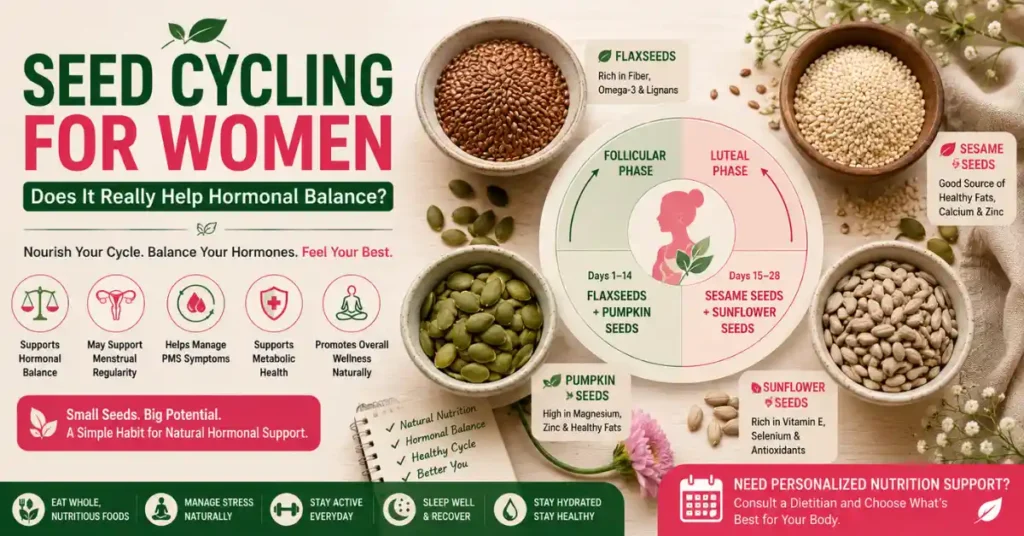
The traditional approach divides a typical menstrual cycle into two parts. During the first half, women usually consume flaxseeds and pumpkin seeds. During the second half, they switch to sesame seeds and sunflower seeds.
Supporters of the practice believe that specific nutrients and plant compounds in these seeds may complement the hormonal changes that occur throughout the menstrual cycle.
However, menstrual cycles do not follow an identical pattern for every woman. Some women have shorter cycles, while others have longer or irregular cycles. Ovulation can also occur at different times.
For that reason, you should view seed cycling as a nutrition practice rather than a precise method for controlling hormones.
What Are the Potential Seed Cycling Benefits?
The growing interest in seed cycling benefits comes from both the nutritional value of the seeds and early research into their possible effects on hormonal and metabolic health.
The evidence remains limited, but several potential benefits deserve attention.
1. It Adds Nutrient-Dense Foods to Your Diet
Seeds contain a combination of healthy fats, fibre, plant protein, vitamins, minerals and beneficial plant compounds.
Flaxseeds provide fibre, alpha-linolenic acid and lignans. Pumpkin seeds provide protein, healthy fats, magnesium and other minerals. Sesame seeds contain healthy fats, fibre, protein and plant compounds, while sunflower seeds provide vitamin E and healthy fats.
Adding these foods to your meals can improve overall dietary variety and nutrient density.
This benefit does not depend on following a particular menstrual-cycle schedule. You can enjoy the nutritional value of these seeds as part of a balanced diet throughout the year.
2. It Can Increase Your Fibre Intake
Fibre plays an important role in digestive health and supports a balanced eating pattern.
Flaxseeds contain a particularly useful amount of dietary fibre. Other seeds also contribute fibre to meals and snacks.
A fibre-rich diet can include vegetables, fruits, legumes, whole grains, nuts and seeds. Instead of focusing on one food, aim for variety across your entire diet.
3. It May Support Overall Metabolic Health
Healthy fats, fibre and plant-based nutrients can contribute to a balanced dietary pattern that supports metabolic health.
This factor matters for women with PCOS because metabolic health often forms an important part of PCOS management.
Still, you should not expect seed cycling alone to improve insulin resistance or treat metabolic problems. Your overall diet, physical activity, sleep, stress, body composition and individual health needs all matter.
Current international PCOS guidance supports sustainable healthy eating and lifestyle habits rather than one universal diet for every woman with PCOS.
4. It May Support PMS Management
Some research has explored seed cycling in relation to premenstrual symptoms.
A 2025 systematic review found promising findings across studies that examined seed cycling and related seed-based interventions. Researchers reported potential improvements in some PMS symptoms and hormonal outcomes, but they also highlighted limitations in the available evidence.
This means seed cycling may complement a healthy diet for some women, but research does not yet support it as a guaranteed solution for PMS.
5. It Can Make Healthy Eating More Interesting
Nutrition does not have to feel repetitive.
You can add flaxseeds to oatmeal, pumpkin seeds to salads, sesame seeds to chutneys and sunflower seeds to yoghurt bowls. These simple additions can bring different textures and flavours to everyday meals.
For many women, small and sustainable dietary habits work better than complicated diet rules.
Want to Support Your Hormonal Health Naturally?
Seed cycling is often discussed as a natural approach to supporting hormonal balance, but its benefits may vary from person to person. Get practical, evidence-based nutrition guidance and a personalized diet plan designed around your hormonal health, lifestyle, and wellness goals.
Get Your Personalized Nutrition ConsultationSeed Cycling Benefits: What Does Each Seed Offer?
Understanding each seed can help you separate genuine nutritional benefits from exaggerated hormone-related claims.
Flaxseeds
Flaxseeds contain fibre, alpha-linolenic acid, a plant-based omega-3 fatty acid, and lignans.
Lignans have attracted scientific interest because they interact with estrogen-related pathways in the body. However, this does not prove that eating flaxseeds during a particular phase of your cycle will regulate estrogen levels.
Flaxseeds remain a nutritious addition to a balanced diet regardless of whether you follow seed cycling.
Pumpkin Seeds
Pumpkin seeds provide protein, healthy fats, magnesium, zinc and other nutrients.
The traditional seed-cycling method pairs pumpkin seeds with flaxseeds during the first half of the cycle.
You can easily add pumpkin seeds to salads, soups, yoghurt bowls or homemade snack mixes.
Sesame Seeds
Sesame seeds provide healthy fats, fibre, protein and plant compounds such as lignans.
The traditional protocol places sesame seeds in the second half of the menstrual cycle.
Although sesame seeds offer useful nutrients, current evidence does not prove that eating them during the luteal phase directly increases progesterone.
Sunflower Seeds
Sunflower seeds provide vitamin E, healthy fats, protein and other nutrients.
The traditional protocol combines sunflower seeds with sesame seeds during the second half of the cycle.
Their nutritional value makes them a useful food choice, but researchers still need stronger evidence to establish specific hormonal effects from the timing-based approach.
What Is the Traditional Seed Cycling Schedule?
The commonly followed seed cycling schedule looks like this:
Days 1 to 14: Flaxseeds and pumpkin seeds
Days 15 to 28: Sesame seeds and sunflower seeds
Many online protocols recommend around one tablespoon of each selected seed per day. However, researchers have not established a universal clinical dose for seed cycling.
The traditional schedule also assumes a 28-day menstrual cycle. Many women do not have a 28-day cycle, and ovulation timing can vary.
If you have irregular periods, do not assume that a fixed 14-day schedule matches your actual hormonal phases.
Does Seed Cycling Really Balance Hormones?
This question deserves a clear answer.
Current evidence does not prove that seed cycling reliably balances estrogen, progesterone or other reproductive hormones.
The theory has some biological reasoning behind it. Seeds contain fatty acids, lignans, antioxidants, minerals and other compounds that support normal nutritional functions.
However, a nutrient having a biological role does not automatically mean that eating a particular food on a particular day will produce a predictable hormonal change.
A 2025 systematic review found promising results across several studies, but the researchers also noted important limitations and called for better-quality clinical research.
Therefore, the most accurate description is simple:
Seed cycling shows potential, but researchers have not yet established it as a proven hormone-balancing treatment.
Want to Support Your Hormonal Health Naturally?
Seed cycling is often discussed as a natural approach to supporting hormonal balance, but its benefits may vary from person to person. Get practical, evidence-based nutrition guidance and a personalized diet plan designed around your hormonal health, lifestyle, and wellness goals.
Get Your Personalized Nutrition ConsultationCan Seed Cycling Help With PCOS?
Women with PCOS often search for seed cycling benefits because many online sources promote it as a natural way to improve hormone balance.
Seed cycling can fit into a healthy PCOS-friendly eating pattern when the individual seeds suit your dietary needs.
However, it should not replace evidence-based PCOS management.
PCOS involves reproductive, hormonal and metabolic factors. Nutrition can support overall management, but the best approach depends on your symptoms, health history, lifestyle and personal goals.
The international evidence-based PCOS guideline does not recommend one specific diet as universally superior for all women with PCOS. Instead, it emphasizes healthy lifestyle habits and individualized approaches.
For example, your nutrition plan may focus on adequate protein, fibre, balanced carbohydrates, healthy fats, metabolic health or sustainable weight management where appropriate.
Seeds can form one part of that plan.
They do not need to become the entire strategy.
Can Seed Cycling Regulate Irregular Periods?
Many websites describe seed cycling as a natural method for regulating menstrual cycles.
However, irregular periods can have many different causes.
PCOS, thyroid disorders, pregnancy, significant weight changes, under-eating, excessive exercise, stress and certain medications can all affect menstrual patterns.
That means you should not automatically assume that irregular periods indicate a simple “hormonal imbalance.”
A nutritious diet can support overall health, but persistent or unexplained menstrual changes deserve proper evaluation.
If your periods suddenly change, disappear for several months or remain consistently irregular, speak with a qualified healthcare professional.
Can Seed Cycling Improve Fertility?
Seed cycling has also gained popularity among women who are trying to conceive.
Some online claims suggest that it can improve ovulation, egg quality or the chances of conception.
At present, researchers do not have enough high-quality evidence to describe seed cycling as a fertility treatment.
Nutrition still plays an important role in reproductive health. A balanced diet can provide adequate energy, protein, essential fats, vitamins and minerals.
However, fertility depends on many factors.
Ovulation disorders, PCOS, age, ovarian reserve, endometriosis, fallopian-tube factors, uterine conditions and sperm health can all influence conception.
If you have concerns about fertility, do not delay appropriate evaluation while trying a dietary trend.
Are Seed Cycling Benefits Scientifically Proven?
Not yet.
This distinction matters because social media often presents preliminary research as established fact.
A 2025 systematic review examined 10 studies involving 635 reproductive-aged women. The findings suggested potential benefits related to menstrual regularity, PMS symptoms, hormone measures and some metabolic outcomes.
However, researchers also identified limitations such as small participant groups, different study methods and variations in the seed-cycling protocols.
These limitations prevent researchers from making strong conclusions about the effectiveness of seed cycling.
The current evidence is therefore best described as promising but preliminary.
More large-scale, well-designed clinical trials can help determine whether seed cycling itself produces meaningful hormonal or reproductive benefits.
How Can You Add Seeds to Your Daily Diet?
You do not need complicated recipes to enjoy the nutritional value of seeds.
Ground flaxseeds work well in oatmeal, yoghurt, smoothies and homemade snacks.
Pumpkin seeds can add crunch to salads, soups and roasted vegetables.
Sesame seeds work naturally in chutneys, dressings, stir-fries and many Indian dishes.
Sunflower seeds can go into salads, breakfast bowls or homemade trail mixes.
If you enjoy the traditional seed-cycling schedule, you can use it as a simple framework.
However, you can still benefit nutritionally from these foods without following the schedule perfectly.
Your overall eating pattern matters much more than following a seed calendar without flexibility.
Are There Any Seed Cycling Side Effects?
Most people can include seeds in a balanced diet, but a sudden increase in intake may cause digestive discomfort.
The high fibre content can lead to bloating, gas or changes in bowel habits when you consume large amounts too quickly.
Start with a comfortable portion and increase your intake gradually if needed.
People with seed allergies should avoid the relevant foods.
Proper storage also matters. Ground seeds can lose freshness more quickly because exposure to air can affect their fats.
If you are pregnant, undergoing fertility treatment, taking medication or managing a medical condition, discuss significant dietary changes with your healthcare professional.
Who Should Be Careful With Seed Cycling?
Seed cycling may sound simple, but a generic online schedule cannot account for every woman’s nutritional needs.
You should consider personalized guidance if you have:
- Very irregular or absent periods
- PCOS
- Thyroid problems
- Persistent digestive symptoms
- Significant unexplained weight changes
- Fertility concerns
- Pregnancy-related nutritional needs
- A medically restricted diet
In these situations, understanding the underlying issue matters more than following a fixed seed schedule.
How Can a Dietitian Help With Hormonal Health?
Hormonal health involves much more than four types of seeds.
Your overall diet, protein intake, fibre intake, physical activity, sleep, stress, metabolic health and existing medical conditions can all influence your health and well-being.
A personalized nutrition plan can help you understand where seeds fit into your diet without turning them into a cure-all solution.
Dietitian Priyanka Shah at Nutridate with Priyanka provides personalized nutrition guidance based on individual health goals and lifestyle needs.
If you are considering seed cycling for PCOS, irregular periods, weight management or reproductive health, personalized dietary guidance can help you build a practical and sustainable approach.
Seed Cycling Benefits: What Should You Actually Expect?
If you decide to try seed cycling, keep your expectations realistic.
You can expect flaxseeds, pumpkin seeds, sesame seeds and sunflower seeds to provide useful nutrients when you include them as part of a balanced diet.
You may also find that following a simple food routine helps you become more mindful of your eating habits.
However, you should not expect a guaranteed change in estrogen, progesterone, ovulation or fertility simply because you switch seeds halfway through your cycle.
Research into seed cycling continues to develop.
For now, the best approach is to treat seed cycling as an optional nutrition practice rather than a hormone-balancing cure.
Final Takeaway
The interest in seed cycling benefits continues to grow, especially among women looking for natural approaches to hormonal health.
Flaxseeds, pumpkin seeds, sesame seeds and sunflower seeds are nutritious foods that can contribute fibre, healthy fats, protein, minerals and plant compounds to a balanced diet.
Research into seed cycling also shows potential, but scientists still need larger and better-controlled studies before they can confirm its specific hormonal and reproductive effects.
So, does seed cycling really balance hormones?
It may support a nutritious eating pattern, but current evidence does not prove that seed cycling can reliably balance hormones or treat PCOS, irregular periods or infertility.
If you enjoy seed cycling, you can include it as one part of a balanced diet. Just avoid treating it as a replacement for professional care.
When PCOS, persistent period problems, hormonal symptoms or fertility concerns affect your health, personalized nutrition and appropriate medical evaluation can provide far more value than following a generic internet trend.
Want to Support Your Hormonal Health Naturally?
Seed cycling is often discussed as a natural approach to supporting hormonal balance, but its benefits may vary from person to person. Get practical, evidence-based nutrition guidance and a personalized diet plan designed around your hormonal health, lifestyle, and wellness goals.
Get Your Personalized Nutrition ConsultationFrequently Asked Questions
There is not enough high-quality evidence to say that seed cycling reliably balances reproductive hormones. The individual seeds are nutritious, and early studies are promising, but the specific timing-based protocol needs more research.
The commonly followed protocol uses flaxseeds and pumpkin seeds during approximately days 1 to 14, followed by sesame seeds and sunflower seeds during approximately days 15 to 28. This is a popular protocol rather than a universally established medical treatment.
Seed cycling may be included within a balanced diet for someone with PCOS, but it should not be considered a standalone treatment. PCOS nutrition should be personalized around metabolic health, symptoms, lifestyle, preferences and individual goals.
There is emerging evidence that seed-based interventions may influence some menstrual and hormonal outcomes, but there is not enough evidence to guarantee that seed cycling will regulate irregular periods. Persistent or unexplained menstrual irregularity should be medically evaluated.
There is currently insufficient evidence to consider seed cycling a proven fertility treatment. A nutritious diet can support general reproductive health, but fertility depends on many factors and may require medical evaluation and treatment.