How Thyroid Problems Affect Weight Loss and Metabolism in Adults
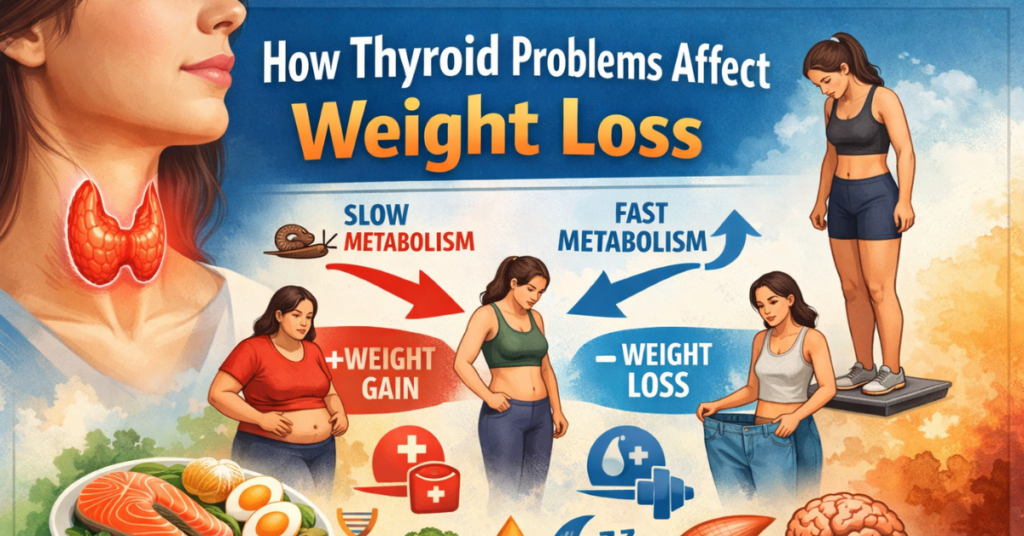
Weight loss is often portrayed as a simple formula of eating fewer calories and exercising more. In reality, the human body is far more complex. One of the most misunderstood factors influencing body weight is thyroid health. Many people struggle to lose weight despite following healthy habits, and thyroid problems are frequently blamed or misunderstood in this process.
This in depth guide explains how thyroid problems affect weight loss, using science based information, real world understanding, and medically accurate insights. The content is written to align with Google’s latest helpful content guidelines, focusing on human first writing, clarity, expertise, and trustworthiness.
If you have ever wondered why weight loss feels harder with thyroid issues, or why results are slower than expected, this article will help you understand what is happening inside your body and how to approach weight loss realistically.
Understanding the Thyroid Gland and Metabolism
The thyroid is a small butterfly shaped gland located at the front of the neck. Despite its size, it plays a powerful role in controlling metabolism. The thyroid produces hormones called T3 and T4, which influence how every cell in the body uses energy.
Metabolism refers to the process by which your body converts food into energy. Thyroid hormones regulate basal metabolic rate, which is the amount of energy your body uses at rest to maintain vital functions such as breathing, heart rate, digestion, and body temperature.
When thyroid hormone levels are balanced, the body efficiently manages energy intake and expenditure. When these hormone levels are too low or too high, metabolism shifts, and weight regulation becomes more difficult. This is why thyroid problems are often linked to unexpected weight gain or weight loss.
Struggling With Weight Changes Due to Thyroid Issues?
Thyroid disorders can slow metabolism, affect energy levels, and make weight loss more challenging. Standard diet plans often don’t work without addressing thyroid health. Our personalised nutrition and lifestyle guidance supports metabolism and healthy weight management for people with thyroid conditions.
Get Personalised Thyroid Weight SupportThe Real Relationship Between Thyroid Function and Weight
One of the biggest misconceptions online is that thyroid problems directly cause major weight changes. In reality, thyroid hormones are only one part of a larger metabolic system. Weight regulation is influenced by appetite hormones, insulin, stress hormones, physical activity, sleep quality, genetics, and gut health.
Thyroid problems can make weight loss more challenging, but they rarely act alone. The body adapts to hormonal changes by adjusting hunger, energy use, and movement levels. This is why some people with thyroid disorders gain weight, while others do not.
Understanding this complexity is essential for setting realistic weight loss expectations and avoiding harmful dieting practices.
Hypothyroidism and Weight Loss Resistance
Hypothyroidism occurs when the thyroid gland does not produce enough thyroid hormones. This condition is commonly associated with fatigue, cold sensitivity, dry skin, hair thinning, and gradual weight gain.
In hypothyroidism, basal metabolic rate slows down slightly. This means the body burns fewer calories at rest, which can contribute to weight gain over time if food intake remains unchanged. However, scientific research shows that this slowdown is usually modest rather than extreme.
A large portion of weight gain in hypothyroidism is related to fluid and salt retention, not fat accumulation. This explains why people often notice puffiness, swelling, or sudden changes on the scale that do not match their eating habits.
Weight loss becomes harder in hypothyroidism due to multiple factors. Low energy levels reduce physical activity. Slower digestion can affect hunger signals. Insulin sensitivity may decrease, making it easier to store fat and harder to access stored energy.
Once hypothyroidism is properly treated and thyroid hormone levels return to normal, metabolism generally improves. At this stage, thyroid function itself is no longer the main obstacle to weight loss. Nutrition quality, muscle mass, sleep, stress, and consistency become the key factors.
Why Thyroid Medication Does Not Automatically Cause Weight Loss
Many people expect that starting thyroid medication will lead to rapid weight loss. This expectation often leads to frustration. Thyroid hormone replacement therapy is designed to restore normal hormone levels, not to boost metabolism beyond healthy limits.
After starting treatment, some individuals experience a small amount of weight loss, mainly due to reduced water retention. Significant fat loss, however, still requires lifestyle changes such as balanced nutrition and regular physical activity.
Medical authorities like the American Thyroid Association clearly state that thyroid hormones should never be used as a weight loss tool. Excess thyroid hormone can lead to serious health problems, including heart rhythm issues, bone loss, and muscle breakdown.
Struggling With Weight Changes Due to Thyroid Issues?
Thyroid disorders can slow metabolism, affect energy levels, and make weight loss more challenging. Standard diet plans often don’t work without addressing thyroid health. Our personalised nutrition and lifestyle guidance supports metabolism and healthy weight management for people with thyroid conditions.
Get Personalised Thyroid Weight SupportHyperthyroidism and Unhealthy Weight Loss
Hyperthyroidism is a condition in which the thyroid produces too much hormone. This speeds up metabolism and often leads to unintentional weight loss, even when calorie intake increases.
While weight loss may seem desirable, it is not healthy in this context. The body may break down muscle tissue along with fat. People with hyperthyroidism often experience symptoms such as anxiety, tremors, rapid heartbeat, heat intolerance, and fatigue.
When hyperthyroidism is treated and hormone levels normalize, most people regain the weight they lost. This weight regain is a sign of metabolic balance returning, not a failure of treatment.
Using thyroid hormone excess for weight loss is dangerous and strongly discouraged by medical experts.
Thyroid Problems and Body Composition Changes
Weight alone does not tell the full story. Thyroid problems can affect body composition, meaning the ratio of fat mass, muscle mass, and water weight.
In hypothyroidism, reduced movement and low protein intake may lead to muscle loss over time. In hyperthyroidism, muscle breakdown can occur rapidly due to increased protein turnover.
Preserving muscle mass is crucial for long term weight management. Muscle tissue burns more calories at rest than fat tissue, supporting metabolic health. This is why strength training and adequate protein intake are especially important for people with thyroid conditions.
The Role of Insulin and Appetite Hormones
Thyroid hormones interact with other hormones involved in weight regulation, including insulin, leptin, and ghrelin. These hormones control hunger, fullness, and how efficiently the body uses glucose.
In hypothyroidism, insulin sensitivity may be reduced, increasing the likelihood of fat storage. Appetite signals may also become less reliable, leading to cravings or irregular eating patterns.
This hormonal interaction explains why calorie counting alone often fails for people with thyroid problems. A focus on stable blood sugar, nutrient dense foods, and consistent eating patterns is usually more effective.
Nutrition Approach for Weight Loss With Thyroid Problems
A thyroid supportive weight loss approach focuses on nourishment rather than restriction. Adequate protein intake supports muscle mass and metabolic rate. Fiber rich whole foods help regulate digestion and appetite.
Micronutrients such as iodine, selenium, zinc, and iron play essential roles in thyroid hormone production and conversion. Deficiencies in these nutrients can worsen symptoms and slow progress. Supplementation should always be guided by a healthcare professional.
Extreme calorie restriction can further slow metabolism and increase fatigue, making weight loss harder in the long run. A moderate, sustainable calorie deficit works better for long term results.
Exercise Strategies That Support Thyroid Health
Physical activity improves insulin sensitivity, preserves muscle mass, and supports metabolic health. For people with thyroid problems, exercise should be tailored to energy levels and recovery capacity.
Strength training helps maintain lean muscle and supports resting metabolic rate. Low to moderate intensity cardio improves cardiovascular health without excessive stress.
Overtraining can raise stress hormones, which may interfere with thyroid hormone balance and weight regulation. Rest and recovery are just as important as exercise itself.
Stress, Sleep, and Weight Gain in Thyroid Disorders
Chronic stress increases cortisol levels, which can impair thyroid hormone conversion and promote fat storage, particularly around the abdomen. Poor sleep further disrupts appetite hormones and blood sugar control.
Improving sleep quality and managing stress through realistic routines, relaxation techniques, and self care practices can significantly improve weight loss outcomes in people with thyroid conditions.
Common Myths About Thyroid Problems and Weight Loss
A common myth is that thyroid problems make weight loss impossible. While progress may be slower, weight loss is achievable with the right strategy and patience.
Another myth is that increasing thyroid medication speeds up fat loss. This practice is unsafe and can cause long term health damage.
Educational organizations such as the British Thyroid Foundation emphasize that balanced treatment and healthy lifestyle habits are the foundation of sustainable weight management.
Setting Realistic Expectations for Weight Loss
Healthy weight loss with thyroid problems is about consistency rather than quick results. Small improvements in energy, strength, and metabolic health often come before visible changes on the scale.
Comparing progress to individuals without thyroid issues can lead to unnecessary frustration. Focusing on long term health leads to better outcomes.
How Understanding Thyroid Health Improves Weight Loss Success
When people understand how thyroid problems affect weight loss, they stop blaming themselves for slow progress and start working with their bodies. This shift in mindset is critical for long term success.
Weight loss becomes a process of restoring balance rather than forcing results. With proper medical care, supportive nutrition, and sustainable habits, people with thyroid problems can achieve and maintain a healthy weight.
A Quick Recap
Thyroid problems influence metabolism, energy use, and weight regulation, but they are rarely the only cause of weight gain or weight loss resistance. Hypothyroidism may slow metabolism slightly, while hyperthyroidism may cause unhealthy weight loss. Proper treatment restores balance and allows the body to respond normally to nutrition and activity.
Long term weight loss comes from understanding the science, supporting metabolic health, and following realistic, consistent habits. With the right approach, weight loss is achievable, healthy, and sustainable even with thyroid problems.
Struggling With Weight Changes Due to Thyroid Issues?
Thyroid disorders can slow metabolism, affect energy levels, and make weight loss more challenging. Standard diet plans often don’t work without addressing thyroid health. Our personalised nutrition and lifestyle guidance supports metabolism and healthy weight management for people with thyroid conditions.
Get Personalised Thyroid Weight SupportFrequently Asked Questions
Thyroid problems affect weight loss by altering metabolism. When thyroid hormone levels are low, the body burns fewer calories at rest, making weight loss slower. When hormone levels are high, metabolism speeds up, which may cause unhealthy weight loss. However, thyroid issues rarely act alone and usually influence weight through energy levels, appetite, insulin response, and overall metabolic balance.
Yes, hypothyroidism can make weight loss more difficult. A slower metabolic rate, low energy levels, and hormonal imbalances can reduce calorie burn and physical activity. However, most weight gain related to hypothyroidism is modest, and weight loss is still possible with proper treatment and lifestyle changes.
Thyroid medication restores hormone levels to normal but does not cause automatic fat loss. Some initial weight loss may occur due to reduced water retention, but long-term weight loss still depends on nutrition, physical activity, sleep, and stress management. The medication removes a metabolic disadvantage rather than acting as a weight-loss solution.
No, weight loss from hyperthyroidism is usually temporary. Once the condition is treated and thyroid hormone levels return to normal, most people regain the lost weight. This happens because metabolism stabilizes and muscle loss is reversed. Hyperthyroidism-related weight loss is not healthy or sustainable.
Most people with hypothyroidism gain a small amount of weight, often between two to five kilograms. A significant portion of this weight is due to fluid retention rather than fat gain. Proper treatment usually helps reduce this weight over time.