Ultra Processed Foods: Hidden Health Risks Every Indian Should Know
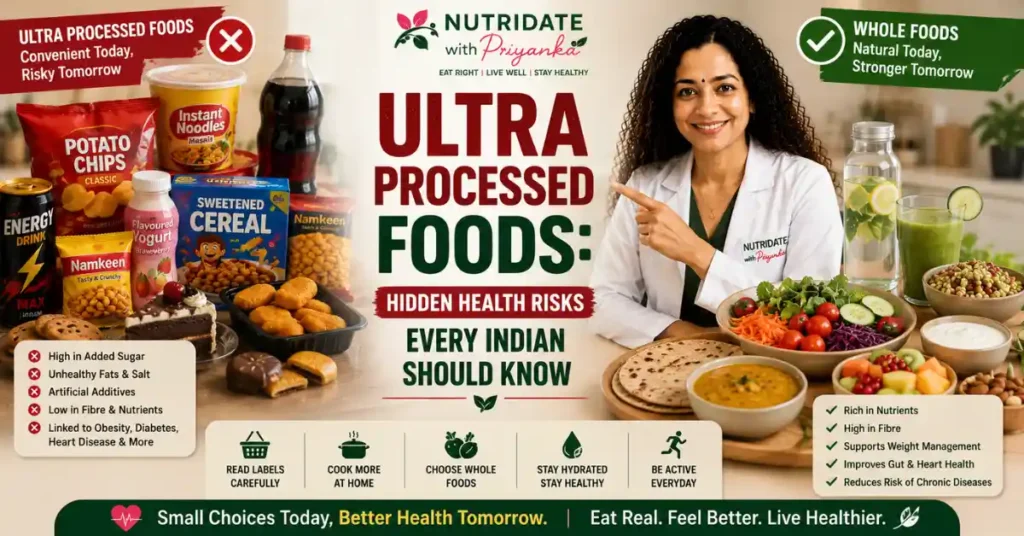
Every day, millions of Indians consume foods that are quick, convenient, and easy to prepare. Instant noodles, packaged snacks, sugary breakfast cereals, soft drinks, flavored yogurt, frozen meals, and ready-to-eat foods have become a regular part of modern lifestyles. While these products save time, many of them fall under a category known as Ultra Processed Foods, which has become a growing concern among nutrition experts worldwide.
The increasing consumption of Ultra Processed Foods is closely linked to the rising number of lifestyle diseases in India, including obesity, type 2 diabetes, high blood pressure, heart disease, fatty liver disease, and digestive disorders. Many people believe that if a food is marketed as “healthy,” “high protein,” or “low fat,” it is automatically good for them. However, attractive packaging and marketing claims do not always reflect the nutritional quality of the food inside.
As a clinical dietitian, I often meet individuals who are surprised to learn that many foods they consume daily are highly processed and may contain excessive amounts of added sugar, unhealthy fats, refined carbohydrates, artificial flavours, preservatives, and emulsifiers. Understanding how to identify these foods and making informed choices can significantly improve long-term health.
What Are Ultra Processed Foods?
Ultra Processed Foods are industrially manufactured food products made mostly from refined ingredients, additives, preservatives, artificial colours, flavour enhancers, emulsifiers, and sweeteners rather than whole foods.
Unlike minimally processed foods such as milk, curd, frozen vegetables, roasted nuts, or plain oats, ultra processed foods go through multiple stages of industrial processing. Their original nutritional value is often reduced while ingredients are added to improve taste, texture, appearance, and shelf life.
These foods are specifically designed to be convenient, affordable, and highly appealing, encouraging people to eat them more frequently.
Concerned About the Hidden Health Risks of Ultra Processed Foods?
Ultra processed foods are becoming a major part of modern diets and may increase the risk of obesity, diabetes, heart disease, and other lifestyle disorders. Learn how to identify unhealthy foods, make smarter choices, and follow a balanced diet with expert nutrition guidance tailored to your health goals.
Book Your Personalized Nutrition ConsultationCommon Ultra Processed Foods Found in Indian Homes
Many Ultra Processed Foods are commonly available in supermarkets and even considered everyday staples. Some examples include:
- Instant noodles
- Potato chips
- Packaged namkeen
- Sweetened breakfast cereals
- Carbonated soft drinks
- Packaged fruit juices
- Flavoured yogurt
- Cookies and cream biscuits
- Cakes and pastries
- Ice cream with multiple additives
- Frozen snacks
- Chicken nuggets
- Sausages
- Sweetened energy drinks
- Protein bars with long ingredient lists
- Ready-to-eat meals
Not every packaged food is an Ultra Processed Food. Reading the ingredient label is the best way to understand what you are eating.
How Are Ultra Processed Foods Different From Processed Foods?
Many people assume that all processed foods are unhealthy, but this is not true.
For example, milk is processed through pasteurization to make it safe to drink. Plain curd, frozen vegetables, roasted peanuts, whole wheat flour, and plain rolled oats are also processed foods, but they retain most of their natural nutritional value.
Ultra Processed Foods, however, are made using refined ingredients and multiple industrial additives that are rarely found in a home kitchen. These products are often high in calories while being low in fibre, vitamins, and minerals.
Understanding this difference helps people make healthier choices without unnecessarily avoiding all packaged foods.
Why Are Ultra Processed Foods Harmful?
The biggest concern with Ultra Processed Foods is not just one ingredient but the overall nutritional profile. They are typically high in added sugar, unhealthy fats, sodium, and refined carbohydrates while lacking essential nutrients.
Regular consumption may contribute to chronic inflammation, poor gut health, insulin resistance, weight gain, and nutritional deficiencies.
Replacing fresh, home-cooked meals with these products over a long period can negatively affect overall health.
Health Risks Associated With Ultra Processed Foods
Weight Gain and Obesity
Ultra Processed Foods are often calorie-dense but low in fibre and protein. Since they do not keep you full for long, people tend to eat larger portions and snack more frequently.
Regular consumption can gradually lead to unhealthy weight gain and obesity.
Increased Risk of Type 2 Diabetes
Many Ultra Processed Foods contain refined flour and added sugars that cause rapid spikes in blood sugar levels. Frequent blood sugar fluctuations increase insulin demand and may contribute to insulin resistance over time.
Choosing whole grains, pulses, vegetables, and fresh fruits instead of sugary processed foods helps maintain healthier blood sugar levels.
Heart Disease
Excess sodium, unhealthy fats, and refined carbohydrates found in many Ultra Processed Foods may increase blood pressure, cholesterol levels, and inflammation, all of which are important risk factors for cardiovascular disease.
A heart-healthy diet should focus on fresh vegetables, fruits, whole grains, nuts, seeds, and healthy fats.
Digestive Problems
The gut microbiome depends on fibre-rich foods to function properly. Most Ultra Processed Foods contain very little dietary fibre, which may lead to constipation, bloating, and poor digestive health.
Including fruits, vegetables, legumes, fermented foods, and whole grains supports a healthier digestive system.
Hormonal Imbalance
A diet dominated by highly processed foods may worsen hormonal conditions such as PCOS and contribute to insulin resistance. A balanced diet rich in natural foods supports better hormonal health and overall well-being.
How to Identify Ultra Processed Foods
One of the easiest ways to identify Ultra Processed Foods is by reading the ingredient list rather than relying on marketing claims.
Ask yourself these questions before buying a packaged product:
- Does it contain several ingredients that you cannot recognize?
- Does it include artificial colours, flavours, preservatives, or emulsifiers?
- Is added sugar listed among the first few ingredients?
- Does it have a very long ingredient list?
If the answer is yes, the product is likely to be ultra processed.
Concerned About the Hidden Health Risks of Ultra Processed Foods?
Ultra processed foods are becoming a major part of modern diets and may increase the risk of obesity, diabetes, heart disease, and other lifestyle disorders. Learn how to identify unhealthy foods, make smarter choices, and follow a balanced diet with expert nutrition guidance tailored to your health goals.
Book Your Personalized Nutrition ConsultationHealthier Alternatives to Ultra Processed Foods
Making healthier food choices does not require giving up convenience completely. Small substitutions can make a significant difference.
| Instead of | Choose |
|---|---|
| Potato chips | Roasted makhana or roasted chana |
| Soft drinks | Lemon water or coconut water |
| Packaged fruit juice | Fresh seasonal fruits |
| Cream biscuits | Nuts with fresh fruit |
| Instant noodles | Homemade vegetable poha or upma |
| Sugary breakfast cereal | Plain oats with fruits and seeds |
| Frozen snacks | Homemade sandwiches or sprouts chaat |
These alternatives provide more fibre, vitamins, minerals, and protein while reducing unnecessary sugar, sodium, and unhealthy fats.
Practical Tips to Reduce Ultra Processed Foods
Completely avoiding Ultra Processed Foods is neither practical nor necessary for most people. The goal is to reduce dependence on them and make healthier choices consistently.
Simple habits that can help include:
- Cook more meals at home whenever possible.
- Plan healthy snacks before leaving home.
- Read food labels carefully before purchasing packaged foods.
- Drink water instead of sugary beverages.
- Include vegetables in every meal.
- Choose whole fruits instead of fruit juices.
- Buy products with shorter ingredient lists.
- Limit foods high in added sugar and sodium.
Small improvements made consistently are far more effective than making drastic changes that are difficult to maintain.
Concerned About the Hidden Health Risks of Ultra Processed Foods?
Ultra processed foods are becoming a major part of modern diets and may increase the risk of obesity, diabetes, heart disease, and other lifestyle disorders. Learn how to identify unhealthy foods, make smarter choices, and follow a balanced diet with expert nutrition guidance tailored to your health goals.
Book Your Personalized Nutrition ConsultationFrequently Asked Questions
No. Foods such as milk, curd, frozen vegetables, plain oats, and roasted nuts are processed but not ultra processed. They can be part of a healthy diet.
Regular consumption of foods high in refined carbohydrates and added sugars may increase the risk of insulin resistance and type 2 diabetes, especially when combined with a sedentary lifestyle.
Occasional consumption is generally acceptable for healthy individuals. However, these foods should not replace fresh, balanced, home-cooked meals on a regular basis.
Always read the ingredient list. Products containing numerous artificial additives, preservatives, flavour enhancers, or unfamiliar ingredients are usually ultra processed.
Start by replacing one processed snack each day with a healthier option such as fruit, roasted nuts, sprouts, or homemade snacks. Gradual changes are easier to maintain and lead to long-term improvements in overall health.