Weight Loss Mistakes: 15 Common Habits That Stop You from Losing Fat
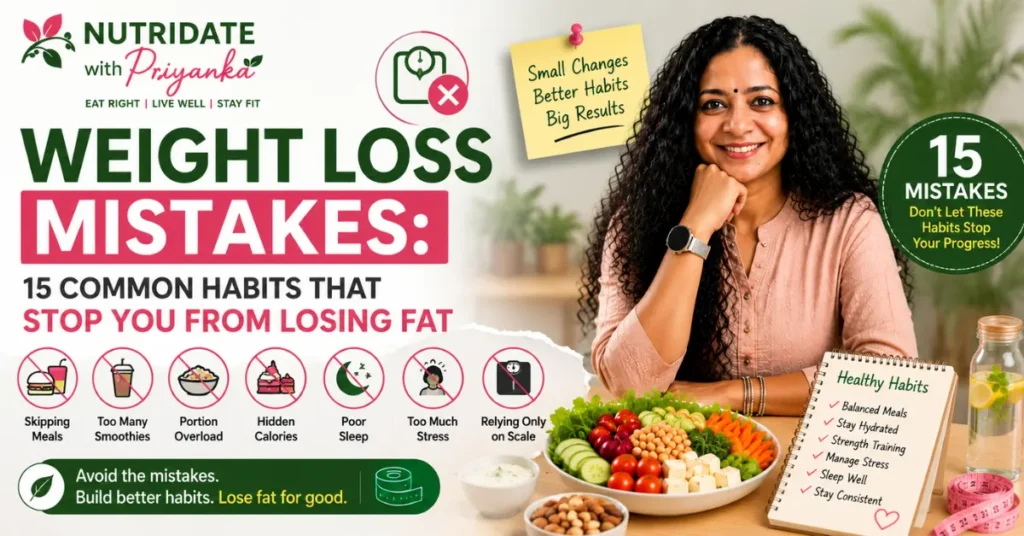
Many people believe weight loss is simply about eating less and exercising more. In my experience, that is only a small part of the story. I have worked with many individuals who were genuinely committed to losing weight but unknowingly repeated everyday mistakes that slowed their progress. These mistakes often seem harmless, yet they can prevent fat loss for weeks or even months. In this guide, I will help you identify the most common weight loss mistakes, especially the weight loss mistakes Indian vegetarians make, and show you practical ways to correct them for sustainable, healthy results.
Quick Answer
If you are eating healthy but not losing weight, the reason is often hidden calories, insufficient protein intake, oversized portions, poor sleep, stress, irregular eating habits, or relying on crash diets. Correcting these habits is usually more effective than following another restrictive diet.
Why Do Most People Struggle Despite Following a Weight Loss Diet?
One of the biggest misconceptions I hear is, “I’m eating healthy, so why am I not losing weight?”
The truth is that healthy eating and weight loss are not always the same thing.
You can eat nutritious foods and still consume more calories than your body requires. Likewise, you may eat very little but choose foods that lack protein and fibre, leaving you hungry throughout the day and increasing your chances of overeating later.
Weight loss is influenced by several factors working together, including nutrition, sleep, stress, physical activity, hormonal health, consistency, and meal quality.
Common Reasons Weight Loss Stops
| Mistake | Why It Happens | Better Approach |
|---|---|---|
| Eating too little | Slows energy levels and increases cravings | Eat balanced meals |
| Eating too much “healthy food” | Portion sizes become excessive | Focus on portion control |
| Low protein intake | Poor muscle preservation | Include protein in every meal |
| Poor sleep | Hunger hormones become imbalanced | Sleep 7–9 hours daily |
| Weekend overeating | Weekly calorie deficit disappears | Stay consistent throughout the week |
I always tell my clients that successful weight loss is rarely about perfection. It is about repeating small, healthy habits every day.
Expert Insight
Many people blame their metabolism when the real issue is their daily routine. Improving a few consistent habits often produces better results than switching to another trendy diet.
Skimmable Summary
Weight loss depends on consistent healthy habits rather than extreme dieting. Hidden calories, poor protein intake, oversized portions, stress, and lack of sleep are some of the biggest reasons people struggle despite eating healthy.
Making Weight Loss Mistakes Without Realizing It?
Skipping meals, following crash diets, eating too little protein, or relying on quick fixes can slow your progress and make fat loss harder. A personalized, science-backed nutrition plan can help you avoid common mistakes and achieve healthy, sustainable weight loss.
Get Your Personalized Weight Loss Diet PlanAre You Making These Common Weight Loss Mistakes Without Realising It?
Most weight loss mistakes do not feel like mistakes.
They often look like healthy habits.
For example, replacing meals with fruit, drinking multiple smoothies, skipping breakfast, or eating handfuls of nuts throughout the day may seem beneficial. However, these habits can increase calorie intake or reduce satiety.
Here are some of the most common mistakes I frequently notice during consultations.
1. Depending Only on the Weighing Scale
The weighing scale tells only part of the story.
Your body may lose fat while gaining lean muscle, especially if you have recently started strength training.
Instead of checking only your weight, monitor your waist circumference, how your clothes fit, your energy levels, and your body measurements.
2. Following Crash Diets
Crash diets often promise rapid weight loss.
Unfortunately, most of that initial loss comes from water and muscle rather than body fat.
Once normal eating resumes, the weight usually returns.
Instead of chasing quick results, aim for habits you can realistically maintain for years.
3. Ignoring Portion Sizes
Healthy foods are nutritious, but they still contain calories.
Peanut butter, almonds, seeds, dates, jaggery, smoothies, and homemade sweets can contribute significantly to daily calorie intake when eaten in large quantities.
Healthy Foods That Can Become High-Calorie Foods
| Food | Approximate Calories |
|---|---|
| Handful of almonds | 170 kcal |
| Peanut butter (2 tbsp) | 190 kcal |
| Banana smoothie | 250–350 kcal |
| Mixed dry fruits | 250 kcal |
| Homemade granola | 220 kcal |
Eating these foods mindfully helps maintain a calorie deficit without sacrificing nutrition.
4. Believing Exercise Can Compensate for Poor Eating Habits
Many people spend one hour exercising but underestimate how easily extra calories add up later in the day.
One sugary coffee or a large dessert can replace the calories burned during an entire workout.
Exercise supports overall health, improves metabolism, and preserves muscle, but nutrition remains the biggest driver of weight loss.
5. Expecting Results Too Quickly
Healthy fat loss takes time.
Losing approximately 0.5–1 kg per week is generally considered safe and sustainable.
Trying to speed up the process often leads to frustration and unhealthy habits.
Skimmable Summary
Many people unknowingly slow their progress by relying only on the weighing scale, following crash diets, ignoring portion sizes, or expecting instant results. Sustainable habits consistently outperform quick fixes.
Making Weight Loss Mistakes Without Realizing It?
Skipping meals, following crash diets, eating too little protein, or relying on quick fixes can slow your progress and make fat loss harder. A personalized, science-backed nutrition plan can help you avoid common mistakes and achieve healthy, sustainable weight loss.
Get Your Personalized Weight Loss Diet PlanWhat Are the Biggest Weight Loss Mistakes Indian Vegetarians Make?
This is one of the most important sections because I frequently meet Indian vegetarians who are genuinely eating nutritious meals but still struggle with weight management.
The issue is rarely vegetarian food itself.
The problem usually lies in food balance.
1. Eating Too Many Carbohydrates
A typical Indian vegetarian plate often contains:
- Rice
- Roti
- Potato
- Dal
- Pickle
- Dessert
While these foods have nutritional value, the meal may contain far more carbohydrates than protein.
Balancing carbohydrates with adequate protein and vegetables improves fullness and supports healthy fat loss.
2. Not Eating Enough Protein
Protein is one of the biggest nutritional gaps I notice among Indian vegetarians.
Without enough protein, preserving lean muscle becomes difficult, and hunger returns much sooner.
High-Protein Vegetarian Foods
| Food | Protein (Approx.) |
|---|---|
| Paneer (100 g) | 18 g |
| Greek yogurt | 10 g |
| Soy chunks | 52 g |
| Tofu | 15 g |
| Lentils | 9 g |
| Chickpeas | 9 g |
| Moong sprouts | 8 g |
Including a quality protein source in every meal can make a significant difference.
3. Assuming Homemade Food Cannot Cause Weight Gain
Home-cooked food is generally healthier than restaurant meals.
However, frequent use of excess oil, ghee, sugar, butter, cream, or large serving sizes can still increase calorie intake.
Healthy cooking methods matter just as much as healthy ingredients.
4. Skipping Strength Training
Many people focus only on walking.
Walking is beneficial, but strength training helps preserve muscle during weight loss and supports a healthier metabolism.
Even bodyweight exercises performed consistently can improve body composition.
5. Drinking Calories Instead of Eating Them
Many beverages contain surprisingly high calories.
Examples include:
- Sweet lassi
- Packaged fruit juice
- Milkshakes
- Sweetened coffee
- Flavoured milk
- Bubble tea
These drinks often fail to satisfy hunger while adding significant calories.
Skimmable Summary
The most common Weight Loss Mistakes Indian Vegetarians Make include eating excess carbohydrates, consuming too little protein, relying on homemade food without portion awareness, avoiding strength training, and drinking calorie-rich beverages.
Are Healthy Foods Secretly Preventing Your Weight Loss?
One of the biggest misconceptions I encounter is that if a food is healthy, it can be eaten without limits.
Unfortunately, that is not how weight loss works.
Healthy foods nourish the body, but they still contribute calories. When portions are ignored, even nutritious foods can slow fat loss.
I often see people adding generous amounts of nuts, seeds, peanut butter, jaggery, honey, smoothies, granola, and dried fruits to their daily routine because they have heard these foods are “good for health.” While that is true, consuming them in excess can easily push your calorie intake beyond what your body needs.
Making Weight Loss Mistakes Without Realizing It?
Skipping meals, following crash diets, eating too little protein, or relying on quick fixes can slow your progress and make fat loss harder. A personalized, science-backed nutrition plan can help you avoid common mistakes and achieve healthy, sustainable weight loss.
Get Your Personalized Weight Loss Diet PlanHealthy Foods That Often Lead to Hidden Calories
| Healthy Food | Why It Can Slow Weight Loss | Smarter Alternative |
|---|---|---|
| Mixed nuts | Easy to overeat | Measure one small handful |
| Peanut butter | Very calorie-dense | Limit to 1 tablespoon |
| Fruit smoothies | Less filling than whole fruit | Choose whole fruits |
| Honey | Natural but still sugar | Use occasionally |
| Granola | Often high in sugar | Plain oats with nuts and seeds |
Another common mistake is believing that “cheat snacks” do not count because they are homemade. Homemade laddoos, baked snacks, and sugar-free desserts can still contain significant calories from ghee, nuts, dates, or jaggery.
When I work with clients, I never ask them to eliminate these foods completely. Instead, I help them understand portion control and meal balance so they can enjoy them without affecting their progress.
Expert Tip
A healthy food is not automatically a weight-loss food. The right quantity matters just as much as the right choice.
Skimmable Summary
Healthy foods support overall health, but overeating them can prevent fat loss. Portion awareness is one of the simplest yet most effective ways to improve weight loss results without following restrictive diets.
Is Protein the Missing Piece in Your Weight Loss Journey?
If there is one nutrient that I wish more people paid attention to during weight loss, it would be protein.
Many people reduce calories but forget to increase protein intake. As a result, they feel hungry soon after eating, lose muscle along with fat, and struggle to maintain their progress. I often notice this among Indian vegetarians, where meals are heavily based on cereals and grains but contain very little high-quality protein.
Protein plays a crucial role in preserving lean muscle, improving satiety, and supporting metabolism. When you consume enough protein, you naturally feel fuller for longer, making it easier to avoid unnecessary snacking.
How Much Protein Do You Really Need?
Your protein requirement depends on factors such as age, activity level, body weight, and health goals. While individual needs vary, including a protein source in every meal is a practical approach for most people.
Best Vegetarian Protein Sources
| Food | Approximate Protein |
|---|---|
| Paneer (100 g) | 18 g |
| Tofu (100 g) | 15 g |
| Soy Chunks (50 g dry) | 26 g |
| Greek Yogurt | 10 g |
| Moong Dal | 9 g |
| Chickpeas | 9 g |
| Rajma | 8 g |
| Sprouts | 8 g |
Instead of having a plate full of rice or rotis, try balancing your meal with vegetables, a quality protein source, and controlled portions of carbohydrates. This simple adjustment often makes a noticeable difference.
My Practical Advice
I never recommend increasing protein by relying only on supplements. Whole foods should always be the first choice whenever possible. Supplements may help in specific situations, but they should complement a balanced diet rather than replace it.
Skimmable Summary
Protein is essential for healthy fat loss because it helps preserve muscle, controls hunger, and supports metabolism. Most Indian vegetarians benefit from including a protein-rich food in every meal instead of relying mainly on carbohydrates.
Why Does Skipping Meals Backfire Instead of Helping Weight Loss?
Skipping meals may seem like an easy way to reduce calories, but in reality, it often creates the opposite effect.
Many people skip breakfast or lunch believing they are saving calories, only to feel extremely hungry later in the day. This intense hunger often leads to overeating during dinner or frequent evening snacking.
I have seen this pattern repeatedly. People think they have been disciplined all day, but by night they end up consuming more calories than they would have if they had eaten balanced meals throughout the day.
What Happens When You Skip Meals?
- Hunger increases.
- Energy levels fall.
- Concentration decreases.
- Cravings become stronger.
- Portion sizes increase later.
- Protein intake usually decreases.
Instead of skipping meals, focus on eating meals that contain protein, fibre, healthy fats, and vegetables. These combinations keep you satisfied for longer and help reduce unnecessary cravings.
Better Meal Timing
| Instead of… | Try This… |
|---|---|
| Skipping breakfast | Eat a protein-rich breakfast |
| Long gaps between meals | Maintain regular meal timings |
| Heavy late-night dinners | Distribute calories throughout the day |
Expert Insight
Weight loss is not about eating as little as possible. It is about eating enough of the right foods to maintain a sustainable calorie deficit.
Skimmable Summary
Skipping meals often increases hunger and makes overeating more likely. Balanced, regular meals with enough protein and fibre usually support better long-term weight loss than prolonged fasting without planning.
Can Weekend Eating Undo Five Days of Hard Work?
This is one of the most overlooked weight loss mistakes.
Many people follow their diet carefully from Monday to Friday but completely relax their eating habits during the weekend. Restaurant meals, desserts, sugary drinks, celebrations, and late-night snacks can quickly eliminate the calorie deficit created during the week.
For example, imagine you create a calorie deficit of around 300 calories each day from Monday to Friday. That gives you a total weekly deficit of 1,500 calories. A single restaurant meal with dessert and sugary beverages can easily exceed that amount.
This is why many people feel they are “doing everything right” but still see no change on the weighing scale.
Common Weekend Mistakes
| Habit | Better Choice |
|---|---|
| Buffet meals | Serve one balanced plate |
| Sugary drinks | Water, buttermilk, or lemon water |
| Unlimited desserts | Share one portion |
| Ordering multiple starters | Choose one starter with protein |
I always remind my clients that weekends should be flexible, not uncontrolled. Enjoy your favourite foods, but remain mindful of portion sizes.
My Practical Advice
You do not need a “cheat day.” What you need is a balanced lifestyle where no food feels forbidden and no meal creates guilt.
Skimmable Summary
Weekend overeating can erase the calorie deficit built during the week. Flexibility is healthy, but portion control and mindful eating are essential for consistent progress.
Making Weight Loss Mistakes Without Realizing It?
Skipping meals, following crash diets, eating too little protein, or relying on quick fixes can slow your progress and make fat loss harder. A personalized, science-backed nutrition plan can help you avoid common mistakes and achieve healthy, sustainable weight loss.
Get Your Personalized Weight Loss Diet PlanAre Liquid Calories Quietly Slowing Down Your Progress?
One of the easiest ways to consume excess calories is through beverages.
Many drinks contain large amounts of sugar while providing very little satiety. Because liquids do not keep us full for long, people often consume them in addition to their regular meals.
High-Calorie Drinks to Watch
| Beverage | Better Alternative |
|---|---|
| Soft drinks | Water with lemon |
| Sweet lassi | Plain buttermilk |
| Packaged fruit juice | Whole fruit |
| Milkshake | Unsweetened smoothie with protein |
| Sweetened coffee | Black coffee or unsweetened coffee |
Even beverages that sound healthy, such as fruit juices or smoothies, may contain several servings of fruit and added sugar. Eating whole fruits instead provides fibre, which helps you stay full.
Hydration is also important for appetite regulation. Sometimes what feels like hunger is actually thirst.
Skimmable Summary
Liquid calories are easy to overlook because they do not satisfy hunger like solid foods. Choosing water or other low-calorie beverages can significantly reduce unnecessary calorie intake.
Why Do Sleep and Stress Matter More Than You Think?
Many people focus only on food and exercise, but sleep and stress have a powerful influence on weight loss.
When you sleep poorly, your body produces more hunger-stimulating hormones and fewer hormones that help you feel full. This often increases cravings for sugary and high-calorie foods.
Stress can have a similar effect. Emotional eating is something I frequently discuss with clients because many people eat in response to frustration, boredom, or anxiety rather than physical hunger.
Signs That Stress May Be Affecting Your Eating
- Frequent cravings
- Night-time snacking
- Emotional eating
- Low motivation to exercise
- Poor sleep quality
- Irregular meal timings
Simple habits such as walking, deep breathing, maintaining a regular sleep schedule, and limiting screen time before bed can improve both stress levels and weight management.
Expert Tip
Healthy weight loss is not only about the food on your plate. It is also about the quality of your sleep, your stress management, and the daily habits that support your overall health.
Skimmable Summary
Poor sleep and chronic stress can increase hunger, cravings, and emotional eating. Managing these lifestyle factors is just as important as choosing healthy foods when working toward sustainable weight loss.
How Can You Avoid These Weight Loss Mistakes? A Step-by-Step Guide
Now that you know the most common weight loss mistakes, the next question is how to avoid them. The good news is that you don’t need another restrictive diet or a complicated workout routine. Small, sustainable changes often deliver better long-term results than drastic measures.
Step 1: Build Every Meal Around Protein
Instead of starting your plate with rice or roti, begin by deciding where your protein will come from.
Good vegetarian options include:
- Paneer
- Tofu
- Soy chunks
- Greek yogurt
- Lentils
- Chickpeas
- Sprouts
Protein helps you stay full for longer, preserves muscle during weight loss, and supports a healthy metabolism.
Step 2: Fill Half Your Plate with Vegetables
Vegetables provide fibre, vitamins, minerals, and volume without adding too many calories.
A colourful plate naturally keeps meals satisfying while helping you control portions.
Step 3: Choose Smart Carbohydrates
Carbohydrates are not the enemy.
The goal is to choose the right type and the right quantity.
Examples include:
- Whole wheat roti
- Brown rice
- Millets
- Oats
- Quinoa
- Sweet potato
Pairing carbohydrates with protein and vegetables creates a balanced meal.
Step 4: Move Every Day
Exercise should not be punishment for eating.
Choose activities that you genuinely enjoy and can continue consistently.
A combination of walking, strength training, stretching, and daily movement often works better than extreme workout plans that last only a few weeks.
Step 5: Monitor Progress Beyond the Weighing Scale
Many people become discouraged because their weight does not change every week.
Instead, pay attention to:
| Measure | Why It Matters |
|---|---|
| Waist circumference | Indicates fat loss |
| Progress photos | Shows body composition changes |
| Energy levels | Reflects overall health |
| Clothing fit | Often changes before weight |
| Strength improvements | Indicates muscle preservation |
Step 6: Stay Consistent Instead of Perfect
One unhealthy meal does not ruin your progress.
Similarly, one healthy meal will not transform your body.
Consistency is always more important than perfection.
I encourage my clients to focus on building habits they can maintain for years rather than following strict diets they can only sustain for a few weeks.
Skimmable Summary
The best way to avoid weight loss mistakes is to build balanced meals, prioritise protein, stay active, sleep well, manage stress, and remain consistent instead of chasing perfection.
When Should You Consult a Dietitian?
Many people try multiple diets before seeking professional guidance.
While self-learning is valuable, there are situations where personalised advice can save months of frustration.
You should consider consulting a qualified dietitian if:
- You have been trying to lose weight for several months without success.
- You have PCOS, thyroid disorders, diabetes, or other medical conditions.
- You experience frequent cravings or emotional eating.
- You are unsure how much to eat.
- You want a vegetarian meal plan that matches your lifestyle.
- You are confused by conflicting nutrition advice on social media.
In my consultations, I focus on creating realistic eating habits rather than temporary diet plans. Every person’s body, routine, medical history, and food preferences are different, so the approach should be personalised rather than copied from the internet.
Skimmable Summary
A personalised nutrition plan can help identify the root cause of slow progress, especially if you have medical conditions or have reached a weight-loss plateau.
Making Weight Loss Mistakes Without Realizing It?
Skipping meals, following crash diets, eating too little protein, or relying on quick fixes can slow your progress and make fat loss harder. A personalized, science-backed nutrition plan can help you avoid common mistakes and achieve healthy, sustainable weight loss.
Get Your Personalized Weight Loss Diet PlanA Quick Recap
Weight loss is rarely about finding the perfect diet. It is about understanding the habits that quietly slow your progress and replacing them with practical, sustainable choices. In my experience, people achieve the best results when they stop chasing shortcuts and start focusing on balanced nutrition, adequate protein, regular movement, quality sleep, and consistency. Small improvements made every day often lead to the biggest transformations over time.
Frequently Asked Questions
The biggest weight loss mistake is relying on extreme diets instead of building sustainable habits.
Many people drastically reduce calories for a short period but cannot maintain the routine. I recommend focusing on balanced meals, adequate protein, regular physical activity, and realistic lifestyle changes that you can follow consistently.
You may still be consuming more calories than your body needs, or your meals may lack enough protein and fibre.
Hidden calories from snacks, beverages, cooking oils, and oversized portions are more common than most people realise. Sleep quality, stress, and certain medical conditions can also influence progress.
The most common mistakes include eating too many refined carbohydrates, consuming too little protein, ignoring portion sizes, and depending only on walking for exercise.
I also notice that many people assume homemade food cannot contribute to weight gain, which is not always true if portions are excessive.
Yes. You do not need to stop eating Indian food to lose weight.
The focus should be on balanced portions, adequate protein, more vegetables, and mindful eating rather than eliminating traditional meals.
Walking is beneficial, but combining it with strength training usually produces better long-term results.
Strength training helps preserve muscle mass while improving body composition and supporting metabolism.