Whey Protein Vegetarian or Not: Truth Every Vegetarian Must Know
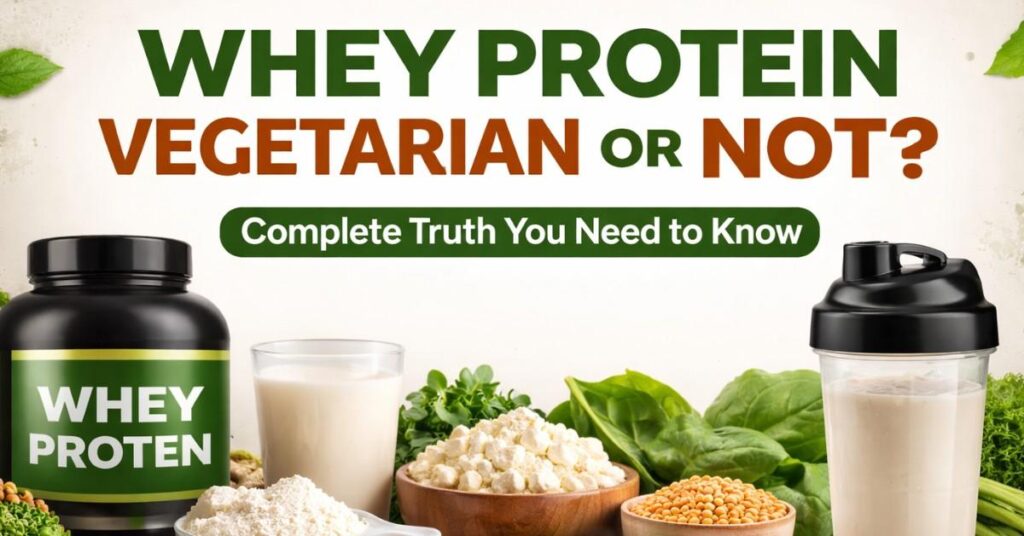
“Whey protein vegetarian or not?” — this is one of the most searched questions among fitness beginners, especially vegetarians who want to build muscle or improve their health without compromising their dietary beliefs.
If you have ever stood in a supplement store or browsed online, confused about whether whey protein fits your vegetarian lifestyle, you are not alone. Even today, a lot of misinformation exists around this topic, leading many people to either avoid whey protein unnecessarily or use it without fully understanding it.
Confused If Whey Protein Is Vegetarian?
Many vegetarians are unsure whether whey protein fits into their diet. Understanding its source, benefits, and alternatives is important before making a choice. Get expert guidance and a personalised plan to choose the right protein for your lifestyle and fitness goals.
Get Your Personalised Protein PlanWhat is Whey Protein and Why It Matters
Before answering whether whey protein is vegetarian or not, you need to understand what it actually is.
Whey protein is a high-quality protein that comes from milk. During the process of making cheese or paneer, milk separates into two parts: solid curds and liquid whey. This liquid whey is then filtered, processed, and dried into powder form, which we call whey protein.
So in simple terms, whey protein is just a refined and concentrated form of milk protein.
This matters because milk and milk products are already a part of most vegetarian diets in India. So logically, whey protein belongs to the same category.
Whey Protein Vegetarian or Not: The Clear Answer
Let’s address the main question directly.
Whey protein is vegetarian.
It is derived from milk and does not involve any animal flesh, eggs, or meat. For anyone following a lacto-vegetarian diet, whey protein is completely acceptable.
The confusion usually comes from the cheese-making process. Traditionally, an enzyme called rennet was used to separate milk. In older methods, this enzyme sometimes came from animal sources.
However, modern whey protein manufacturing mostly uses microbial or plant-based enzymes. This makes whey protein safe and suitable for vegetarians today.
So if you consume milk, paneer, curd, or butter, there is no reason to consider whey protein non-vegetarian.
Why This Confusion Exists Among Vegetarians
The confusion around “whey protein vegetarian or not” exists mainly because of three reasons.
First, lack of awareness about how whey protein is made. Many people assume supplements are synthetic or chemically derived, which is not true.
Second, misinformation on the internet. Many blogs and videos provide incomplete or incorrect explanations, creating unnecessary fear.
Third, the association with cheese production. Since cheese is sometimes linked to animal enzymes, people assume whey protein must also be non-vegetarian.
But when you understand modern processing methods, this confusion disappears completely.
Protein Problem in Vegetarian Diets
One of the biggest nutritional challenges for vegetarians is meeting daily protein requirements.
Most vegetarian diets are rich in carbohydrates but relatively low in high-quality protein. Foods like dal, rice, roti, and vegetables are healthy, but they often do not provide enough protein for muscle growth or active lifestyles.
Even when protein is present, it may not be complete. This means it may lack one or more essential amino acids required by the body.
This is where whey protein becomes extremely useful. It provides a complete and easily absorbable protein source in a convenient form.
What Makes Whey Protein So Effective
Whey protein is not just another protein source. It is considered one of the highest-quality proteins available.
It contains all essential amino acids and is especially rich in branched-chain amino acids, which are important for muscle recovery and growth.
Scientific concepts like Biological Value and PDCAAS rank whey protein higher than most vegetarian protein sources.
This means your body can absorb and use whey protein more efficiently compared to many plant-based options.
Confused If Whey Protein Is Vegetarian?
Many vegetarians are unsure whether whey protein fits into their diet. Understanding its source, benefits, and alternatives is important before making a choice. Get expert guidance and a personalised plan to choose the right protein for your lifestyle and fitness goals.
Get Your Personalised Protein PlanWhey Protein vs Plant Protein: What Should You Choose
If you are a vegetarian, you might also consider plant protein options like soy, pea, or rice protein.
Plant proteins are good, especially for vegans. However, they often have lower digestibility and may lack certain amino acids.
Whey protein, on the other hand, provides complete nutrition, faster absorption, and better results for muscle recovery and strength.
If your goal is general health, both can work. But if your goal is muscle gain, fat loss, or performance improvement, whey protein has a clear advantage.
Common Myths About Whey Protein
There are several myths that prevent people from using whey protein.
One common myth is that whey protein is non-vegetarian. As explained earlier, it is derived from milk and is vegetarian.
Another myth is that whey protein is harmful or unnatural. In reality, it is simply a filtered form of milk protein.
Some people also believe whey protein damages kidneys. This is not true for healthy individuals consuming it in recommended amounts.
Understanding these myths is important to make informed decisions.
Who Should Take Whey Protein
Whey protein is not only for bodybuilders or gym enthusiasts.
Vegetarians who struggle to meet their protein intake can benefit greatly. People trying to lose weight can use it to maintain muscle mass.
Working professionals who have busy schedules can use whey protein as a convenient nutrition option.
Women, who often consume less protein than required, can use whey protein for better overall health, hair, and skin.
How Much Protein Do You Really Need
Your protein requirement depends on your body weight and activity level.
If you are not physically active, you need around 0.8 grams per kilogram of body weight. If you exercise regularly, your requirement increases to 1.2 to 2 grams per kilogram.
Whey protein helps you meet this requirement without forcing you to eat excessive amounts of food.
Best Time to Take Whey Protein
Whey protein can be taken at different times depending on your lifestyle.
Post-workout is the most effective time because your body needs protein for recovery. Morning is also a good option to start your day with proper nutrition.
You can also use it as a snack between meals to stay full and avoid unhealthy cravings.
Is Whey Protein Safe for Daily Use
Yes, whey protein is safe when consumed in the right amount.
The key is to choose a high-quality product without unnecessary additives. Also, remember that whey protein is a supplement, not a replacement for whole foods.
A balanced diet with natural protein sources should always be your priority.
Final Verdict on Whey Protein Vegetarian or Not
Whey protein is vegetarian.
It comes from milk, fits perfectly into a lacto-vegetarian diet, and is one of the most effective ways to meet your protein needs.
The confusion around this topic is mostly due to outdated information and lack of clarity.
Once you understand its source and processing, the answer becomes simple and clear.
A Quick Recap
If you have been confused about whether whey protein is vegetarian or not, now you have a clear and complete answer.
Whey protein is not only vegetarian but also one of the best protein sources available for vegetarians who want to improve their health, fitness, and lifestyle.
Instead of relying on myths, focus on facts. When used correctly, whey protein can help you bridge the gap between your diet and your nutritional needs.
Making the right choice today can significantly impact your long-term health and fitness journey.
Confused If Whey Protein Is Vegetarian?
Many vegetarians are unsure whether whey protein fits into their diet. Understanding its source, benefits, and alternatives is important before making a choice. Get expert guidance and a personalised plan to choose the right protein for your lifestyle and fitness goals.
Get Your Personalised Protein PlanFrequently Asked Questions
Whey protein is vegetarian because it is derived from milk. It does not contain meat, eggs, or any animal flesh, making it suitable for lacto-vegetarians.
Many people believe whey protein is non-vegetarian because it is made during cheese production, where animal-based enzymes were traditionally used. However, most modern whey protein uses vegetarian-friendly enzymes.
Yes, vegetarians who consume dairy products can safely take whey protein. It is similar to consuming milk, paneer, or curd.
No, whey protein is not suitable for vegans because it is derived from milk. Vegans can choose plant-based protein options like pea or soy protein instead.
Whey protein comes from milk, which is an animal-derived product, but it does not contain meat or animal flesh. That is why it is considered vegetarian, not vegan.