Why Poor Sleep Blocks Fat Loss and Delays Your Weight Loss Progress
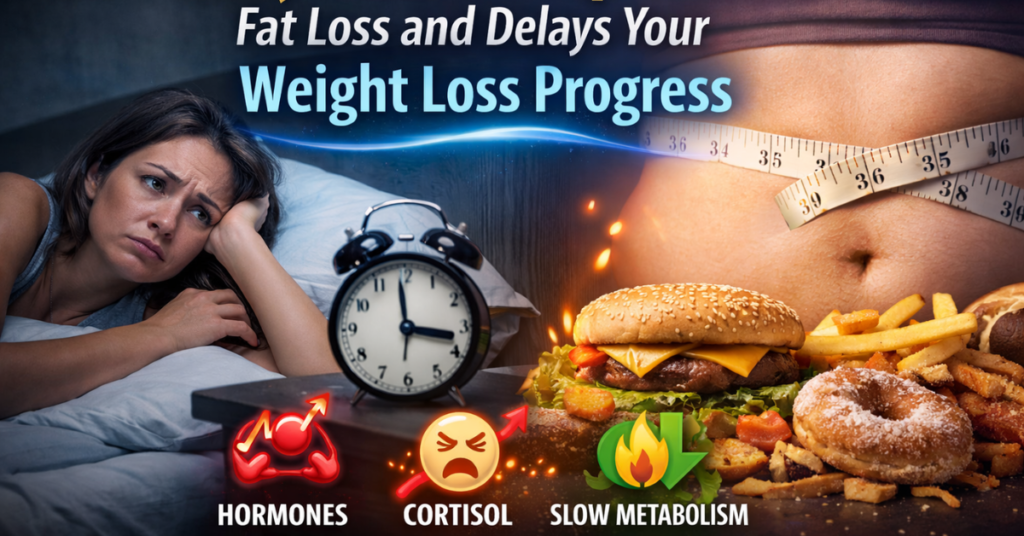
You are eating clean. You are controlling calories. You are exercising regularly. Yet the fat is not reducing the way you expected.
At this point, most people assume they need to diet harder or increase cardio. But there is one powerful factor that many people ignore completely. Sleep.
Understanding why poor sleep blocks fat loss can completely change your weight loss journey. Fat loss is not only about calories. It is about how your body functions internally. Sleep controls hunger hormones, stress response, metabolism, muscle recovery, and even cravings.
After years of working with clients on sustainable fat loss, one pattern is very clear. When sleep improves, fat loss becomes smoother. When sleep is poor, progress slows down even if the diet looks perfect.
Let us understand why this happens.
Not Losing Fat Despite Diet and Exercise?
Poor sleep can disrupt hormones, increase cravings, slow metabolism, and block fat loss progress. Without proper rest, weight loss becomes harder than it should be. Our personalised nutrition and lifestyle guidance helps you improve sleep habits and support sustainable fat loss.
Start Your Sustainable Fat Loss PlanFat Loss Is Hormonal, Not Just Calorie Based
Most people believe fat loss is simply about eating less and moving more. While calorie balance matters, hormones decide how efficiently your body burns fat.
When you do not sleep enough, your hunger hormones become unbalanced.
Leptin, the hormone that signals fullness, decreases.
Ghrelin, the hormone that signals hunger, increases.
This shift makes you feel hungrier than usual. You may eat your regular meals but still feel unsatisfied. Snacking becomes more frequent. Portion control becomes harder.
This is one of the primary reasons why poor sleep blocks fat loss. Your body pushes you to eat more even when you are trying to maintain a calorie deficit.
It is not a lack of discipline. It is a biological response.
Sleep Deprivation Increases Cravings
Have you noticed stronger cravings after a bad night of sleep?
Sleep deprivation affects the brain’s reward center. High calorie foods appear more attractive. At the same time, the brain area responsible for decision making becomes less active.
This means sugary and processed foods become more tempting, and your ability to resist them becomes weaker.
Even highly motivated individuals struggle with food choices when they are tired. Over time, these small decisions slow down fat loss.
Elevated Cortisol Encourages Fat Storage
Another major reason why poor sleep blocks fat loss is increased cortisol levels.
Cortisol is your stress hormone. When you do not sleep properly, cortisol remains elevated.
High cortisol levels promote fat storage, especially around the abdomen. They also increase muscle breakdown and worsen blood sugar control.
If you are struggling with stubborn belly fat despite dieting, sleep may be the missing piece. Your body does not prioritize fat burning when it feels stressed.
Not Losing Fat Despite Diet and Exercise?
Poor sleep can disrupt hormones, increase cravings, slow metabolism, and block fat loss progress. Without proper rest, weight loss becomes harder than it should be. Our personalised nutrition and lifestyle guidance helps you improve sleep habits and support sustainable fat loss.
Start Your Sustainable Fat Loss PlanPoor Sleep Slows Your Metabolism
Your metabolism adapts to your lifestyle. It is not fixed.
Chronic sleep deprivation can lower resting metabolic rate. This means you burn fewer calories even when you are not exercising.
Poor sleep also reduces insulin sensitivity. When this happens, your body becomes less efficient at using carbohydrates for energy and more likely to store them as fat.
So even if your calorie intake remains the same, your body handles those calories differently when sleep is inadequate.
This explains clearly why poor sleep blocks fat loss even when your diet looks correct.
Muscle Loss Becomes More Likely
Preserving muscle during fat loss is essential because muscle keeps your metabolism strong.
Deep sleep supports growth hormone release and muscle repair. When sleep is insufficient, recovery declines.
If you are dieting and sleeping poorly, your body may lose more muscle instead of primarily burning fat.
Less muscle leads to a slower metabolism. A slower metabolism makes future fat loss even harder.
Lower Energy Means Lower Activity
Sleep affects more than just workouts. It affects your overall daily movement.
When you are tired, you move less throughout the day. You may sit longer, avoid stairs, or skip walks.
Even small reductions in daily movement can reduce total calorie burn significantly over time.
This subtle drop in activity is another reason why poor sleep blocks fat loss progress.
Sleep Quality Matters as Much as Sleep Duration
Sleeping seven hours is not enough if the sleep quality is poor.
If your sleep is frequently interrupted, restless, or affected by late night phone use, your body may not reach deep restorative stages.
Deep sleep is when muscle repair, hormone balance, and fat metabolism improve.
Without quality sleep, these processes remain incomplete.
Poor Sleep Disrupts Your Body Clock
Your body operates on a natural rhythm called the circadian rhythm.
This rhythm regulates hunger, digestion, hormone release, and energy levels.
Irregular sleep patterns or late nights disrupt this rhythm. When this happens, hunger increases at unusual times, cravings intensify, and metabolism becomes less efficient.
Late night eating combined with poor sleep creates a cycle that slows fat loss further.
Research Supports the Connection
Studies consistently show that people who sleep less than six hours per night have higher body fat percentages and struggle more with weight loss.
Research comparing equal calorie diets found that individuals who slept adequately lost more fat and preserved more muscle than those who were sleep deprived.
This confirms that understanding why poor sleep blocks fat loss is not just theory. It is backed by scientific evidence.
Signs That Sleep May Be Blocking Your Fat Loss
You wake up tired even after sleeping.
You crave sugar frequently.
You feel stressed often.
You struggle with belly fat.
You hit repeated plateaus.
You feel hungry even in a calorie deficit.
If several of these signs apply to you, improving sleep should become a priority.
How to Improve Sleep for Better Fat Loss
Go to bed and wake up at the same time daily.
Avoid screens at least one hour before bed.
Limit caffeine after afternoon.
Keep your bedroom cool and dark.
Practice relaxation techniques before sleep.
Avoid heavy meals late at night.
Small improvements in sleep can lead to noticeable improvements in fat loss within weeks.
A Quick Recap
Why poor sleep blocks fat loss becomes clear when you look at its impact on hunger hormones, stress hormones, metabolism, muscle preservation, cravings, and daily movement.
Fat loss is not just about eating less. It is about creating the right internal environment where your body feels safe enough to burn stored fat.
When sleep improves, cravings reduce, energy increases, metabolism stabilizes, and fat burning becomes more efficient.
If your progress has stalled, fix your sleep before cutting more calories.
Sometimes the real breakthrough begins with rest.
Not Losing Fat Despite Diet and Exercise?
Poor sleep can disrupt hormones, increase cravings, slow metabolism, and block fat loss progress. Without proper rest, weight loss becomes harder than it should be. Our personalised nutrition and lifestyle guidance helps you improve sleep habits and support sustainable fat loss.
Start Your Sustainable Fat Loss PlanFrequently Asked Questions
Poor sleep blocks fat loss because it disrupts hunger hormones, increases cortisol levels, reduces insulin sensitivity, and slows metabolism. Even if you are eating in a calorie deficit, your body becomes less efficient at burning fat when sleep is inadequate. Hormonal imbalance makes fat loss much harder despite dieting.
Most adults need seven to nine hours of quality sleep per night for optimal fat loss. Both duration and sleep quality matter. Deep, uninterrupted sleep supports hormone balance, muscle recovery, and efficient fat metabolism.
Yes. Poor sleep increases cortisol, which promotes fat storage around the abdomen. Chronic sleep deprivation is strongly linked to stubborn belly fat because the body remains in a stressed state and prioritizes fat storage over fat burning.
Yes. Research shows that sleep deprivation can reduce resting metabolic rate and impair insulin sensitivity. This means your body burns fewer calories and stores more energy as fat, which explains why poor sleep blocks fat loss progress.
Fat loss becomes significantly harder with only five hours of sleep. Short sleep duration increases hunger, cravings, and stress hormones while reducing muscle recovery. Over time, this makes maintaining consistent fat loss more difficult.