Cortisol Lowering Foods: What to Eat for Healthy Stress Hormone Levels
When life gets stressful, food is often one of the first things that changes. You may skip breakfast because of work, rely on coffee to stay awake, reach for something sweet in the afternoon, or eat a heavy meal late at night because you finally have time to relax.
Over time, these habits can affect your overall health, sleep, energy and relationship with food.
This is also why cortisol lowering foods have become such a popular topic.
Cortisol is commonly known as the stress hormone, but cortisol itself is not bad. Your body needs it. It helps regulate metabolism, blood pressure, blood sugar and the body’s response to stress. Cortisol naturally rises and falls throughout the day and increases temporarily when you experience stress. The concern is when cortisol regulation becomes abnormal or when an underlying medical condition causes cortisol levels to remain excessively high.
So, can food actually lower cortisol?
No single food can switch off cortisol or instantly eliminate stress. However, a balanced diet can support overall metabolic health, provide essential nutrients and complement healthy sleep, exercise and stress-management habits.
That is the approach behind a practical cortisol-supportive diet.
In this guide, you will learn which cortisol lowering foods can be included in an everyday diet, which eating habits may work against your goals, and how to build a balanced Indian meal pattern without following an unnecessarily restrictive “cortisol diet.”
Quick Answer: What Are the Best Cortisol Lowering Foods?
There is no scientifically established list of foods that directly “turn off” cortisol. Instead, focus on nutrient-dense foods that support overall health and a balanced eating pattern.
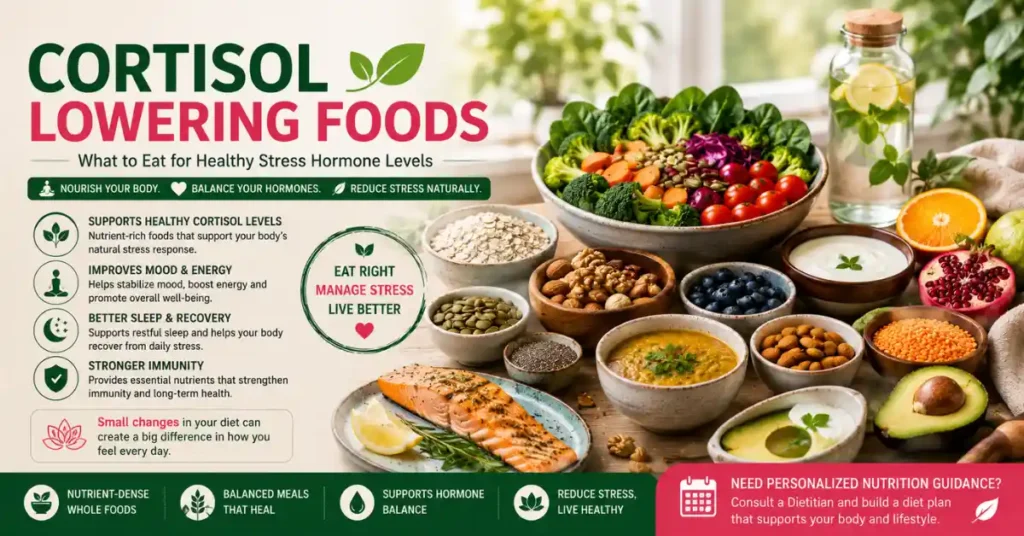
Some useful choices include:
Vegetables: spinach, broccoli, carrots, capsicum, tomatoes, beans and other colourful vegetables.
Fruits: guava, oranges, berries, papaya, apples, pomegranate and other whole fruits.
Protein-rich foods: dal, lentils, chickpeas, beans, eggs, fish, chicken, paneer, tofu and curd.
Whole grains: oats, whole wheat, brown rice and suitable millets.
Healthy fats: walnuts, almonds, seeds, peanuts, olive oil and fatty fish.
Fermented foods: plain curd and other suitable fermented foods.
The bigger picture matters more than any individual ingredient. A nutritious meal eaten consistently is more valuable than adding one “superfood” while continuing to struggle with poor sleep, highly processed foods or chronic stress.
Want to Support Healthy Cortisol Levels Naturally?
The right foods can support a balanced stress response and overall wellbeing. Discover practical nutrition strategies, cortisol lowering foods, and healthy eating habits that may help support healthy stress hormone levels, energy, sleep, and long-term health.
Get Your Personalized Nutrition ConsultationWhat Is Cortisol and Why Does Your Body Need It?
Cortisol is a hormone produced by the adrenal glands. It plays an important role in helping your body respond to stress and has several functions related to metabolism and other body processes.
It is normal for cortisol levels to change during the day.
For example, your body typically produces cortisol according to a daily rhythm, and stressful situations can temporarily increase cortisol production.
That means the goal should not be to make cortisol as low as possible.
Healthy cortisol regulation is the goal.
This is an important distinction because many online “cortisol hacks” make it sound as though cortisol is a toxin that needs to be removed from the body. It isn’t.
If you have a medical condition that causes abnormal cortisol levels, food alone cannot correct the underlying problem.
Can Cortisol Lowering Foods Really Reduce Cortisol?
This question deserves a careful answer.
Food can influence many processes involved in health, including energy metabolism, blood sugar regulation, inflammation and overall nutrient status. Diet is also closely connected with sleep, body weight and cardiovascular health.
However, it would be misleading to promise that eating a particular food will directly lower your cortisol within a few hours.
A better way to think about cortisol lowering foods is this:
Choose foods that support a balanced, nutritious eating pattern while reducing habits that may contribute to poor sleep, unstable eating patterns and poor overall health.
This approach is more realistic, sustainable and consistent with evidence-based nutrition.
10 Cortisol Lowering Foods to Add to Your Diet
1. Leafy Green and Colourful Vegetables
Vegetables should be the foundation of a nutrient-dense diet.
Spinach, methi, broccoli, carrots, beans, capsicum, tomatoes, pumpkin, cauliflower and other colourful vegetables provide fibre, vitamins, minerals and plant compounds.
Instead of searching for one special “cortisol vegetable,” aim for variety.
A simple Indian lunch of dal, roti, sabzi and salad can provide a much stronger nutritional foundation than a restrictive diet based around expensive powders or supplements.
2. Whole Fruits
If you are worried about cortisol, you do not need to remove fruit from your diet.
Whole fruits provide carbohydrates, fibre and a range of vitamins, minerals and plant compounds.
Good everyday options include:
- Guava
- Papaya
- Orange
- Apple
- Pomegranate
- Berries
- Banana
- Seasonal fruits
The important distinction is between whole fruit and highly sweetened fruit products.
Eating a whole orange is very different from regularly drinking a sugar-loaded fruit beverage.
3. Dal, Lentils and Beans
Indian diets have a major advantage here.
Moong dal, masoor dal, chana, rajma, lobia, chickpeas and other pulses can provide protein, fibre and important micronutrients.
They are also affordable and easy to incorporate into everyday meals.
Try dal with vegetables and roti, rajma with rice and salad, or chana with vegetables for a satisfying meal.
There is no need for a complicated “hormone-balancing” recipe when traditional foods can already provide a strong nutritional foundation.
4. Oats and Other Whole Grains
Oats, whole wheat, brown rice and suitable millets can provide carbohydrates and fibre as part of a balanced diet.
Carbohydrates are sometimes unfairly blamed for cortisol problems.
The reality is more nuanced.
Your body needs adequate energy, and completely removing carbohydrates is not necessary for most people.
Instead of asking, “Should I stop eating carbs to lower cortisol?” ask:
“Am I choosing nutritious carbohydrate sources and balancing them with protein, fibre and healthy fats?”
That is a much more useful question.
5. Nuts and Seeds
Nuts and seeds can make a simple diet more nutrient-dense.
Walnuts, almonds, peanuts, pumpkin seeds, chia seeds, flaxseeds and sunflower seeds can provide healthy fats, fibre, protein and micronutrients.
A small portion can be added to breakfast, curd, oats or salads.
Walnuts and flaxseeds are also sources of plant-based omega-3 fats.
Remember, though, that more is not always better. Nuts and seeds are nutritious but energy-dense, so portion size matters, particularly if weight management is one of your goals.
6. Fatty Fish
For people who eat fish, oily fish such as salmon, sardines and mackerel can provide omega-3 fatty acids.
Fish can therefore be part of a balanced diet that supports cardiovascular and metabolic health.
Indian diets can also incorporate locally available fish according to regional food preferences and preparation methods.
However, calling fish a direct “cortisol lowering food” would be an oversimplification.
Think of it as one nutritious component of a larger dietary pattern.
Want to Support Healthy Cortisol Levels Naturally?
The right foods can support a balanced stress response and overall wellbeing. Discover practical nutrition strategies, cortisol lowering foods, and healthy eating habits that may help support healthy stress hormone levels, energy, sleep, and long-term health.
Get Your Personalized Nutrition Consultation7. Eggs and Other Quality Protein Sources
Adequate protein is important for maintaining muscle, supporting satiety and building balanced meals.
Eggs can be a practical protein source for people who eat them.
Other options include:
- Fish
- Chicken
- Paneer
- Tofu
- Soy
- Dal
- Beans
- Curd
A breakfast containing protein can also be more satisfying than starting the day with only tea or coffee and then becoming extremely hungry later.
8. Plain Curd
Curd can be an easy addition to an Indian meal.
It provides protein and calcium, depending on the type and serving, and fermented dairy foods can contribute to dietary variety.
Choose plain curd more often than highly sweetened flavoured versions.
You can pair curd with lunch, add it to a balanced meal or use it as a base for a simple raita with vegetables.
9. Avocado, Olive Oil and Other Healthy Fat Sources
Healthy fats can be part of a balanced diet.
Depending on your food preferences and availability, useful options include olive oil, nuts, seeds, avocado and fatty fish.
You do not need to completely eliminate dietary fat to manage cortisol or body weight.
The type of fat, quantity and overall dietary pattern matter.
10. Dark Chocolate in Moderation
Dark chocolate is sometimes discussed in relation to stress because cocoa contains flavanols and other plant compounds.
If you enjoy dark chocolate, a small portion can fit into a balanced diet.
But this does not make chocolate a cortisol treatment.
Choose a sensible portion and avoid turning “dark chocolate for cortisol” into an excuse to consume large quantities of calorie-dense foods.
What About Green Tea and Cortisol?
Green tea is often marketed as a stress-supporting beverage because it contains several bioactive compounds.
It can be a reasonable alternative to heavily sweetened drinks for many people.
However, green tea contains caffeine.
If caffeine makes you feel restless, increases anxiety or interferes with your sleep, drinking more green tea may not be helpful for you.
The right beverage depends on your individual tolerance and the rest of your daily routine.
Foods to Limit When You Are Trying to Support Healthy Cortisol Regulation
A cortisol-supportive diet should not become a long list of foods you are afraid to eat.
Instead, focus on reducing patterns that may compromise overall health.
Highly Sugary Foods and Drinks
Regularly consuming large amounts of sugary drinks, sweets and highly processed snacks can increase your overall intake of added sugar without providing much nutritional value.
You do not have to completely eliminate dessert.
The goal is to make nutritious foods the foundation of your diet and enjoy treats occasionally and mindfully.
Highly Processed Foods
Packaged snacks, fast food and heavily processed meals can be convenient, but relying on them frequently may make it harder to get enough fibre, protein, vitamins and minerals.
One packet of chips does not suddenly cause a cortisol problem.
The concern is the overall dietary pattern.
Excessive Alcohol
Alcohol can interfere with sleep and overall health.
If stress is already affecting your sleep, mood or eating habits, frequent alcohol consumption may make it harder to establish a healthier routine.
Too Much Caffeine
Coffee and tea can be part of a healthy diet for many people.
The problem is often the amount and timing.
If you rely on several cups of strong coffee to get through the day and then struggle to sleep at night, reducing or moving your caffeine intake earlier may be more useful than searching for another “cortisol lowering food.”
Does Skipping Meals Affect Cortisol?
There is no simple rule that says skipping one meal automatically causes high cortisol.
However, very restrictive diets, inadequate calorie intake, prolonged fasting and irregular eating patterns are not appropriate for everyone.
If skipping meals leaves you exhausted, extremely hungry, irritable or likely to overeat later, a more structured meal pattern may be worth considering.
Your diet should provide enough energy and nutrients for your individual needs.
This becomes particularly important if you are pregnant or breastfeeding, highly physically active, taking medication that affects blood glucose, or managing a medical condition.
What Is the Best Indian Breakfast for a Cortisol-Supportive Diet?
There is no single perfect breakfast.
A useful formula is:
Protein + fibre-rich carbohydrate + fruit or vegetables + healthy fat
For example, you could choose:
Moong dal chilla + curd + vegetables
or
Vegetable oats + eggs + fruit
or
Poha with vegetables + peanuts + curd
or
Whole-wheat vegetable sandwich + paneer/egg + fruit
The goal is not to create a “cortisol detox breakfast.”
The goal is to start your day with a meal that provides meaningful nutrition and keeps you satisfied.
Want to Support Healthy Cortisol Levels Naturally?
The right foods can support a balanced stress response and overall wellbeing. Discover practical nutrition strategies, cortisol lowering foods, and healthy eating habits that may help support healthy stress hormone levels, energy, sleep, and long-term health.
Get Your Personalized Nutrition ConsultationWhat Should You Eat for Lunch to Support Healthy Cortisol Levels?
Keep lunch simple.
A balanced Indian lunch could include:
Dal + roti + sabzi + salad + curd
or
Rajma + rice + vegetables + salad
or
Fish + rice/roti + vegetables + curd
or
Paneer/tofu + roti + vegetables + salad
The exact portion should depend on your energy needs, body composition, activity level and health goals.
This is why copying someone else’s “cortisol diet chart” may not give you the results you expect.
Can Cortisol Lowering Foods Help With Weight Loss?
This is where cortisol and weight management are often oversimplified online.
Stress, sleep, appetite, food choices, physical activity and body weight can influence one another.
But there is no specific food that directly burns “cortisol belly fat.”
A sustainable weight-management diet should provide enough protein and fibre, include nutrient-dense foods and fit your lifestyle.
If stress is causing emotional eating, late-night eating or frequent cravings, addressing those behaviours may be more useful than simply adding a particular food to your diet.
Cortisol, Sleep and Food Are Connected
Imagine eating a balanced diet but sleeping five hours every night, drinking coffee late in the evening and working under constant pressure.
Adding walnuts or berries to that routine will not solve everything.
Nutrition is one piece of the puzzle.
Sleep, physical activity, stress management, meal regularity and overall lifestyle matter too.
This is why a practical cortisol-supportive approach should look beyond the plate.
Can Cortisol Lowering Foods Reduce Belly Fat?
Not directly.
There is no food that specifically targets abdominal fat because of cortisol.
If you have gained weight around your abdomen, several factors may be involved, including overall calorie intake, physical activity, sleep, genetics, age, hormones and other health conditions.
A sustainable nutrition and lifestyle plan is a better approach than trying to find a single “cortisol belly fat food.”
What About Cortisol Supplements and “Cortisol Blockers”?
Be careful with products marketed as:
Cortisol blockers
Adrenal support
Stress hormone detox
Cortisol balancing supplements
The word “natural” does not automatically mean safe or effective.
Some ingredients have been researched for stress-related outcomes, but evidence differs between products, doses and populations. Supplements can also interact with medications or be unsuitable for people with particular medical conditions.
The Endocrine Society has specifically warned about the unsupported concept of “adrenal fatigue” and products marketed to treat it.
If you are considering a supplement specifically to change your cortisol levels, speak with a qualified healthcare professional first.
When Should You Get Your Cortisol Levels Checked?
Feeling stressed does not automatically mean you have a cortisol disorder.
Symptoms such as fatigue, difficulty sleeping, weight changes, anxiety, cravings and low energy can have many different causes.
If you have persistent or unusual symptoms, have been told that your cortisol test is abnormal, or have concerns about an endocrine disorder, speak with a doctor or endocrinologist.
Conditions involving abnormal cortisol production require appropriate medical assessment.
Food can support your health, but it should not replace diagnosis or treatment.
How a Dietitian Can Help You Build a Cortisol-Supportive Diet
There is no universal cortisol diet that works for everyone.
Your nutrition needs depend on factors such as:
- Age
- Activity level
- Body composition
- Sleep pattern
- Food preferences
- Lifestyle
- Medical history
- Current medications
- Weight-management goals
For example, the nutritional strategy for someone dealing with stress-related overeating may be very different from the plan for an athlete, someone with diabetes, or a person managing PCOS.
This is where personalized nutrition becomes valuable.
At Nutridate with Priyanka, the focus is on creating practical nutrition strategies around an individual’s lifestyle, preferences and health goals rather than giving everyone the same generic diet chart.
A personalized plan can focus on balanced meals, adequate protein and fibre, sustainable weight management, better food choices and lifestyle habits that support overall well-being.
The Bottom Line
The best cortisol lowering foods are not exotic ingredients or expensive supplements.
They are the nutritious foods you can consistently include in your everyday diet.
Think vegetables, whole fruits, dal, beans, whole grains, adequate protein, nuts, seeds, curd and healthy sources of fat.
But remember the bigger picture.
You do not need to eliminate every carbohydrate, avoid every sweet food or buy a “cortisol blocker” to support your health.
A balanced diet combined with sufficient sleep, regular movement and effective stress management is a much more sustainable approach.
And if you are experiencing persistent symptoms or have concerns about abnormal cortisol levels, do not try to diagnose yourself through diet. Get appropriate medical advice and use nutrition as part of a personalized health strategy.
For individualized nutrition guidance based on your lifestyle, health needs and goals, consider working with a qualified dietitian who can help you create a plan that is realistic enough to follow and flexible enough to fit your everyday life.
Want to Support Healthy Cortisol Levels Naturally?
The right foods can support a balanced stress response and overall wellbeing. Discover practical nutrition strategies, cortisol lowering foods, and healthy eating habits that may help support healthy stress hormone levels, energy, sleep, and long-term health.
Get Your Personalized Nutrition ConsultationFrequently Asked Questions
There is no single food proven to switch off cortisol. A balanced diet containing vegetables, fruits, pulses, whole grains, adequate protein, nuts, seeds and healthy fats can support overall health and healthy stress management.
No food can reliably lower cortisol immediately. If you are feeling stressed, a balanced meal, hydration, adequate sleep and stress-management practices are generally more useful than looking for a quick cortisol-lowering food.
Instead of completely banning foods, consider limiting excessive added sugar, highly processed foods, alcohol and caffeine if it disrupts your sleep or makes you feel more anxious. Your overall eating pattern matters more than one food.
They may support a nutritious eating pattern and healthy weight management, but no food specifically burns cortisol-related belly fat. Abdominal weight gain can have multiple causes and should be addressed through a sustainable overall approach.
Yes. A dietitian can help build a personalized eating pattern based on your health goals, lifestyle, food preferences and nutritional needs. If you have clinically abnormal cortisol levels, nutrition care should complement appropriate medical evaluation.