Save 300 Calories Daily: Easy Ways to Lose Weight Naturally

If someone asked me for one habit that could genuinely improve weight management without making life miserable, I would always recommend learning how to save 300 calories daily. It sounds like a small change, but over weeks and months, it can create a meaningful calorie deficit, improve metabolic health, and support sustainable fat loss. The best part is that you don’t have to stop eating your favourite foods or follow extreme diets to make it work.
Whenever someone comes to me wanting to lose weight, the first thing they usually say is, “I think I need to eat much less.” I understand why people believe that, but in my experience, that’s one of the biggest reasons diets fail.
Most crash diets promise quick results. They also leave you hungry, tired, and frustrated. Eventually, the cravings become stronger than the motivation, and people return to their old eating habits.
That’s why I prefer a smarter approach.
Instead of asking you to remove entire food groups or survive on salads, I want to help you identify unnecessary calories hiding in your everyday routine. Once you learn how to replace those calories with healthier choices, weight management becomes much easier.
Saving just 300 calories every day may not seem exciting, but consistency always beats perfection. When paired with balanced nutrition, regular movement, quality sleep, and stress management, this simple habit can produce lasting results.
Why Should You Save 300 Calories Daily Instead of Following Extreme Diets?
One of the biggest myths about weight loss is that eating as little as possible leads to faster and better results.
I have seen many people skip meals, avoid carbohydrates completely, or follow restrictive detox diets because they believe suffering equals success. Unfortunately, the human body doesn’t work that way.
When you reduce calories too aggressively, your body responds by increasing hunger hormones, lowering your energy levels, and making it harder to stay consistent. Many people eventually overeat because they simply cannot maintain such restrictive eating patterns.
A moderate calorie deficit is much more practical.
Saving around 300 calories each day allows you to reduce your overall calorie intake without feeling deprived. You still enjoy satisfying meals while gradually moving toward your health goals.
For example, imagine making these three simple changes:
- Replace a sugary coffee with black coffee or unsweetened tea.
- Use one teaspoon less cooking oil.
- Replace evening chips with a bowl of roasted chana or fruit.
Together, these small adjustments can easily save around 300 calories without making your day feel restrictive.
This is why I often tell people that successful weight loss isn’t about eating dramatically less. It’s about eating more intentionally.
Want to Save 300 Calories Every Day Without Feeling Hungry?
Small daily changes can lead to big results over time. Replacing high-calorie foods with healthier alternatives, controlling portions, and making smarter meal choices can help you lose weight naturally without following restrictive diets. Get a personalised nutrition plan that fits your lifestyle.
Start Your Healthy Weight Loss Journey TodayBenefits of Saving 300 Calories Daily
| Benefit | Why It Matters |
|---|---|
| Sustainable weight loss | Easier to maintain for months or years |
| Better energy | Less fatigue than crash diets |
| Reduced cravings | Balanced meals improve satiety |
| Improved metabolic health | Supports healthy blood sugar and cholesterol |
| Better relationship with food | No need to fear favourite foods |
Skimmable Summary
Saving 300 calories daily creates a manageable calorie deficit that is easier to maintain than extreme dieting. Small, consistent changes often lead to better long-term results than short-term restrictions.
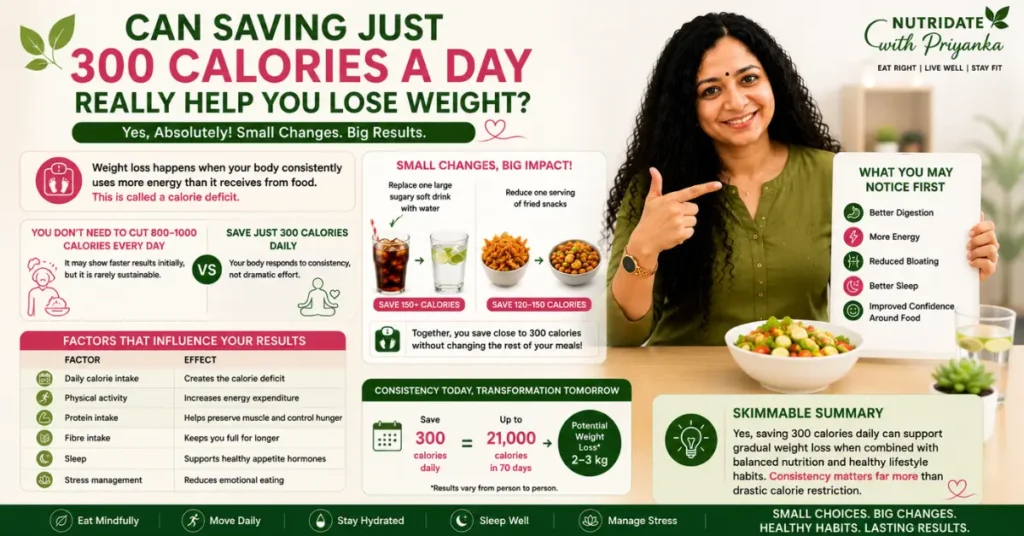
Can Saving Just 300 Calories a Day Really Help You Lose Weight?
Yes, absolutely.
Weight loss happens when your body consistently uses more energy than it receives from food. This is known as a calorie deficit.
Many people assume they need to cut 800 or even 1,000 calories every day to lose weight. While that may produce faster results initially, it is rarely sustainable.
A daily reduction of around 300 calories may seem small, but remember that your body responds to consistency, not dramatic effort.
Think about someone who drinks one large sugary soft drink every afternoon.
Replacing that drink with water immediately removes more than 150 calories.
Now imagine reducing one serving of fried snacks later in the evening.
Together, those two habits create a calorie deficit close to 300 calories without changing the rest of the day’s meals.
When repeated every day, these changes can contribute to gradual fat loss while allowing you to continue enjoying normal meals.
I also encourage people not to judge progress only by the weighing scale.
Many of my clients first notice:
- Better digestion
- More energy
- Reduced bloating
- Better sleep
- Improved confidence around food
These improvements often appear before major weight changes.
Factors That Influence Your Results
| Factor | Effect |
| Daily calorie intake | Creates the calorie deficit |
| Physical activity | Increases energy expenditure |
| Protein intake | Helps preserve muscle and control hunger |
| Fibre intake | Keeps you full for longer |
| Sleep | Supports healthy appetite hormones |
| Stress management | Reduces emotional eating |
Skimmable Summary
Yes, saving 300 calories daily can support gradual weight loss when combined with balanced nutrition and healthy lifestyle habits. Consistency matters far more than drastic calorie restriction.
Where Are Those Extra 300 Calories Hiding in Your Daily Routine?
One of my favourite exercises with clients is reviewing everything they eat over three normal days.
Most people expect me to point at their lunch or dinner.
Instead, I usually find hidden calories in places they never considered.
Calories quietly add up through:
- Sweetened tea or coffee several times a day
- Extra cooking oil
- Soft drinks
- Biscuits with evening tea
- Large handfuls of namkeen
- Mindless tasting while cooking
- Oversized portions of rice
- Sugary sauces
- Weekend desserts
Even foods considered “healthy” can become high in calories when portion sizes increase.
For example:
A handful of almonds is nutritious.
Three handfuls while watching television can easily exceed 250 calories.
The same applies to peanut butter, smoothies, dried fruits, and granola.
Rather than avoiding these foods, I encourage eating them mindfully.
Keeping a simple food diary for just three days often reveals where those hidden calories are coming from.
Want to Save 300 Calories Every Day Without Feeling Hungry?
Small daily changes can lead to big results over time. Replacing high-calorie foods with healthier alternatives, controlling portions, and making smarter meal choices can help you lose weight naturally without following restrictive diets. Get a personalised nutrition plan that fits your lifestyle.
Start Your Healthy Weight Loss Journey TodayCommon Hidden Calorie Sources
| Food or Habit | Approximate Calories |
| Sugary latte | 220 |
| Two cream biscuits | 140 |
| One tablespoon extra cooking oil | 120 |
| Soft drink | 140 |
| Fried namkeen | 180 |
| Extra cheese slice | 80 |
| Sweetened fruit juice | 150 |
| One spoon mayonnaise | 100 |
Most people are surprised that removing just two or three of these habits is enough to save around 300 calories every day.
Skimmable Summary
Hidden calories often come from drinks, cooking oil, snacks, sauces, and oversized portions rather than main meals. Identifying these everyday habits is one of the easiest ways to save 300 calories daily without feeling hungry.
How Can You Save 300 Calories Daily Without Feeling Hungry?
One of the biggest concerns people share with me is, “If I cut calories, won’t I feel hungry all the time?” My answer is usually no, provided you reduce the right calories instead of simply eating less food.
The goal isn’t to shrink every meal. It’s to replace high-calorie, low-nutrient foods with options that keep you satisfied for longer. Foods rich in protein and fibre digest more slowly, helping control hunger while naturally reducing calorie intake.
For example, replacing a packet of chips with roasted chana, switching from sugary beverages to lemon water, or adding more vegetables to your plate can help you stay full while lowering your calorie intake.
I also recommend slowing down while eating. Many people finish a meal within 10 minutes, long before their brain has registered fullness. Eating mindfully gives your body enough time to signal satisfaction, reducing the urge to overeat.
Practical Ways to Save 300 Calories Every Day
| Habit | Calories Saved |
|---|---|
| Skip one sugary soft drink | 140–180 |
| Use 1 tablespoon less cooking oil | 120 |
| Replace chips with roasted chana | 120–180 |
| Choose grilled instead of fried snacks | 150–250 |
| Replace sugary coffee with black coffee | 80–150 |
| Eat one chapati instead of two (if appropriate) | 100–120 |
Skimmable Summary
Saving 300 calories doesn’t mean starving yourself. It means making smarter food choices, improving portion awareness, and replacing calorie-dense foods with filling alternatives.
Which Food Swaps Help You Save the Most Calories?
Want to Save 300 Calories Every Day Without Feeling Hungry?
Small daily changes can lead to big results over time. Replacing high-calorie foods with healthier alternatives, controlling portions, and making smarter meal choices can help you lose weight naturally without following restrictive diets. Get a personalised nutrition plan that fits your lifestyle.
Start Your Healthy Weight Loss Journey TodaySmall food swaps can make a surprisingly big difference over time. Instead of thinking about what you need to stop eating, I focus on finding better alternatives that fit naturally into everyday life.
Smart Food Swaps
| Instead Of | Try This Instead | Calories Saved |
|---|---|---|
| Potato chips | Roasted makhana | 120 |
| Sweetened cold drink | Lemon water | 150 |
| Creamy coffee | Black coffee | 100 |
| Fried samosa | Grilled sandwich | 180 |
| Ice cream | Greek yogurt with berries | 150 |
| White bread | Whole grain bread | Better satiety |
These changes may seem small individually, but together they can easily help you save 300 calories every day without feeling restricted.
Skimmable Summary
Simple food swaps reduce calorie intake while improving nutrition. Choosing whole foods over processed snacks makes weight management much easier.
What Does a 7 Day 300 Calorie Diet Plan Look Like?
This sample plan shows how small adjustments can create a calorie deficit without removing complete meals.
Day 1
- Breakfast: Vegetable oats with curd
- Lunch: Dal, brown rice, salad
- Snack: Apple
- Dinner: Grilled paneer with vegetables
Day 2
- Breakfast: Moong chilla
- Lunch: Rajma with one chapati
- Snack: Roasted chana
- Dinner: Mixed vegetable soup with paneer
Day 3
- Breakfast: Poha with peanuts
- Lunch: Grilled chicken or tofu with salad
- Snack: Buttermilk
- Dinner: Dal with sautéed vegetables
Day 4
- Breakfast: Vegetable upma
- Lunch: Khichdi with curd
- Snack: Guava
- Dinner: Paneer bhurji with salad
Day 5
- Breakfast: Besan chilla
- Lunch: Fish or tofu with vegetables
- Snack: Coconut water
- Dinner: Vegetable soup
Day 6
- Breakfast: Idli with sambar
- Lunch: Brown rice with dal
- Snack: Orange
- Dinner: Stir-fried vegetables
Day 7
- Breakfast: Oats smoothie (unsweetened)
- Lunch: Quinoa with vegetables
- Snack: Handful of nuts
- Dinner: Mixed dal with salad
The goal of this 7 day 300 calorie diet plan isn’t perfection. It’s about building habits you can repeat every week.
Skimmable Summary
A realistic weekly meal plan should include balanced meals, adequate protein, fibre, and moderate calorie reduction rather than skipping meals.
How Can You Follow a 7-Day Calorie Deficit Diet Plan Successfully?

A calorie deficit works best when it fits into your normal routine rather than disrupting it.
Here are the principles I recommend:
Eat Enough Protein
Protein helps maintain muscle mass while increasing fullness.
Fill Half Your Plate With Vegetables
Vegetables add volume without adding many calories.
Stay Hydrated
Sometimes thirst feels like hunger.
Don’t Skip Breakfast Just to Save Calories
Skipping meals often leads to overeating later in the day.
Move More
Even a 30-minute walk contributes to your daily calorie deficit.
Sleep Well
Poor sleep increases cravings for sugary foods.
Skimmable Summary
The best 7-day calorie deficit diet plan combines balanced eating, movement, hydration, and sleep instead of focusing only on calorie numbers.
Which Mistakes Stop People From Losing Weight?
Many people unknowingly make mistakes that slow their progress despite eating “healthy.”
Common Mistakes
- Drinking calories instead of eating them
- Underestimating portion sizes
- Skipping meals
- Eating too little protein
- Depending only on exercise
- Weekend overeating
- Emotional eating
- Poor sleep habits
I remind my clients that consistency over months always beats perfection for one week.
Skimmable Summary
Weight loss usually stalls because of hidden habits rather than lack of effort. Addressing portion sizes, liquid calories, sleep, and consistency often produces better results than stricter dieting.
Who Should Avoid Reducing Calories Without Professional Guidance?
Although saving 300 calories daily is safe for many healthy adults, some people should speak with a qualified dietitian or doctor before changing their diet.
This includes:
- Pregnant women
- Breastfeeding mothers
- Children and teenagers
- Older adults with poor appetite
- People with eating disorders
- Individuals with diabetes taking medication
- People recovering from surgery or illness
Every person’s nutritional needs are different. A personalised plan is always better than copying someone else’s diet.
Skimmable Summary
Most healthy adults can benefit from modest calorie reduction, but people with medical conditions or special nutritional needs should seek professional guidance before changing their calorie intake.
How Can You Make Saving 300 Calories a Permanent Habit?
One of the biggest reasons people regain weight is that they treat healthy eating as a temporary project instead of a lifestyle. My goal is never to help someone lose weight for just a month. I want to help them build habits they can follow for years.
The easiest way to make saving 300 calories daily a habit is to focus on one change at a time. Trying to change everything overnight often leads to frustration. Instead, start with a simple goal like replacing sugary beverages with water, reducing fried snacks, or adding one extra serving of vegetables every day.
I also encourage planning meals in advance. When healthy options are available, you’re less likely to order fast food or reach for processed snacks.
Another habit I personally recommend is mindful eating. Avoid eating while watching television or scrolling through your phone. Paying attention to your meal helps you recognise when you’re comfortably full.
Remember, consistency is always more important than perfection. Missing one healthy meal doesn’t ruin your progress. What matters is returning to your routine at the next meal.
Daily Habit Checklist
| Healthy Habit | Completed |
|---|---|
| Drank enough water | ☐ |
| Ate protein with every meal | ☐ |
| Filled half my plate with vegetables | ☐ |
| Avoided sugary drinks | ☐ |
| Walked for at least 30 minutes | ☐ |
| Slept for 7–8 hours | ☐ |
Skimmable Summary
Building long-term habits like meal planning, mindful eating, hydration, and regular movement makes it much easier to save 300 calories every day without feeling restricted.
Want to Save 300 Calories Every Day Without Feeling Hungry?
Small daily changes can lead to big results over time. Replacing high-calorie foods with healthier alternatives, controlling portions, and making smarter meal choices can help you lose weight naturally without following restrictive diets. Get a personalised nutrition plan that fits your lifestyle.
Start Your Healthy Weight Loss Journey TodayA Quick Recap
If there’s one lesson I hope you take away from this guide, it’s that healthy weight management doesn’t have to feel overwhelming.
You don’t need expensive detox drinks, crash diets, or impossible workout routines.
In my experience, the people who achieve lasting success are the ones who focus on small, sustainable habits. Saving 300 calories daily may seem like a modest change, but over time, those small decisions add up to meaningful improvements in your health.
Start with one simple habit today. Replace one sugary drink, reduce one fried snack, or increase the vegetables on your plate. These small choices, repeated consistently, can create lasting results without making you feel deprived.
Frequently Asked Questions
Yes. A consistent calorie deficit of around 300 calories per day can contribute to gradual and sustainable weight loss over time.
I often remind people that healthy weight loss isn’t about dramatic changes. Small improvements repeated every day usually deliver better long-term results than extreme dieting.
Most people begin noticing positive changes within a few weeks, although the exact timeline depends on age, activity level, metabolism, sleep, and overall eating habits.
Some people notice improved energy and reduced bloating before they see significant changes on the weighing scale.
Yes.
Reducing calorie intake alone can create a calorie deficit. However, combining healthy eating with regular physical activity usually produces better health outcomes and helps preserve muscle mass.
Even a daily walk can make a noticeable difference.
Limit foods that provide many calories but little nutrition, such as sugary drinks, fried snacks, packaged sweets, processed desserts, and high-calorie sauces.
Instead of completely avoiding your favourite foods, enjoy them occasionally while focusing on balanced meals most of the time.
For most healthy adults, yes.
A moderate calorie deficit is generally easier to maintain than aggressive dieting. However, people with medical conditions, pregnant women, breastfeeding mothers, or individuals taking medication should seek personalised advice before changing their diet.